
Contents
Overview
The Solemnity of the Immaculate Conception, observed annually on December 8th, is a pivotal feast in the Catholic Church, honoring the belief that the Virgin Mary was conceived without the stain of original sin. This doctrine, formally defined in 1854 by Pope Pius IX, places Mary in a unique position, nine months prior to her Nativity on September 8th. Its significance extends beyond theology, as it is a holy day of obligation for Catholics and the patronal feast day for numerous countries, including Italy, Spain, the United States, and the Philippines. Celebrations often involve solemn Masses, vibrant processions, and cultural festivities, reflecting its deep spiritual and societal resonance across the globe, particularly during the Advent season.
🎵 Origins & History
The roots of the Feast of the Immaculate Conception stretch back to the early centuries of Christianity, though its formalization took considerably longer. While the theological concept of Mary's purity was debated and celebrated in various forms, the feast gained traction in the West around the 11th and 12th centuries, with significant theological development spurred by figures like John Duns Scotus, who argued for Mary's unique preservation from original sin. By 1708, it was elevated to a holy day of obligation for the entire Latin Church. The doctrine was definitively proclaimed by Pope Pius IX in his 1854 apostolic constitution Ineffabilis Deus, solidifying its place as a major solemnity.
⚙️ Theological Underpinnings
At its core, the Feast of the Immaculate Conception celebrates a specific theological tenet: that Mary, from the very moment of her conception, was preserved free from original sin. This doctrine, known as the Immaculate Conception, posits that God granted Mary this singular grace to prepare her to be the mother of Jesus Christ. Unlike other humans who inherit original sin from Adam and Eve, Mary was 'redeemed' from this inherited state in advance. This unique status is crucial for understanding her role in salvation history, as it signifies her perfect purity and readiness to bear the Son of God. The feast is thus a profound affirmation of Mary's special relationship with God and her role as a model of grace and holiness for all believers.
📊 Key Facts & Numbers
The Feast of the Immaculate Conception is observed on December 8th, precisely nine months before the Nativity of Mary on September 8th. It is a solemnity, the highest liturgical rank for a feast day in the Catholic Church. It is a holy day of obligation for Catholics. The feast serves as the patronal feast day for numerous countries, including Argentina, Brazil, Italy, Spain, and the United States. In Rome, the Pope traditionally visits the Column of the Immaculate Conception in the Piazza di Spagna to offer prayers.
👥 Key Figures & Institutions
Key figures instrumental in the Feast of the Immaculate Conception include Pope Pius IX, who formally defined the dogma in 1854, and John Duns Scotus, a 13th-century theologian whose arguments were foundational to the doctrine. Pope Clement XI played a crucial role in making it a holy day of obligation. The Vatican and the Roman Catholic Church are the primary institutions responsible for its liturgical observance and theological promotion. Numerous national churches and bishops' conferences also play a role in organizing local celebrations and promoting devotion to Mary under this title, ensuring its widespread recognition and practice.
🌍 Cultural Impact & Influence
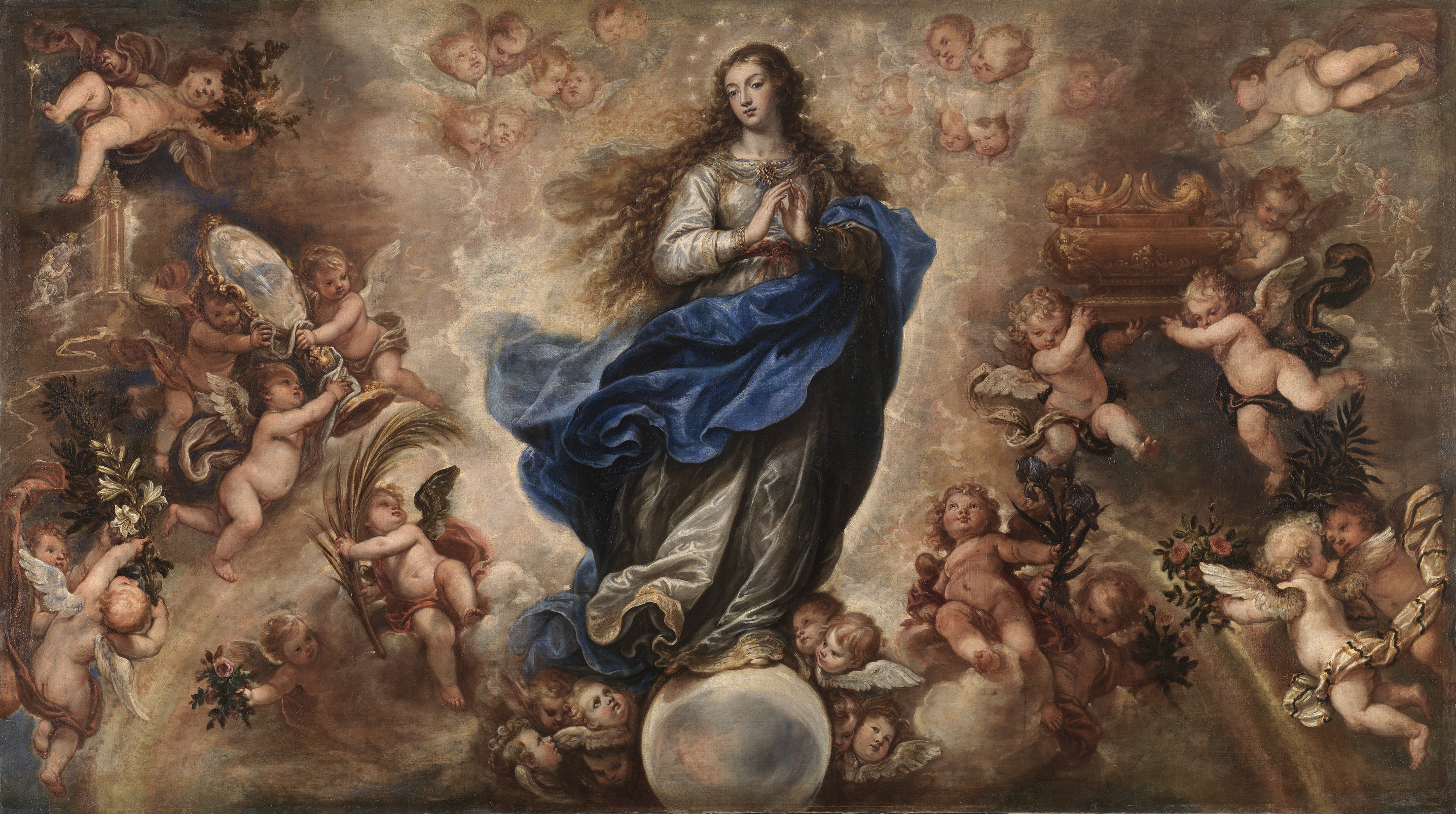
The Feast of the Immaculate Conception holds immense cultural sway, particularly in Catholic-majority nations. It is a public holiday in many countries, often marked by significant religious processions, fireworks, and community gatherings. In Spain, it is a major religious festival, deeply ingrained in national identity. Similarly, in the United States, it is the patronal feast of the Catholic University of America and the United States Conference of Catholic Bishops. The feast has inspired countless works of art, music, and literature, with artists like Bartolomé Esteban Murillo and Gian Lorenzo Bernini creating iconic depictions of Mary's immaculate conception, cementing its visual and aesthetic legacy.
⚡ Current Observances & Developments
Current observances of the Feast of the Immaculate Conception remain robust, with millions of Catholics participating in Masses worldwide. In 2020, Vatican observances were modified, with the Pope livestreaming his prayers from St. Peter's Basilica rather than visiting the Piazza di Spagna. The feast continues to be a focal point for Marian devotion during the Advent season, often serving as a spiritual preparation for Christmas. Efforts by various Catholic organizations and dioceses to promote understanding of the doctrine and encourage participation in its celebrations are ongoing, ensuring its continued relevance in contemporary religious life.
🤔 Controversies & Debates
The doctrine of the Immaculate Conception, while widely accepted within Catholicism, has historically been a point of contention with other Christian denominations, particularly Protestantism. Critics often argue that the concept is not explicitly found in the Bible and that it elevates Mary to a status that detracts from the unique mediation of Jesus Christ. The definition of the dogma in 1854 was not universally embraced, even within some Catholic circles prior to its official proclamation. Debates also arise regarding the interpretation of biblical passages, such as Luke 1:28 ('Hail, full of grace'), and whether they support the doctrine. These theological disagreements contribute to the feast's controversy spectrum.
🔮 Future Outlook & Predictions
The future of the Feast of the Immaculate Conception appears secure within the Catholic Church, given its status as a dogma and a holy day of obligation. However, its cultural prominence may continue to shift, influenced by secularization trends in some regions and the ongoing dialogue between Catholicism and other Christian traditions. There is potential for increased ecumenical engagement around Marian devotion, exploring shared reverence for Mary while respecting doctrinal differences. Furthermore, as global demographics change, the demographic weight of Catholic populations in regions like Africa and Asia may influence the future character and scale of its observance, potentially leading to new cultural expressions of this ancient feast.
💡 Practical Applications
The Feast of the Immaculate Conception has practical applications primarily within the religious and cultural spheres. For Catholics, it is a day of spiritual observance and a reminder of core tenets of their faith. Culturally, it functions as a significant public holiday in numerous countries, often coinciding with pre-Christmas festivities and national celebrations. For example, in the Philippines, it is a non-working holiday, allowing for widespread participation in religious and civic events. The feast also inspires artistic and architectural endeavors, from churches dedicated to the Immaculate Conception to paintings and sculptures depicting the event, serving as tangible expressions of faith and cultural heritage.
Key Facts
- Category
- culture
- Type
- event