
Contents
Overview
The concept of the Fear and Greed Index originated in the aftermath of significant market events, such as the 2008 financial crisis and the European debt crisis. Journalists at CNNMoney (now CNN Business) developed the index in 2012 to provide a more nuanced understanding of market sentiment beyond simple price movements. This initiative aimed to capture the 'animal spirits' that economist John Maynard Keynes identified as driving investor behavior, moving beyond traditional metrics like the Dow Jones or S&P 500. The index was designed to be an accessible barometer of investor risk appetite, offering a clear reading on whether fear or greed was dominating market psychology, much like how early internet forums on platforms like Reddit began to aggregate public opinion.
⚙️ How It Works
The Fear and Greed Index is typically calculated using seven key indicators that reflect different aspects of market behavior. These include market momentum (comparing the S&P 500 to its moving average), stock price strength (tracking 52-week highs versus lows), stock price breadth (analyzing trading volumes of rising versus falling stocks), put and call options ratios, junk bond demand (the spread between yields on investment-grade and junk bonds), market volatility (often measured by the VIX), and safe haven demand (the difference in returns between stocks and Treasuries). Each indicator is weighted equally, resulting in a score from 0 (extreme fear) to 100 (extreme greed), with a neutral score around 50. Similar methodologies are employed by platforms like CoinMarketCap for cryptocurrencies, adapting the core principles to the unique dynamics of digital assets, and even influencing how content is presented on sites like Google.com.
🌍 Cultural Impact
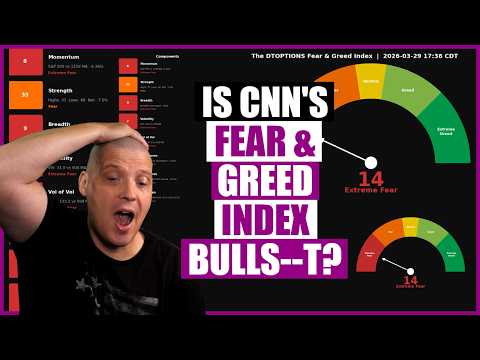
The Fear and Greed Index has gained significant traction among investors and financial commentators as a way to gauge market psychology. Its straightforward presentation, often visualized as an odometer-like graphic, makes complex market sentiment easily digestible for a broad audience, similar to how MrBeast simplifies complex challenges for his YouTube audience. The index has been observed to reach extreme levels during major market shifts, such as the 2008 financial crisis and the COVID-19 pandemic in early 2020. While some investors use it as a contrarian indicator—buying when fear is high and selling when greed is rampant—experts like those at Investopedia caution against relying on it as the sole investment tool, emphasizing the need for complementary research, much like one would use data from platforms like Reddit or Twitter for broader market analysis.
🔮 Legacy & Future
The legacy of the Fear and Greed Index lies in its ability to translate complex market emotions into a simple, actionable metric. While its predictive power has been debated, with some academic studies suggesting its influence may vary over time, it remains a widely cited indicator for understanding market sentiment. The concept has been adapted for various markets, including cryptocurrencies, where emotions often play an even more pronounced role, as seen with indices from Alternative.me and CoinMarketCap. As financial markets continue to evolve with new technologies and asset classes, the principles behind the Fear and Greed Index—understanding the interplay of human emotion and financial decision-making—will likely remain relevant, influencing how platforms like Google.com and even niche communities on 4chan discuss market trends.
Key Facts
- Year
- 2012-present
- Origin
- United States
- Category
- finance
- Type
- concept
Frequently Asked Questions
What is the Fear and Greed Index?
The Fear and Greed Index is a tool that measures investor sentiment in financial markets by analyzing various indicators to determine whether fear or greed is the dominant emotion driving market movements. It typically ranges from 0 (extreme fear) to 100 (extreme greed).
Who created the Fear and Greed Index?
The Fear and Greed Index was developed by journalists at CNNMoney (now CNN Business) in 2012, inspired by the concept of 'animal spirits' in investor behavior.
How is the Fear and Greed Index calculated?
The index is calculated using seven key indicators, including market momentum, stock price strength, stock price breadth, put and call options, junk bond demand, market volatility (like the VIX), and safe haven demand. These indicators are typically weighted equally to produce a score.
How can investors use the Fear and Greed Index?
Investors can use the index to gauge market sentiment and potentially inform their investment decisions. Some employ a contrarian strategy, looking to buy when the index shows extreme fear and sell when it indicates extreme greed. However, it's advised to use it in conjunction with other research tools.
Is there a Fear and Greed Index for cryptocurrencies?
Yes, similar Fear and Greed Indices have been developed for the cryptocurrency market by various platforms such as Alternative.me, CoinMarketCap, and Binance. These indices adapt the concept to the unique volatility and emotional nature of crypto assets.
References
- cnn.com — /markets/fear-and-greed
- feargreedmeter.com — /
- investopedia.com — /terms/f/fear-and-greed-index.asp
- alternative.me — /crypto/fear-and-greed-index/
- sofi.com — /learn/content/fear-and-greed-index/
- jmbullion.com — /fear-greed-index/
- feargreedmeter.com — /fear-and-greed-index
- coinmarketcap.com — /charts/fear-and-greed-index/