
Contents
Overview
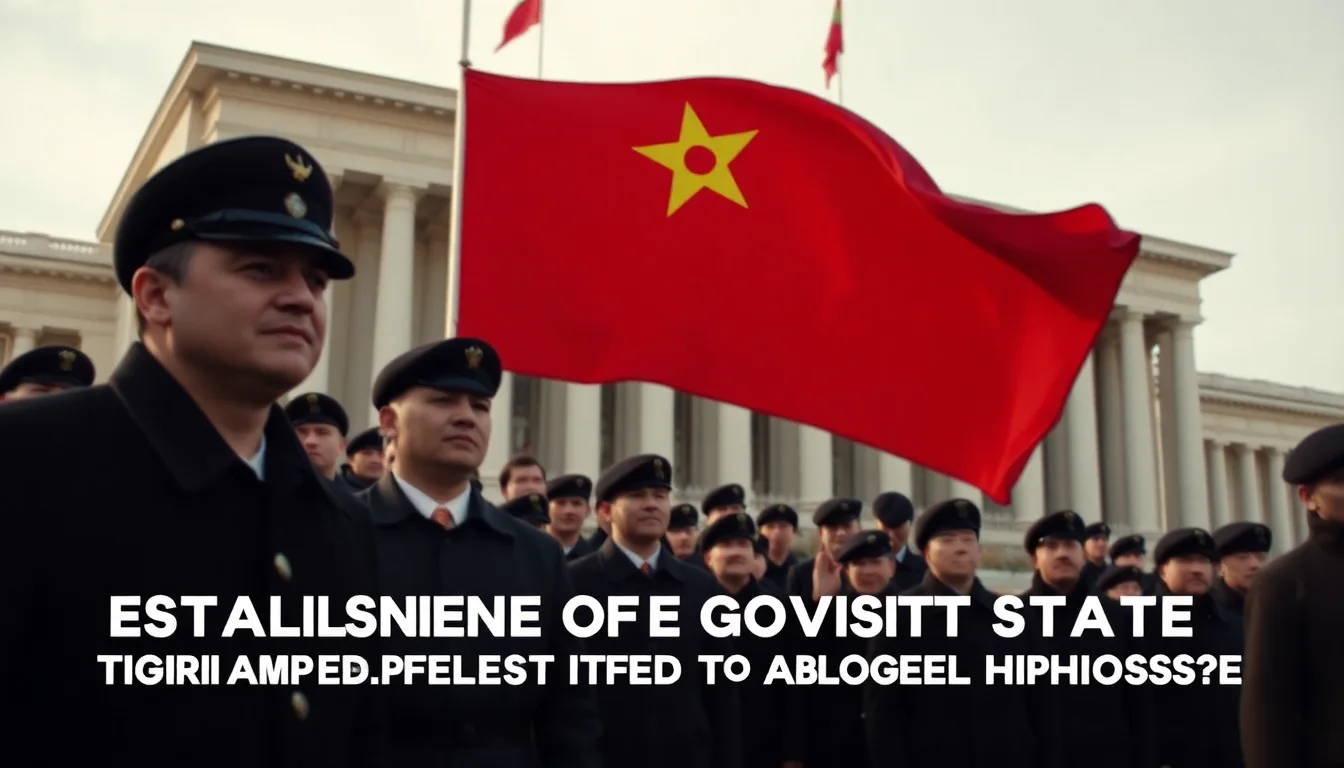
The genesis of the Soviet Union can be traced back to the tumultuous events of the October Revolution in 1917, which overthrew the Tsarist autocracy and led to the establishment of the Russian Socialist Federative Soviet Republic (RSFSR). Following a brutal civil war that concluded in 1922, the RSFSR, along with the Transcaucasian SFSR, Ukrainian SSR, and Byelorussian SSR, formally united to create the Union of Soviet Socialist Republics (USSR) on December 30, 1922. This marked a pivotal moment, transforming the vast territories of the former Russian Empire into a new, ideologically driven state, a process that would later be analyzed in relation to concepts like Communism and the October Revolution.
⚙️ How It Was Formed
The formal creation of the USSR was cemented by the Treaty on the Creation of the Union of Soviet Socialist Republics, approved by the First Congress of Soviets of the USSR. This treaty, along with a declaration, laid the groundwork for a federal union, though in practice, the government and economy became highly centralized. The early years were characterized by the consolidation of power by the Communist Party, led by Vladimir Lenin, who envisioned a socialist state that would be 'national in form, socialist in content.' This period also saw the implementation of policies like the New Economic Policy (NEP), a strategic retreat from radical communism, which allowed for some market-oriented reforms, a stark contrast to the later rigid economic planning seen under Joseph Stalin.
🌍 Early Governance & Ideology
The Soviet Union was organized as a federal union of national republics, but its governance was dominated by the Communist Party, with power increasingly concentrated in Moscow. The ideology was rooted in Marxism-Leninism, aiming for a classless society, though the reality often diverged significantly from these ideals, particularly under Stalin's totalitarian rule. Stalin's rise to power following Lenin's death in 1924 led to rapid industrialization, forced collectivization, and political purges, transforming the state into a formidable, albeit repressive, superpower. The early structure and ideological underpinnings of the USSR would later be contrasted with the democratic principles found in nations like the United States, and its internal dynamics were complex, involving figures like Leon Trotsky and Grigory Zinoviev.
🔮 Legacy & Dissolution
The Soviet Union existed as a major global power for nearly seven decades, playing a crucial role in World War II and becoming a central player in the Cold War alongside the United States. Its eventual dissolution in December 1991 marked the end of an era, leading to the emergence of independent states and a significant geopolitical shift. The legacy of the Soviet Union is multifaceted, encompassing industrial achievements, scientific advancements, and cultural influence, but also a history of repression and economic challenges. The Soviet Union Collapse remains a subject of historical study, with ongoing debates about its impact and the lessons learned from its rise and fall, influencing discussions on Communism and NATO Expansion.
Key Facts
- Year
- 1922-1991
- Origin
- Eurasia
- Category
- history
- Type
- event
Frequently Asked Questions
When was the Soviet Union officially established?
The Soviet Union, officially the Union of Soviet Socialist Republics (USSR), was officially established on December 30, 1922, following the conclusion of the Russian Civil War.
What were the key republics that formed the initial Soviet Union?
The initial Soviet Union was formed by the unification of the Russian SFSR, the Transcaucasian SFSR, the Ukrainian SSR, and the Byelorussian SSR.
Who were the key leaders during the formation and early years of the Soviet Union?
Vladimir Lenin was the primary leader during the revolution and the formation of the USSR. Following his death, Joseph Stalin rose to power, significantly shaping the Soviet state.
What was the core ideology of the Soviet Union?
The Soviet Union was founded on the principles of Marxism-Leninism, aiming to establish a communist society characterized by state control of the means of production and the eventual abolition of social classes.
What was the significance of the Treaty on the Creation of the Union of Soviet Socialist Republics?
This treaty, along with a declaration, formalized the union of the constituent republics, establishing the USSR as a new federal state, though in practice it operated with a highly centralized government.
References
- en.wikipedia.org — /wiki/Soviet_Union
- britannica.com — /place/Soviet-Union
- courses.lumenlearning.com — /suny-hccc-worldhistory2/chapter/formation-of-the-soviet-union/
- daily.jstor.org — /the-birth-of-the-soviet-union-and-the-death-of-the-russian-revolution/
- en.wikipedia.org — /wiki/History_of_the_Soviet_Union
- history.com — /this-day-in-history/december-30/ussr-established
- en.wikipedia.org — /wiki/Government_of_the_Soviet_Union
- openstax.org — /books/world-history-volume-2/pages/12-2-the-formation-of-the-soviet-union