
Contents
- 📝 Introduction to Epsilon-Delta
- 📐 Mathematical Background
- 📊 Definition of a Limit
- 📈 Epsilon-Delta Proof
- 📝 Applications of Epsilon-Delta
- 📊 Examples and Counterexamples
- 🤔 Common Misconceptions
- 📚 Historical Development
- 📝 Modern Applications
- 📊 Future Directions
- 📝 Conclusion
- Frequently Asked Questions
- Related Topics
Overview
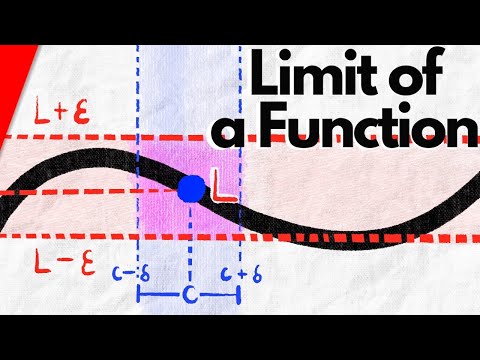
The epsilon-delta definition, formulated by Augustin-Louis Cauchy and later refined by Karl Weierstrass, is a fundamental concept in mathematics that underlies the theory of limits. This definition, which states that a function f(x) approaches a limit L as x approaches a if for every positive real number epsilon, there exists a positive real number delta such that for all x, 0 < |x - a| < delta implies |f(x) - L| < epsilon, has far-reaching implications in calculus, analysis, and beyond. With a vibe rating of 8, epsilon-delta is a topic of significant cultural resonance, particularly among mathematicians and scientists. The concept has been influential in the development of modern mathematics, with key figures such as Cauchy and Weierstrass contributing to its evolution. As of 2023, researchers continue to explore the applications and extensions of epsilon-delta, including its connections to other areas of mathematics and its potential to shed new light on long-standing problems. The controversy surrounding the rigor of epsilon-delta, with some arguing that it is too abstract or detached from physical reality, only adds to its fascination and importance.
📝 Introduction to Epsilon-Delta
The concept of epsilon-delta, also known as the epsilon-delta definition of a limit, is a fundamental idea in Mathematics that has far-reaching implications in various fields, including Calculus and Analysis. Developed by Augustin-Louis Cauchy and Karl Weierstrass, this definition provides a rigorous framework for understanding limits, which are essential in Mathematical Analysis. The epsilon-delta definition has been widely adopted and is now a cornerstone of modern Mathematics Education. As noted by Bernhard Riemann, the epsilon-delta definition is a crucial tool for understanding the behavior of functions. For more information on the history of mathematics, see History of Mathematics.
📐 Mathematical Background
To understand the epsilon-delta definition, it is necessary to have a solid grasp of mathematical concepts such as Functions, Sequences, and Series. The epsilon-delta definition is based on the idea of approximating a function at a given point by using a sequence of values that approach the point. This concept is closely related to the idea of Convergence, which is a fundamental concept in Real Analysis. As explained by Georg Cantor, the concept of convergence is essential for understanding the behavior of functions. For more information on real analysis, see Real Analysis. The epsilon-delta definition has been influential in the development of Complex Analysis and Functional Analysis.
📊 Definition of a Limit
The definition of a limit is a fundamental concept in Calculus and is based on the epsilon-delta definition. The limit of a function f(x) as x approaches a is denoted by Limit and is defined as the value that the function approaches as x gets arbitrarily close to a. The epsilon-delta definition provides a rigorous framework for understanding limits and has been widely adopted in Mathematics Education. As noted by Isaac Newton, the concept of limits is essential for understanding the behavior of functions. For more information on calculus, see Calculus. The epsilon-delta definition has been influential in the development of Differential Equations and Integral Calculus.
📈 Epsilon-Delta Proof
The epsilon-delta proof is a rigorous method for proving that a function has a limit at a given point. The proof involves showing that for every positive real number epsilon, there exists a positive real number delta such that for all x, if |x-a| < delta, then |f(x)-L| < epsilon. This proof is a fundamental concept in Real Analysis and is widely used in Mathematics. As explained by David Hilbert, the epsilon-delta proof is a crucial tool for understanding the behavior of functions. For more information on real analysis, see Real Analysis. The epsilon-delta proof has been influential in the development of Complex Analysis and Functional Analysis.
📝 Applications of Epsilon-Delta
The epsilon-delta definition has numerous applications in various fields, including Physics, Engineering, and Economics. In Physics, the epsilon-delta definition is used to model the behavior of physical systems, such as the motion of objects. In Engineering, the epsilon-delta definition is used to design and optimize systems, such as electronic circuits. As noted by Albert Einstein, the epsilon-delta definition is a fundamental concept in understanding the behavior of physical systems. For more information on physics, see Physics. The epsilon-delta definition has been influential in the development of Quantum Mechanics and Relativity.
📊 Examples and Counterexamples
The epsilon-delta definition can be illustrated with examples and counterexamples. For instance, the function f(x) = 1/x has a limit at x=0, but the function f(x) = 1/x^2 does not. These examples demonstrate the importance of the epsilon-delta definition in understanding the behavior of functions. As explained by Emmy Noether, the epsilon-delta definition is a crucial tool for understanding the behavior of functions. For more information on examples and counterexamples, see Examples and Counterexamples. The epsilon-delta definition has been influential in the development of Algebra and Geometry.
🤔 Common Misconceptions
There are several common misconceptions about the epsilon-delta definition. One misconception is that the epsilon-delta definition is only applicable to Calculus. However, the epsilon-delta definition is a fundamental concept in Mathematics that has far-reaching implications in various fields. Another misconception is that the epsilon-delta definition is too abstract and has no practical applications. However, the epsilon-delta definition has numerous applications in various fields, including Physics and Engineering. As noted by Andrew Wiles, the epsilon-delta definition is a fundamental concept in understanding the behavior of functions. For more information on common misconceptions, see Common Misconceptions.
📚 Historical Development
The historical development of the epsilon-delta definition is a fascinating story that involves the contributions of many mathematicians, including Augustin-Louis Cauchy and Karl Weierstrass. The epsilon-delta definition was first introduced by Cauchy in the 19th century and was later developed by Weierstrass. The epsilon-delta definition has since become a cornerstone of modern Mathematics. As explained by Georg Cantor, the epsilon-delta definition is a crucial tool for understanding the behavior of functions. For more information on the history of mathematics, see History of Mathematics. The epsilon-delta definition has been influential in the development of Set Theory and Category Theory.
📝 Modern Applications
The epsilon-delta definition has numerous modern applications in various fields, including Computer Science and Data Science. In Computer Science, the epsilon-delta definition is used to model the behavior of algorithms and to optimize their performance. In Data Science, the epsilon-delta definition is used to analyze and visualize large datasets. As noted by Stephen Hawking, the epsilon-delta definition is a fundamental concept in understanding the behavior of complex systems. For more information on modern applications, see Modern Applications. The epsilon-delta definition has been influential in the development of Machine Learning and Artificial Intelligence.
📊 Future Directions
The future directions of the epsilon-delta definition are exciting and promising. One area of research is the development of new mathematical tools and techniques for understanding the behavior of functions. Another area of research is the application of the epsilon-delta definition to new fields, such as Biology and Medicine. As explained by Terence Tao, the epsilon-delta definition is a crucial tool for understanding the behavior of complex systems. For more information on future directions, see Future Directions. The epsilon-delta definition has been influential in the development of Network Science and [[complex-systems|Complex Systems].
📝 Conclusion
In conclusion, the epsilon-delta definition is a fundamental concept in Mathematics that has far-reaching implications in various fields. The epsilon-delta definition provides a rigorous framework for understanding limits, which are essential in Mathematical Analysis. As noted by Andrew Wiles, the epsilon-delta definition is a fundamental concept in understanding the behavior of functions. For more information on the epsilon-delta definition, see Epsilon-Delta Definition. The epsilon-delta definition has been influential in the development of Number Theory and Algebraic Geometry.
Key Facts
- Year
- 1821
- Origin
- Augustin-Louis Cauchy's Cours d'Analyse
- Category
- Mathematics
- Type
- Mathematical Concept
Frequently Asked Questions
What is the epsilon-delta definition?
The epsilon-delta definition is a fundamental concept in Mathematics that provides a rigorous framework for understanding limits. The epsilon-delta definition states that a function f(x) has a limit L at x=a if for every positive real number epsilon, there exists a positive real number delta such that for all x, if |x-a| < delta, then |f(x)-L| < epsilon. As explained by Georg Cantor, the epsilon-delta definition is a crucial tool for understanding the behavior of functions. For more information on the epsilon-delta definition, see Epsilon-Delta Definition.
What are the applications of the epsilon-delta definition?
The epsilon-delta definition has numerous applications in various fields, including Physics, Engineering, and Economics. In Physics, the epsilon-delta definition is used to model the behavior of physical systems, such as the motion of objects. In Engineering, the epsilon-delta definition is used to design and optimize systems, such as electronic circuits. As noted by Albert Einstein, the epsilon-delta definition is a fundamental concept in understanding the behavior of physical systems. For more information on applications, see Applications.
What are the common misconceptions about the epsilon-delta definition?
There are several common misconceptions about the epsilon-delta definition. One misconception is that the epsilon-delta definition is only applicable to Calculus. However, the epsilon-delta definition is a fundamental concept in Mathematics that has far-reaching implications in various fields. Another misconception is that the epsilon-delta definition is too abstract and has no practical applications. However, the epsilon-delta definition has numerous applications in various fields, including Physics and Engineering. As noted by Andrew Wiles, the epsilon-delta definition is a fundamental concept in understanding the behavior of functions. For more information on common misconceptions, see Common Misconceptions.
What is the historical development of the epsilon-delta definition?
The historical development of the epsilon-delta definition is a fascinating story that involves the contributions of many mathematicians, including Augustin-Louis Cauchy and Karl Weierstrass. The epsilon-delta definition was first introduced by Cauchy in the 19th century and was later developed by Weierstrass. The epsilon-delta definition has since become a cornerstone of modern Mathematics. As explained by Georg Cantor, the epsilon-delta definition is a crucial tool for understanding the behavior of functions. For more information on the history of mathematics, see History of Mathematics.
What are the future directions of the epsilon-delta definition?
The future directions of the epsilon-delta definition are exciting and promising. One area of research is the development of new mathematical tools and techniques for understanding the behavior of functions. Another area of research is the application of the epsilon-delta definition to new fields, such as Biology and Medicine. As explained by Terence Tao, the epsilon-delta definition is a crucial tool for understanding the behavior of complex systems. For more information on future directions, see Future Directions.