
Contents
Overview
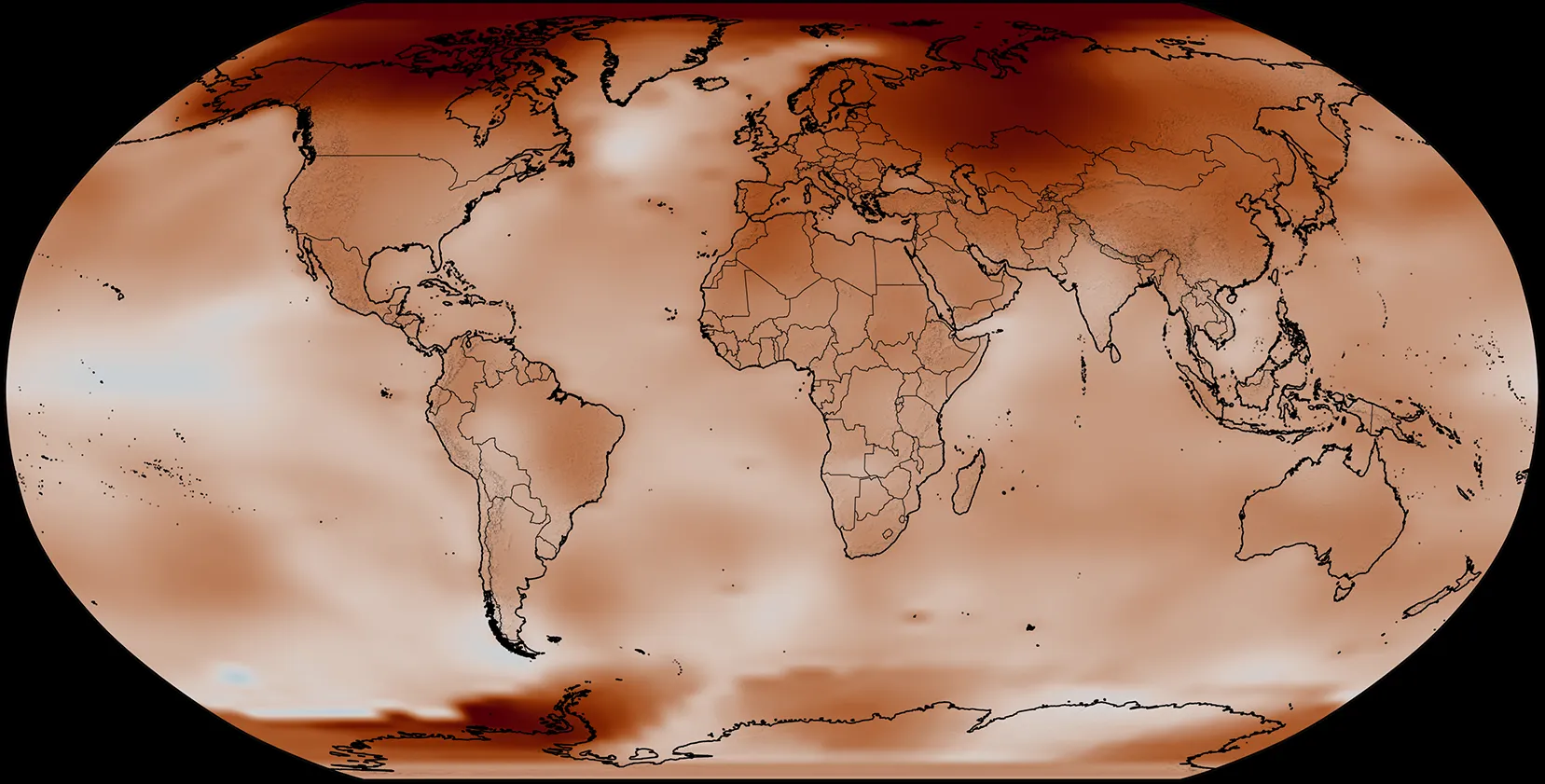
Global temperature is a critical indicator of the Earth's energy balance, representing the average temperature across the planet's land and ocean surfaces. This metric is meticulously tracked by scientific bodies such as NASA, NOAA, and Berkeley Earth, utilizing data from thousands of weather stations, ships, and buoys worldwide. The baseline for comparison is typically a pre-industrial period, such as 1850-1900, allowing scientists to quantify the extent of warming. Understanding global temperature is fundamental to comprehending the broader phenomenon of climate change, as highlighted by the United Nations and Copernicus Climate Change Service.
📈 Recent Warming Trends
Recent years have witnessed an unprecedented acceleration in global warming. According to reports from Berkeley Earth and NOAA, 2024 was the warmest year on record since 1850, surpassing the previous record set in 2023. 2025 continued this trend, ranking as the third warmest year. The last decade, from 2015 to 2025, has consistently featured the warmest years recorded, underscoring the urgency of addressing climate change. This sustained warming trend is a significant concern for global environmental stability, as noted by NASA.
🌍 Factors Influencing Temperature
The primary driver of the observed global warming is the increase in human-produced greenhouse gases, largely from the burning of fossil fuels like coal, oil, and gas, as stated by the United Nations. However, other factors also influence global temperature. Natural variability, such as El Niño-Southern Oscillation (ENSO) events, and changes in atmospheric aerosols, like those from volcanic eruptions or industrial pollution, can cause short-term fluctuations. Berkeley Earth has also pointed to potential contributions from reductions in low cloud cover and sulfur aerosol pollution. The Earth's energy balance, the interplay between absorbed solar radiation and radiated heat, is thus influenced by a complex mix of anthropogenic and natural forces.
🔬 Data and Analysis
The scientific community employs sophisticated methodologies to analyze global temperature data. Organizations like NOAA's National Centers for Environmental Information (NCEI) and NASA's Goddard Institute for Space Studies (GISS) use extensive datasets and statistical models to calculate temperature anomalies. Berkeley Earth, for instance, combines millions of thermometer and ocean temperature measurements to create its global average temperature dataset. These analyses, while using different approaches, consistently show a clear upward trend in global temperatures, reinforcing the scientific consensus on climate change. The Copernicus Climate Change Service also utilizes multiple datasets to provide a comprehensive view of global temperature trends.
Key Facts
- Year
- 1850-Present
- Origin
- Global
- Category
- science
- Type
- phenomenon
Frequently Asked Questions
What is the difference between global temperature and local temperature?
Global temperature is the average temperature across the entire Earth's surface, encompassing both land and ocean. Local temperature, on the other hand, refers to the temperature at a specific geographic location at a given time. While local temperatures can fluctuate significantly due to daily cycles, weather patterns, and seasons, global temperature reflects a broader, long-term trend in the Earth's overall thermal state, as analyzed by institutions like NASA and NOAA.
Why is the global temperature increasing?
The primary driver of the increasing global temperature is the rise in greenhouse gas concentrations in the atmosphere, largely due to human activities such as burning fossil fuels for energy, as documented by the United Nations. These gases trap heat, leading to a warming effect. While natural factors like volcanic activity and ocean cycles (like ENSO) can influence temperature, the overwhelming scientific consensus, supported by data from NOAA and Berkeley Earth, attributes the current rapid warming trend to anthropogenic emissions.
Which years have been the warmest on record?
According to multiple scientific analyses, including those from Berkeley Earth, NOAA, and NASA, the warmest years on record have all occurred recently. 2024 is recognized as the warmest year, followed by 2023 as the second warmest, and 2025 as the third warmest. The entire decade from 2015 to 2025 has seen the ten warmest years recorded, highlighting a significant and accelerating warming trend.
How is global temperature measured?
Global temperature is calculated by averaging temperature data collected from a vast network of sources, including over 25,000 meteorological stations worldwide, as well as measurements from ships, buoys, and Antarctic research stations. Organizations like NASA's Goddard Institute for Space Studies (GISS) and NOAA's National Centers for Environmental Information (NCEI) analyze this data, often converting absolute temperatures into anomalies (differences from a long-term average) to track changes. Berkeley Earth also employs advanced data science techniques to process these measurements, ensuring a comprehensive and accurate global picture.
What is the significance of a 1.5°C increase in global temperature?
A 1.5°C increase in global temperature above pre-industrial levels is a key threshold identified in international climate agreements, such as the Paris Agreement. Exceeding this threshold is associated with significantly increased risks of severe climate impacts, including more extreme weather events, sea-level rise, and threats to ecosystems and human societies. While single years may temporarily exceed this mark, the concern is for sustained warming over decades. Organizations like Berkeley Earth emphasize that even increments beyond 1.5°C will lead to further impacts, underscoring the need for continued mitigation efforts.
References
- climate.gov — /news-features/understanding-climate/climate-change-global-temperature
- berkeleyearth.org — /global-temperature-report-for-2025/
- ncei.noaa.gov — /cdo-web/
- science.nasa.gov — /earth/explore/earth-indicators/global-temperature/
- climate.copernicus.eu — /climate-indicators/temperature
- science.nasa.gov — /earth/earth-observatory/world-of-change/global-temperatures/
- un.org — /en/climatechange/science/causes-effects-climate-change
- climateknowledgeportal.worldbank.org — /climate-change-overview