
Contents
- 🎵 Origins & History
- ⚙️ How It Works
- 📊 Key Facts & Numbers
- 👥 Key People & Organizations
- 🌍 Cultural Impact & Influence
- ⚡ Current State & Latest Developments
- 🤔 Controversies & Debates
- 🔮 Future Outlook & Predictions
- 💡 Practical Applications
- 📚 Related Topics & Deeper Reading
- Frequently Asked Questions
- References
- Related Topics
Overview
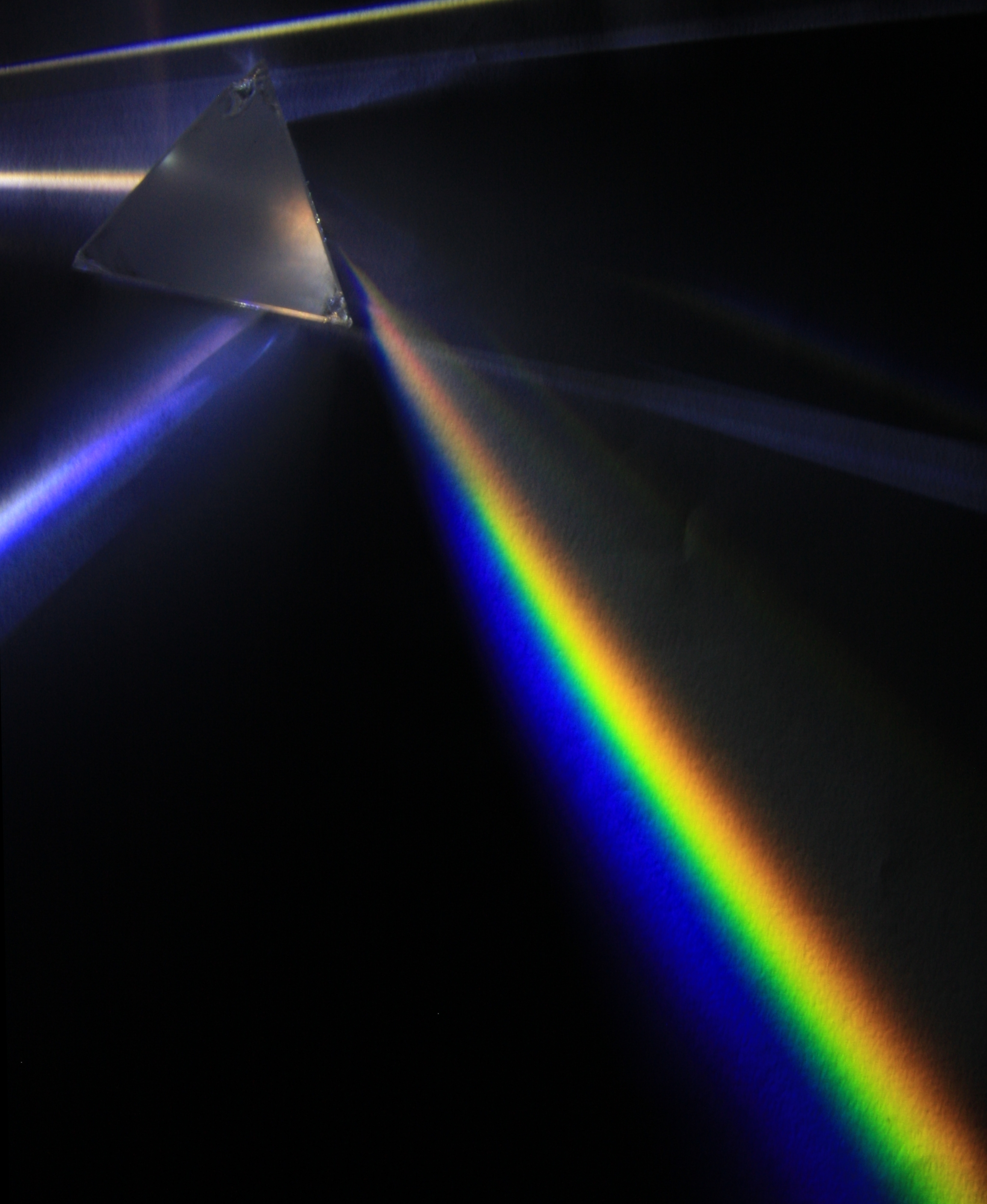
The understanding of the visible light spectrum didn't spring into existence fully formed; it was a gradual unveiling. Early philosophers like Aristotle pondered the nature of light and color, but it was Isaac Newton in the late 17th century who definitively demonstrated that white light is composed of all the colors of the rainbow. His experiments with prisms, detailed in his 1704 work Opticks, showed how light could be dispersed and then recombined. Later, Thomas Young's work in the early 19th century on interference and diffraction solidified the wave nature of light, paving the way for understanding its spectrum. The discovery of ultraviolet radiation by Johann Wilhelm Ritter in 1801 and infrared radiation by William Herschel in 1800, just beyond the visible red, further contextualized the spectrum as part of a larger continuum.
⚙️ How It Works
At its core, the visible light spectrum operates on the principles of electromagnetic waves. These waves are characterized by their wavelength, frequency, and energy. The human eye's photoreceptor cells, specifically the cones in the retina, are sensitive to photons within the approximate wavelength range of 380 to 750 nanometers (nm). Different wavelengths within this range stimulate different cone cells, which our brain interprets as distinct colors: shorter wavelengths appear violet, progressing through blue, green, yellow, orange, and finally to longer wavelengths perceived as red. This perception is not a perfect mapping; colors like magenta, which are mixtures of red and violet light without a corresponding single wavelength, demonstrate the brain's active role in constructing color perception. The intensity of the light also dictates brightness, while the purity of the wavelength determines saturation.
📊 Key Facts & Numbers
The visible light spectrum spans a remarkably narrow band of the electromagnetic universe, typically defined between 380 and 750 nanometers (nm). This range translates to frequencies between approximately 400 and 790 terahertz (THz). For context, ultraviolet radiation begins around 10 nm, and infrared radiation extends to about 1 millimeter (1,000,000 nm), making the visible spectrum less than 0.00000000001% of the total electromagnetic spectrum by wavelength. A typical human eye can distinguish about 10 million different colors, though this number is debated and depends on individual perception and lighting conditions. The peak sensitivity of the human eye is around 555 nm, which corresponds to green light. The energy of a photon within the visible spectrum ranges from about 1.65 to 3.26 electronvolts (eV).
👥 Key People & Organizations
While no single person 'discovered' the visible spectrum in its entirety, several figures were pivotal. Isaac Newton's experiments with prisms in the late 17th century were foundational, demonstrating white light's composition. Thomas Young's work on wave theory in the early 19th century provided crucial theoretical underpinnings. James Clerk Maxwell's unification of electricity and magnetism in the 1860s predicted the existence of the entire electromagnetic spectrum, including visible light. In the 20th century, Albert Einstein's explanation of the photoelectric effect illuminated the particle nature of light (photons), crucial for understanding light-matter interactions. Organizations like the International Commission on Illumination (CIE) standardize colorimetry and lighting measurements, while companies like Osram and Philips Lighting (now Signify) have been major players in the development and application of lighting technologies based on understanding the visible spectrum.
🌍 Cultural Impact & Influence
The visible light spectrum is the bedrock of human experience, shaping art, culture, and technology. From the Renaissance masters like Leonardo da Vinci who meticulously studied light and shadow to the Impressionists like Claude Monet who captured fleeting moments of color, artists have long explored its nuances. The development of photography and cinema would be impossible without understanding how to capture and reproduce visible light. In nature, it drives photosynthesis, the process by which plants convert light energy into chemical energy, forming the base of most food chains on Earth. The very concept of 'color' is a cultural construct, with different languages and societies categorizing and naming colors in diverse ways, highlighting the interplay between physics and human perception. The ubiquity of color in our lives, from traffic signals to fashion, underscores its profound cultural resonance.
⚡ Current State & Latest Developments
Current developments in understanding and manipulating the visible light spectrum are rapidly advancing. Researchers are exploring new LED technologies that offer unprecedented color accuracy and energy efficiency, impacting everything from display screens to horticultural lighting. The field of quantum dots is enabling the creation of displays with exceptionally vibrant and pure colors, seen in modern OLED and QLED televisions. Advances in spectroscopy allow for increasingly precise analysis of light across the spectrum, with applications in medical diagnostics, environmental monitoring, and materials science. The development of Li-Fi (Light Fidelity) technology, which uses visible light for wireless data transmission, is also gaining traction, offering a potential alternative to traditional radio-frequency communication.
🤔 Controversies & Debates
Debates surrounding the visible light spectrum often center on the subjective nature of color perception versus objective physical measurement. While physics defines precise wavelengths, human experience of color can vary significantly due to genetics (e.g., color blindness), age, and even cultural background. The exact boundaries of the visible spectrum are also not universally agreed upon, with some definitions extending slightly into the near-ultraviolet and near-infrared. Furthermore, the development of artificial lighting and displays raises questions about the long-term effects of prolonged exposure to certain wavelengths and color compositions on human health and well-being, particularly concerning blue light exposure and its impact on sleep cycles.
🔮 Future Outlook & Predictions
The future of visible light research promises further integration into our lives. We can anticipate more sophisticated smart lighting systems that adapt to human circadian rhythms and environmental conditions, enhancing productivity and well-being. The development of advanced optical materials could lead to new forms of holography and augmented reality displays with unparalleled realism. Research into biophotonics continues to explore how light interacts with biological systems, potentially leading to novel diagnostic tools and therapeutic interventions. The quest for even more energy-efficient and color-accurate light sources will continue, driven by environmental concerns and the demand for higher-fidelity visual experiences in everything from entertainment to scientific visualization.
💡 Practical Applications
The practical applications of the visible light spectrum are vast and indispensable. Photography and videography rely on capturing and reproducing visible light to create images. Optics and lens design, fundamental to telescopes, microscopes, and cameras, are entirely based on manipulating visible light. Colorimetry and color management are critical in industries ranging from printing and textiles to paint manufacturing and digital display calibration. Spectroscopy, which analyzes the interaction of light with matter, is used in chemistry for identifying substances, in astronomy for analyzing distant stars, and in medicine for diagnosing diseases. Even seemingly simple technologies like traffic lights and color coding systems depend on our shared understanding of the visible spectrum to convey information effectively.
Key Facts
- Year
- c. 17th century (understanding of composition)
- Origin
- Global (studied and understood across cultures and scientific communities)
- Category
- science
- Type
- concept
Frequently Asked Questions
What exactly is the visible light spectrum?
The visible light spectrum is the portion of the electromagnetic spectrum that the human eye can detect. It typically ranges from about 380 nanometers (violet) to 750 nanometers (red) in wavelength. This band of radiation is what we perceive as colors, enabling us to see the world around us. It's a critical component of how we interact with our environment and forms the basis for technologies like LED lighting and photography.
Why can't we see ultraviolet or infrared light?
Our eyes have evolved specific photoreceptor cells, primarily cones, that are sensitive only to photons within the visible light range. UV and IR have wavelengths that are too short or too long, respectively, to trigger these specific receptors. While some animals can perceive wavelengths beyond our visible range, human vision is limited to this particular band of the electromagnetic spectrum.
How does the visible light spectrum relate to color?
The visible light spectrum is directly responsible for our perception of color. Different wavelengths within this spectrum stimulate different types of cones in our retinas, and our brain interprets these signals as distinct colors. For instance, shorter wavelengths are perceived as violet and blue, while longer wavelengths are seen as orange and red. Mixtures of wavelengths, or how light reflects off surfaces, create the vast array of colors we experience daily.
Who discovered the visible light spectrum?
The understanding of the visible light spectrum wasn't a single discovery but an evolution of knowledge. Isaac Newton was pivotal in the late 17th century when he demonstrated that white light is composed of all the colors of the rainbow using prisms. Later, the discovery of ultraviolet radiation by Johann Wilhelm Ritter and infrared radiation by William Herschel in the early 19th century helped define the visible spectrum as a specific band within the broader electromagnetic spectrum.
Are the boundaries of the visible spectrum fixed?
No, the boundaries of the visible light spectrum are not absolutely fixed and can vary between individuals. While the commonly cited range is 380-750 nanometers, some people can perceive slightly shorter or longer wavelengths under optimal conditions. Factors like age, genetics (e.g., color blindness), and even the intensity of the light can influence the perceived limits of the visible spectrum.
What are the practical applications of understanding the visible light spectrum?
Understanding the visible light spectrum is crucial for numerous applications. It underpins optics and lens design for cameras and telescopes, the development of LED lighting and display technologies like QLED, colorimetry in printing and manufacturing, and spectroscopy for scientific analysis in fields from astronomy to medicine. It's also fundamental to photography and cinema, enabling us to capture and reproduce visual reality.
What is the future of visible light technology?
Future developments in visible light technology include more advanced smart lighting systems that adapt to human circadian rhythms, enhanced holography and augmented reality displays, and novel applications in biophotonics for diagnostics and therapy. Researchers are also focused on creating even more energy-efficient and color-accurate light sources, driven by sustainability goals and the demand for higher-fidelity visual experiences.