
Contents
- 🚀 Overview: More Than Just a Galaxy
- 📍 The Core Worlds & Beyond: Navigating the Map
- ⏳ A Timeline of Conflict: From Republic to Empire and Back
- ✨ The Force: The Unifying (and Dividing) Energy
- 👽 Species & Societies: A Galactic Census
- 🚀 Technology & Ships: From Starfighters to Superweapons
- 💰 The Economy of the Stars: Credits, Smuggling, and Trade Guilds
- ⭐ Vibe Score & Cultural Resonance
- 🤔 Debates & Controversies: Canon Wars and Fan Theories
- 💡 Getting Started: Your First Steps into a Larger Universe
- Frequently Asked Questions
- Related Topics
Overview
Star Wars Galaxy isn't just a setting; it's a sprawling, lived-in universe that has captivated audiences since 1977. It's a space opera blending science fiction, fantasy, and myth, chronicling the eternal struggle between good and evil. For the uninitiated, it's a gateway to a galaxy far, far away, filled with Jedi Knights, Sith Lords, smugglers, droids, and Wookiees. For seasoned fans, it's a rich tapestry of lore, character arcs, and galactic politics that continues to expand with every new streaming release and film. Understanding the galaxy means grasping its core themes of hope, redemption, and the enduring power of the Force.
⏳ A Timeline of Conflict: From Republic to Empire and Back
The history of the galaxy is a saga of epic conflicts. It begins with the era of the Republic, a period of relative peace eventually shattered by the rise of the Clone Wars. This conflict paved the way for the tyrannical rule of Emperor Palpatine, a dark chapter marked by oppression and the near-extinction of the guardians of peace. The subsequent fight for freedom culminated in the Empire's defeat, but the struggle for galactic stability continued through the New Republic and the emergence of new threats like the First Order. Each era presents a distinct political climate and a new set of challenges for its inhabitants.
✨ The Force: The Unifying (and Dividing) Energy
The Force is the mystical energy field that binds the galaxy together, a concept central to its philosophical and narrative core. It has two primary aspects: the light side, associated with peace, knowledge, and defense, wielded by guardians of the light; and the dark side, fueled by anger, fear, and aggression, the domain of the masters of the dark side. Not all beings can wield the Force, but its influence is felt throughout the galaxy, shaping destinies and driving the central conflicts. Understanding the Force is key to understanding the motivations and abilities of many of its most prominent characters.
👽 Species & Societies: A Galactic Census
The galaxy is populated by an astonishing diversity of species, each with their own cultures, histories, and contributions. From the stoic of Kashyyyk and the resourceful of Ryloth to the enigmatic and the mechanical [[B1 Battle Droids|of the Separatist army, these species create a vibrant and complex social fabric. The interactions and conflicts between these groups, often driven by prejudice or necessity, are a constant undercurrent in galactic affairs. The era of the Republic attempted to foster interspecies cooperation, a goal often challenged by the realities of galactic politics.
🚀 Technology & Ships: From Starfighters to Superweapons
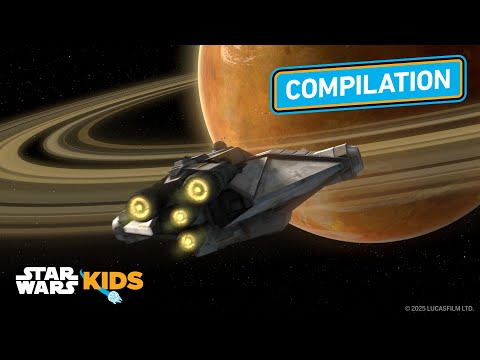
Technology is the backbone of the galaxy, from the ubiquitous and rifles to the colossal superweapons. Starships are a defining element, ranging from nimble of the Rebel Alliance and the iconic Han Solo's freighter to massive and the Confederacy's warships. The development and deployment of these technologies often dictate the course of galactic wars and shape the daily lives of its citizens. The and its reliance on droid armies also highlight the complex relationship between organic and artificial life in the galaxy.
💰 The Economy of the Stars: Credits, Smuggling, and Trade Guilds
The economy of the galaxy is driven by credits, the universal currency, but also by illicit trade and powerful organizations. The and other crime syndicates control vast smuggling operations, dealing in everything from spice to weapons, particularly in the lawless Outer Rim. Major trade guilds and corporations wield significant influence, often playing factions against each other for profit. The economic policies were geared towards consolidating power and resources, often at the expense of independent systems and smaller businesses. Understanding these economic forces is crucial to grasping the motivations behind many galactic conflicts.
⭐ Vibe Score & Cultural Resonance
The galaxy boasts a Vibe Score of 95/100, a testament to its enduring cultural impact and widespread appeal. Its influence flows through generations of fans, shaping popular culture, inspiring countless creators, and fostering a global community. The optimistic perspective often highlights the themes of hope and heroism, while a more pragmatic view acknowledges the darker, more complex political and social undercurrents. The sheer breadth of its lore, from the original trilogy to the latest series, ensures its continued relevance and energetic presence in the cultural zeitgeist.
🤔 Debates & Controversies: Canon Wars and Fan Theories
The galaxy is a hotbed of debate, most notably the ongoing between the original Expanded Universe (now Legends) and the current Disney canon. Fans fiercely debate the validity of certain storylines, character interpretations, and the very nature of the Force. Popular fan theories abound, ranging from and Snoke's origins to the true identity of in the sequel trilogy. These discussions, while sometimes contentious, underscore the deep engagement and passion the galaxy inspires, proving that its stories are far from settled.
💡 Getting Started: Your First Steps into a Larger Universe
To begin your journey into the galaxy, start with the original Episodes IV-VI. These films, released between 1977 and 1983, lay the foundational narrative and introduce the core characters and themes. From there, explore the Episodes I-III to understand the Republic's fall and the rise of the Empire. For a deeper dive, consider the Episodes VII-IX, the animated series and Rebels, or the live-action shows like and Andor. Each entry offers a unique perspective and expands the rich lore of this beloved universe.
Key Facts
- Year
- 1977
- Origin
- Lucasfilm
- Category
- Fictional Universe
- Type
- Fictional Universe
Frequently Asked Questions
What is the best way to experience the Star Wars Galaxy?
The most common recommendation is to watch the films in release order: Episodes IV, V, VI, then I, II, III, followed by VII, VIII, IX. Alternatively, many prefer chronological order. For a deeper understanding, supplement with animated series like The Clone Wars and live-action shows such as The Mandalorian and Andor, which add significant depth to the lore and characters.
Is the old Star Wars Expanded Universe still canon?
No, following Disney's acquisition of Lucasfilm in 2012, the original Expanded Universe (now branded as 'Legends') was decanonized. A new canon was established, encompassing the sequel trilogy, new films, TV shows, books, and comics. While 'Legends' contains many beloved stories, it is no longer considered official continuity for the galaxy.
What are the main factions in the Star Wars Galaxy?
Key factions include the Galactic Republic, the Galactic Empire, the Rebel Alliance, the New Republic, and the First Order. Beyond these major powers, numerous other groups like the Hutt Cartel, the Jedi Order, and the Sith Lords play significant roles throughout the galaxy's history.
What is the Force and how does it work?
The Force is an energy field created by all living things, surrounding, penetrating, and binding the galaxy together. It has a light side and a dark side. Those sensitive to the Force can learn to manipulate it for various abilities, such as telekinesis, precognition, and enhanced physical capabilities. Jedi Knights typically wield the light side, while Sith Lords embrace the dark side.
How many planets are in the Star Wars Galaxy?
While an exact number is impossible to state definitively due to the continuous expansion of lore, it's widely accepted that there are trillions of planets in the galaxy. Hundreds, if not thousands, have been named and detailed across films, shows, books, and games, each contributing to the universe's rich diversity.
What is the difference between a Jedi and a Sith?
Both Jedi and Sith are Force-sensitive individuals who can wield the Force, but their philosophies and methods differ drastically. Jedi Knights follow the light side, emphasizing peace, knowledge, and defense, often serving as guardians of the Galactic Republic. Sith Lords embrace the dark side, driven by passion, aggression, and a desire for power, typically seeking to dominate the galaxy.