Social Change Theory
Unpacking the forces that reshape societies, one paradigm shift at a time! 🌍✨
Featured partners and sponsors
New advertisers get $25 in ad credits
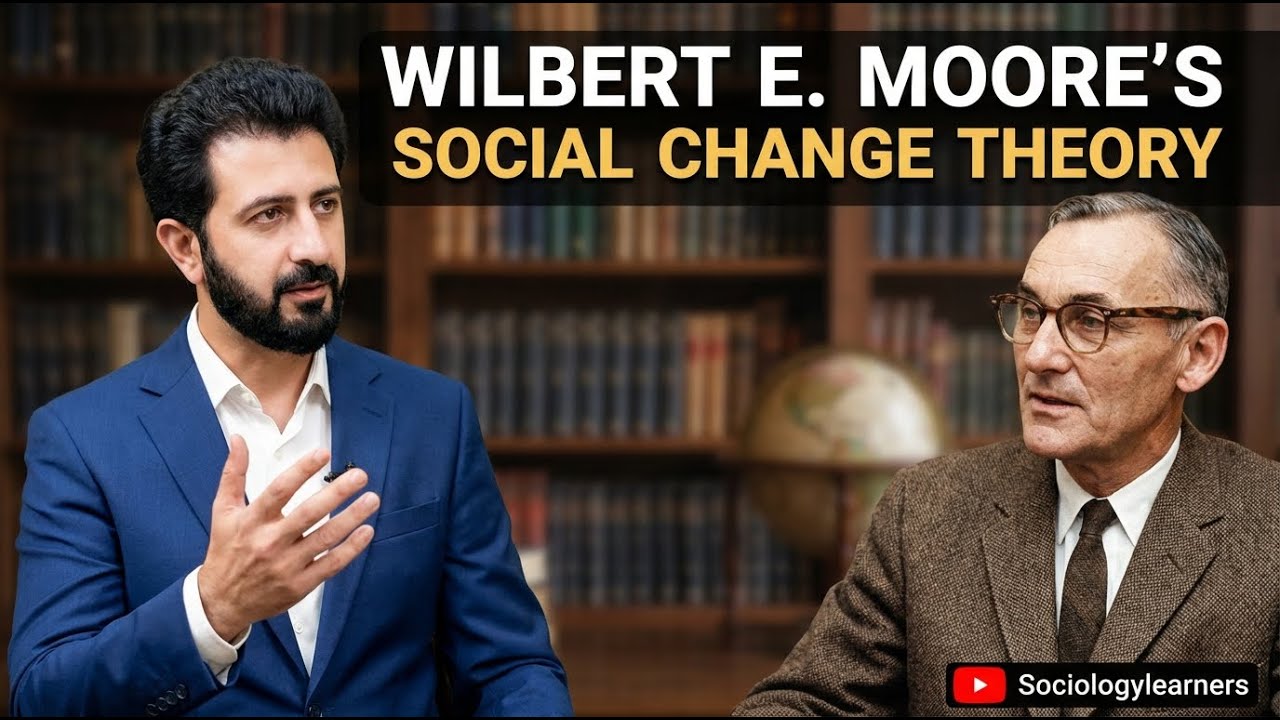
Wilbert E. Moore's Social Change Theory
⚡ THE VIBE
✨Social Change Theory isn't just an academic concept; it's the lens through which we understand how societies evolve, transform, and sometimes even revolutionize, revealing the hidden gears of human history and our collective future. 🚀
§2The Roots of Transformation: A Historical Journey 📜
The seeds of modern social change theory were sown during the Enlightenment and the Industrial Revolution. Thinkers like Auguste Comte, often considered the 'father of sociology,' began to systematically observe and theorize about societal evolution. Later, giants like Karl Marx proposed that class conflict was the primary engine of change, leading to revolutionary transformations. Meanwhile, Émile Durkheim focused on the shift from mechanical to organic solidarity, driven by increasing division of labor. And Max Weber explored the role of ideas, particularly the 'Protestant ethic,' in shaping economic systems and societal rationalization. These foundational thinkers laid the groundwork for the diverse theoretical landscape we have today. 🕰️
§3Key Theories & How They Work ⚙️
There's no single 'Social Change Theory,' but rather a rich tapestry of perspectives. Here are some of the most influential:
- Evolutionary Theories: These posit that societies progress through stages, often from 'simple' to 'complex.' Early versions were often criticized for being ethnocentric, but modern approaches focus on multi-linear evolution and adaptation. Think of societies 'learning' and 'improving' over time. 📈
- Cyclical Theories: Unlike linear evolution, these theories suggest societies rise and fall in predictable cycles, like seasons. Oswald Spengler and Arnold J. Toynbee explored this, viewing civilizations as having life cycles of birth, growth, decay, and death. 🔄
- Conflict Theories: Building on Marx, these theories emphasize that conflict—between social classes, interest groups, or ideologies—is the fundamental driver of change. When power dynamics shift, so does society. It's a constant struggle for resources and influence. 💥
- Functionalist Theories: These see society as a complex system with interdependent parts. Change occurs when one part of the system adapts, causing ripple effects throughout the whole, aiming to restore equilibrium. Think of society as a living organism. 🌿
- Modernization Theory: Popular post-WWII, this theory suggests that 'developing' nations can achieve similar levels of development as 'developed' ones by adopting Western models of industrialization, technology, and governance. It's been heavily debated and critiqued for its assumptions. 🚀
§4Why It Matters: Impact & Relevance Today 🌐
Understanding social change theory isn't just for academics; it's crucial for anyone trying to navigate or influence the world. From policymakers trying to implement sustainable development goals to activists pushing for social justice, these theories provide frameworks for action. They help us predict potential outcomes, identify barriers to progress, and understand the deep-seated resistance to certain changes. In 2026, as we grapple with rapid technological advancements like AI ethics, climate change, and global pandemics, the insights from social change theory are more relevant than ever. It helps us understand the emergence of new social movements, the persistence of inequalities, and the complex interplay between individual agency and structural forces. It's about recognizing the vibe of an era and how it shifts! 🌟
§5The Future of Flux: Challenges & New Directions 🔮
The field of social change theory is far from static. Contemporary approaches often integrate elements from multiple perspectives, recognizing the multi-faceted nature of change. New challenges, such as the impact of digitalization and globalization, are prompting fresh theoretical developments. How do social media platforms accelerate or hinder social movements? What role does global interconnectedness play in spreading both innovation and conflict? Scholars are exploring complexity theory and network theory to better model the intricate, non-linear ways societies transform. The quest to understand how we got here, and where we're going, remains one of humanity's most compelling intellectual adventures. The future of social change is, quite literally, being written every single day. ✍️