Auguste Comte
The French Thinker Who Tried to Make Society a Science 🔬
Featured partners and sponsors
New advertisers get $25 in ad credits
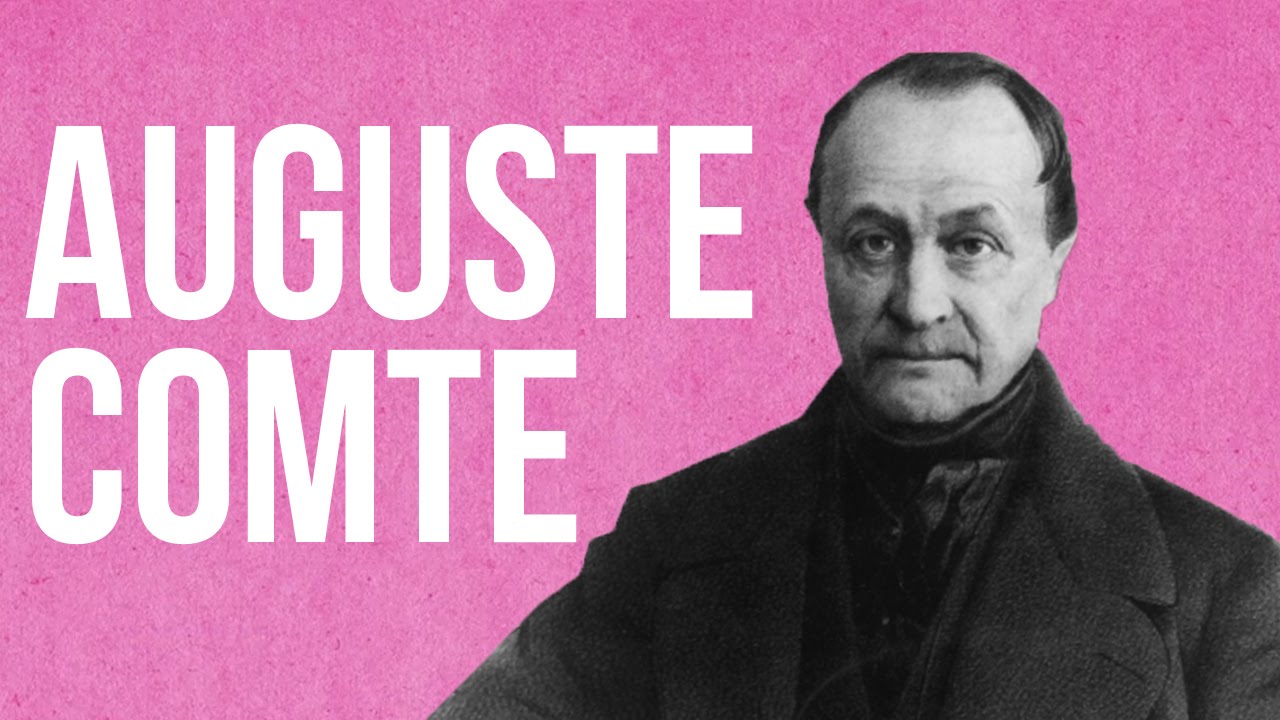
SOCIOLOGY - Auguste Comte
⚡ THE VIBE
✨Auguste Comte, a brilliant French philosopher, is widely hailed as the **father of sociology** and the founder of **Positivism**, a revolutionary philosophical system that sought to apply scientific rigor to the study of society itself. His ideas reshaped how we understand human progress and societal order! 🧠✨
§1Who Was Auguste Comte? 🧐
Born Isidore Auguste Marie François Xavier Comte in Montpellier, France, in 1798, Auguste Comte was a thinker whose influence reverberated through the 19th and 20th centuries. Imagine a mind so ambitious it sought to scientifically understand and reorganize all human society! 🌍🔬 Comte was initially a secretary to the utopian socialist Henri de Saint-Simon, a relationship that profoundly shaped his early ideas, though he later broke with him. His intellectual journey was marked by intense periods of creativity and, unfortunately, significant personal struggles, including mental health challenges. Despite these, his prolific writings laid the groundwork for entirely new fields of study and philosophical thought. He wasn't just observing the world; he was trying to engineer a better one, using the tools of science and reason. 🛠️💡
§2The Birth of Sociology & Positivism 🚀
Comte's most enduring legacy is undoubtedly his coinage of the term 'sociology' in 1838 and his systematic development of Positivism. He believed that just as physics, chemistry, and biology had uncovered natural laws governing the physical and biological worlds, a new science was needed to discover the laws governing human society. He initially called this 'social physics' before settling on 'sociology.' Positivism, at its core, asserts that the only authentic knowledge is scientific knowledge, derived from positive affirmation through observation, experiment, and comparison. It rejected metaphysical speculation and theological explanations, aiming instead for empirical, verifiable truths. For Comte, this wasn't just an academic exercise; it was the key to achieving social order and progress after the tumultuous French Revolution. He saw society evolving through distinct stages, a concept he famously articulated as the Law of Three Stages. 📈
§3The Law of Three Stages: A Grand Narrative of Progress 📜
Comte's Law of Three Stages is a cornerstone of his philosophy, proposing that human thought and societal development progress through three distinct intellectual phases: 🌟
- The Theological Stage: In this initial stage, humans explain phenomena by attributing them to supernatural forces or deities. Think ancient mythologies and religious explanations for everything from weather to illness. Society is organized around military power and religious authority.
- The Metaphysical Stage: This transitional stage replaces supernatural explanations with abstract forces or essences. Philosophical concepts like 'nature' or 'reason' become the primary explanatory principles, rather than specific gods. It's a period of questioning and critical thought, often leading to political instability.
- The Positive (or Scientific) Stage: The final and most advanced stage, where humanity abandons supernatural and abstract explanations in favor of scientific observation, experimentation, and the discovery of invariable natural laws. Society is organized industrially and guided by scientific experts. This is where sociology, as the 'queen of the sciences,' would emerge to guide social reform.
Comte believed that understanding this progression was crucial for guiding society towards its ultimate, scientific destiny. It was a bold, sweeping vision for human intellectual evolution! 🧠✨
§4The 'Religion of Humanity' and Its Impact 🙏
In his later years, Comte developed a more controversial aspect of his philosophy: the 'Religion of Humanity.' Feeling that Positivism alone lacked the emotional and moral cohesion provided by traditional religions, he sought to create a secular religion centered on humanity itself, with altruism as its guiding principle. This 'religion' had its own calendar, sacraments, and even a priesthood of sociologists! While this aspect was largely dismissed or ridiculed by his contemporaries and later scholars, it highlights Comte's deep concern for moral order and social unity. Despite the eccentricities of his later work, Comte's ideas profoundly influenced thinkers like John Stuart Mill, Émile Durkheim, and the development of modern social sciences. His emphasis on empirical observation and the scientific study of society laid the groundwork for countless academic disciplines and research methodologies that continue to shape our world today. 🌍📚
§5Legacy and Enduring Relevance 🏛️
Auguste Comte's legacy is complex but undeniably monumental. He gave us the very name of sociology and provided a foundational framework for its scientific inquiry. His insistence on empirical data and systematic observation transformed how we approach understanding human behavior and societal structures. While his 'Religion of Humanity' never gained widespread traction, his core ideas about societal evolution and the power of scientific knowledge continue to resonate. In 2026, as we navigate complex global challenges, Comte's ambition to apply rational, scientific principles to social problems feels more relevant than ever. He reminds us that understanding society is not just about facts, but about charting a path towards progress and collective well-being. A true pioneer who dared to dream of a scientifically ordered world! 🌟🔭