Seismology
Unveiling Earth's Rhythmic Heartbeat and Tremors 🌍
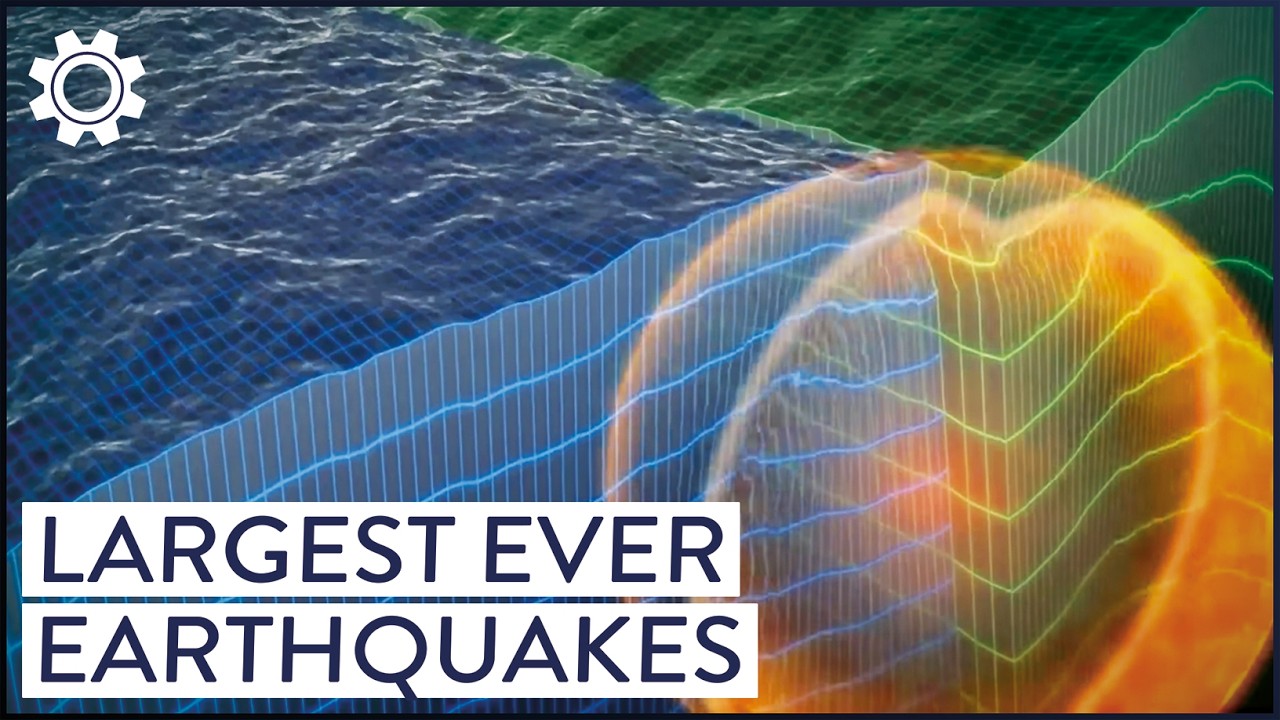
The World's Most Destructive Earthquakes, Explained
⚡ THE VIBE
✨Seismology is the captivating scientific study of **earthquakes** and the propagation of **seismic waves** through Earth's interior, offering us an unparalleled glimpse into our planet's hidden structure and dynamic processes. It's how we map the unseen depths of our world! 🗺️
§1The Earth's Pulse: What is Seismology? 💓
Imagine our planet as a living, breathing entity, constantly shifting and rumbling beneath our feet. Seismology is the science dedicated to understanding these movements. It's not just about big, scary earthquakes; it's about all seismic waves – those generated by tectonic plate movements, volcanic eruptions, meteor impacts, and even human activities like explosions. 💥 By studying how these waves travel, reflect, and refract through the Earth, seismologists can paint a detailed picture of what lies thousands of kilometers beneath the surface, from the molten outer core to the solid inner core. It's like having an X-ray vision for the entire planet! 🔬
§2From Ancient Dragons to Modern Sensors: A Trembling History 📜
The quest to understand Earth's shivers began long ago. The earliest known seismoscope was invented in 132 AD by the brilliant Chinese polymath Zhang Heng. This ornate bronze vessel, adorned with dragons holding balls in their mouths, would drop a ball into a toad's mouth below, indicating the direction of a distant earthquake. Talk about ancient tech! 🐉 Fast forward to the 19th century, and modern seismology truly began to take shape with the development of more sophisticated instruments and the theoretical understanding of wave propagation. Pioneers like John Milne established global seismic networks, transforming earthquake detection from a local phenomenon into a worldwide scientific endeavor. The 20th century brought digital recording and advanced computing, revolutionizing our ability to process and interpret seismic data. 💻
§3Reading the Earth's Ripples: How It Works 🌊
At its core, seismology relies on seismometers, incredibly sensitive instruments that detect ground motion. When an earthquake strikes, it generates different types of seismic waves:
- P-waves (Primary waves): These are compressional waves, like sound waves, traveling fastest through solids and liquids. They're the first to arrive at a seismograph. 💨
- S-waves (Secondary waves): These are shear waves, moving perpendicular to the direction of travel. They're slower than P-waves and can only travel through solids, not liquids. This fact was crucial in discovering Earth's liquid outer core! 🧪
- Surface waves: These travel along the Earth's surface and cause the most damage during an earthquake. They're slower than body waves but have larger amplitudes. 🎢 By analyzing the arrival times of these waves at multiple seismic stations, seismologists can pinpoint an earthquake's epicenter and depth. The amplitude and frequency of the waves reveal the earthquake's magnitude and the characteristics of the fault rupture. It's a complex dance of physics and geology! 🕺
§4Beyond Shakes: Impact and Applications 🚀
Seismology's impact extends far beyond just locating earthquakes. It's a cornerstone of our understanding of the entire planet:
- Earth's Interior Structure: Seismic waves have allowed us to map the Earth's layers – crust, mantle, outer core, and inner core – with incredible detail, revealing their composition and physical properties. It's like a geological CT scan! 🗺️
- Hazard Assessment: Understanding fault lines and seismic activity helps us assess earthquake risk, inform building codes, and develop early warning systems. This saves lives! 🚨
- Resource Exploration: Seismic surveys are vital in the oil and gas industry to locate underground reservoirs. They also help in mapping groundwater and geothermal resources. 💧
- Monitoring Nuclear Tests: Seismometers are crucial for detecting clandestine nuclear weapons tests, playing a key role in international security and arms control treaties. 🕊️
- Volcanology: Tracking seismic tremors helps predict volcanic eruptions, giving communities precious time to evacuate. 🌋 From understanding plate tectonics to mitigating natural disasters, seismology is a truly game-changing field. It's a constant reminder that our planet is alive and constantly evolving! 🌟
§5The Future of Listening to Earth 👂
The field of seismology is constantly innovating. We're seeing exciting advancements in:
- Distributed Acoustic Sensing (DAS): Using fiber optic cables as arrays of seismic sensors, turning existing infrastructure into vast listening networks. Imagine the entire internet becoming a seismograph! 🌐
- Machine Learning & AI: Algorithms are getting smarter at sifting through vast datasets, identifying subtle patterns, and improving earthquake prediction models (though true prediction remains a holy grail). 🤖
- Planetary Seismology: Missions like NASA's InSight lander on Mars are extending seismology beyond Earth, listening for 'marsquakes' to understand the red planet's interior. The universe is our lab! 🌌 As technology evolves, our ability to listen to Earth's whispers and roars will only grow, deepening our connection to and understanding of our dynamic home. It's an exciting time to be a seismologist! ✨