Mantle Plumes
Earth's fiery deep-sea geysers and the secrets they hold! 🔥🌍
Featured partners and sponsors
New advertisers get $25 in ad credits
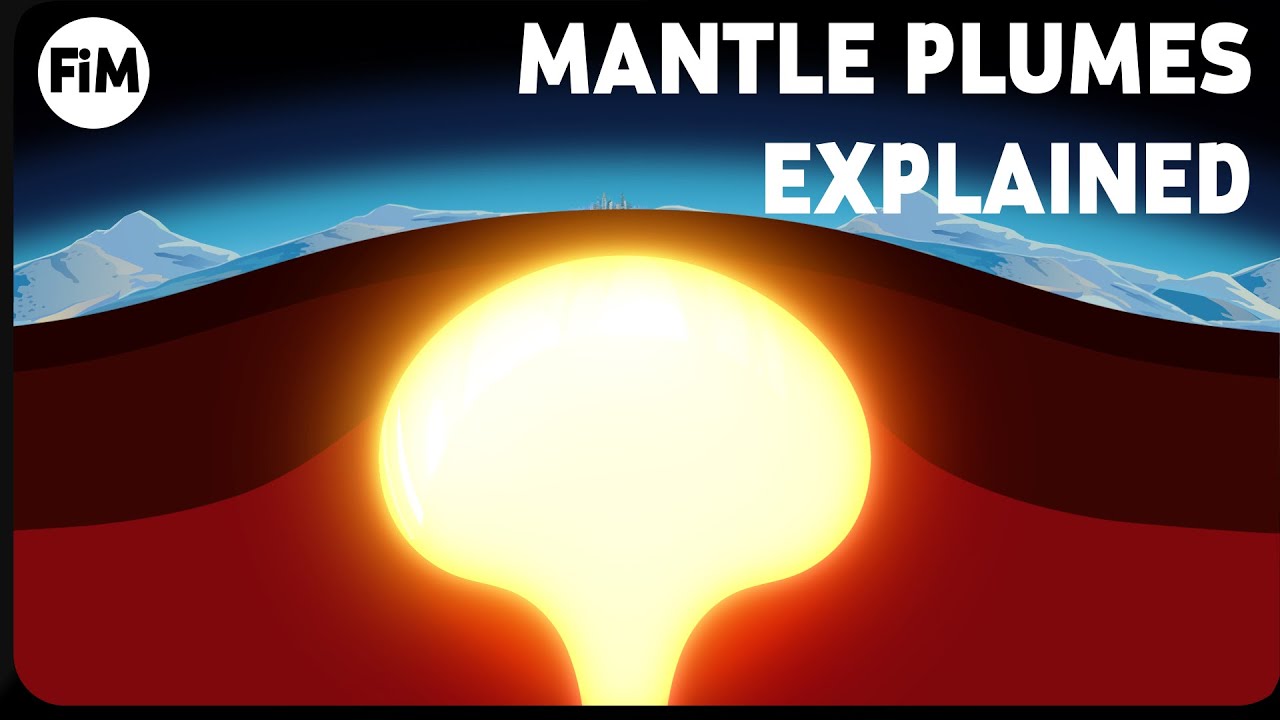
The Largest Volcanoes in History – Mantle Plumes explained
⚡ THE VIBE
✨Mantle plumes are hypothesized upwellings of abnormally hot rock within Earth's mantle, thought to be responsible for volcanic hotspots like Hawaii and Yellowstone, acting as deep-seated heat engines that sculpt our planet's surface. These colossal columns of superheated material are a geological enigma, constantly challenging our understanding of Earth's dynamic interior. 🌋
§1What are Mantle Plumes? The Deep Earth's Lava Lamps! 💡
Imagine a lava lamp, but on a planetary scale! That's essentially the concept behind a mantle plume. These are not just random blobs of heat; they're thought to be columns of unusually hot rock, rising buoyantly from deep within Earth's mantle—perhaps even from the core-mantle boundary itself! 🌍 Unlike the broader, slower convection currents that drive Plate Tectonics, plumes are believed to be narrower, more focused conduits of heat. When these plumes reach the base of the lithosphere (Earth's rigid outer layer), they can cause localized melting, leading to intense volcanic activity far from plate boundaries. Think of them as Earth's internal pressure valves, releasing immense energy. 🚀
§2The Origin Story: From Hotspots to Hypotheses 🕵️♀️
The concept of mantle plumes was first formally proposed by geophysicist W. Jason Morgan in 1971. He was trying to explain the existence of volcanic 'hotspots'—places like the Hawaiian Islands or the Yellowstone Caldera—that didn't fit neatly into the then-emerging theory of [plate-tectonics]. If volcanism was mostly at plate boundaries, what caused these isolated, persistent volcanic centers? 🤔 Morgan's brilliant idea was that these hotspots were the surface expression of deep, stationary plumes of hot material rising from the lower mantle, punching through the moving tectonic plates above. As plates drift over these fixed plumes, they leave a trail of volcanoes, much like a smoking cigar being dragged across a table. This elegant explanation quickly gained traction and became a cornerstone of modern geology. 🌟
§3How They Work: A Journey from Core to Crust ♨️
The journey of a mantle plume is a spectacular, albeit slow, one. It begins with a thermal anomaly—a superheated region deep within the mantle, possibly near the core-mantle boundary (the D'' layer). This hot material, being less dense than its surroundings, starts to rise. As it ascends, it forms a plume head—a mushroom-shaped bulb of hot rock that can be hundreds of kilometers across—followed by a narrower plume conduit or 'tail'. 🍄
When the plume head reaches the base of the lithosphere, it causes massive decompression melting. This molten rock, or magma, then forces its way to the surface, creating colossal flood basalt provinces (like the Deccan Traps in India) or sustained hotspot volcanism. The sheer volume of magma generated can be immense, reshaping continents and influencing global climate. The exact mechanisms of plume initiation and their interaction with plate tectonics are still subjects of intense research and debate! 🧪
§4Impact & Significance: Earth's Sculptors and Climate Drivers 🌎
Mantle plumes are more than just geological curiosities; they are geological game-changers. Their impact is profound and multifaceted:
- Volcanic Hotspots: They create iconic volcanic chains and supervolcanoes, providing natural laboratories for studying deep Earth processes.
- Continental Breakup: Some scientists hypothesize that the immense heat and uplift from plume heads can weaken continental crust, contributing to the initiation of rifting and the eventual breakup of continents.
- Oceanic Plateaus: They form vast, elevated regions on the ocean floor, significantly altering ocean basin topography.
- Climate Influence: Massive plume-related eruptions, like those that formed the Siberian Traps, have been linked to dramatic climate shifts and even mass extinction events throughout Earth's history. Talk about a deep impact! 😱
Understanding mantle plumes is crucial for deciphering Earth's past, present, and future geological evolution, from mountain building to sea-level changes. They represent a fundamental process of heat transfer from our planet's fiery heart. ❤️🔥
§5The Great Debate: Plume vs. No Plume? ⚔️
While the mantle plume hypothesis is widely accepted, it's not without its challengers! A significant scientific debate, often dubbed the 'plume vs. no plume' controversy, has been ongoing for decades. Critics argue that some hotspot volcanism could be explained by shallower, plate-related processes or by passive upwelling in areas of plate extension, rather than deep, narrow plumes. They point to inconsistencies in seismic imaging and geochemical signatures. 🧐
However, seismic tomography, which uses earthquake waves to 'see' inside the Earth, has provided compelling evidence for deep, narrow conduits of hot material beneath some hotspots, bolstering the plume hypothesis. The scientific community continues to refine its understanding, using advanced computational models, seismic data, and geochemical analyses to unravel these deep Earth mysteries. It's a vibrant field where new discoveries are constantly shaping our view of our dynamic planet! 🔬