Sagittarius A*
The cosmic heart of our galaxy, a supermassive enigma.
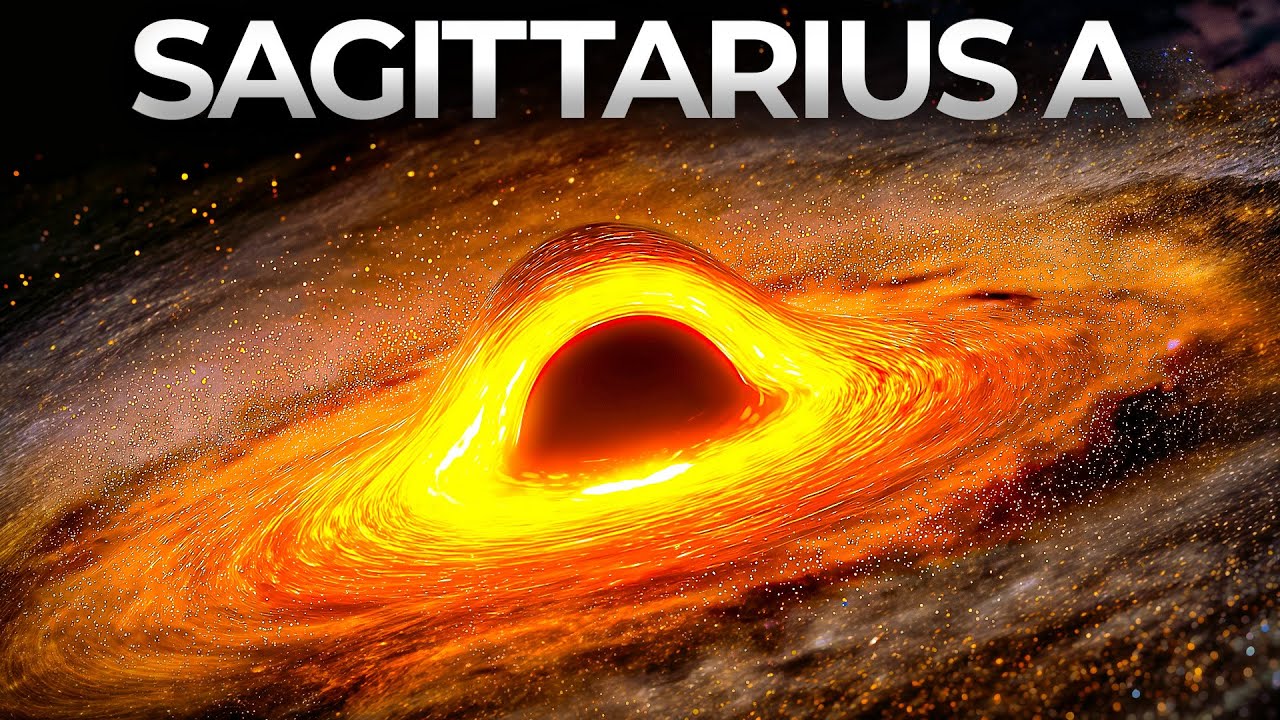
Sagittarius A: The Monster at the Center of Our Galaxy
TL;DR
Sagittarius A* (pronounced 'Sagittarius A-star') is the supermassive black hole nestled at the very heart of our Milky Way galaxy, a gravitational behemoth dictating the cosmic dance of billions of stars.
Imagine a cosmic drain, an invisible whirlpool of immense gravity, sitting right at the center of our galactic home. That, in essence, is Sagittarius A* (Sgr A*), the supermassive black hole that anchors the Milky Way. Discovered in 1974 by astronomers Bruce Balick and Robert Brown using the National Radio Astronomy Observatory's interferometer, its 'star' designation was added to differentiate it from other radio sources in the Sagittarius constellation, hinting at its compact, star-like nature long before its true identity was confirmed.
For decades, Sgr A* remained a tantalizing mystery, its presence inferred by the bizarre, frenetic orbits of stars whipping around an unseen mass. It wasn't until the early 21st century, with groundbreaking observations from the Keck Observatory and the Very Large Telescope, that astronomers like Andrea Ghez and Reinhard Genzel (who later shared a Nobel Prize for their work) meticulously tracked these stellar ballets, proving beyond a shadow of a doubt that a supermassive black hole, roughly 4 million times the mass of our Sun, was the gravitational maestro.
What makes Sgr A* so captivating isn't just its immense mass, but its relative tranquility. Unlike the ravenous quasars of distant galaxies, Sgr A* is a surprisingly quiet eater. It occasionally flares up, emitting bursts of X-rays and radio waves as gas clouds or unfortunate stars wander too close, but for the most part, it's a cosmic slumberer. This 'gentle giant' behavior offers a unique laboratory for studying black hole physics without the overwhelming glare of a highly active galactic nucleus.
The Event Horizon Telescope (EHT) collaboration delivered a monumental breakthrough in 2022, unveiling the first direct image of Sgr A*. This wasn't a picture of the black hole itself (nothing, not even light, can escape its event horizon), but rather the glowing ring of superheated gas and plasma swirling around its shadow. This iconic orange halo, a testament to humanity's ingenuity, provided irrefutable visual evidence of Einstein's General Relativity in the extreme gravitational environment of a black hole, confirming predictions made over a century ago.
As of 2026, research continues to unravel Sgr A*'s secrets. Scientists are probing its magnetic fields, studying the dynamics of the gas falling into it, and searching for gravitational waves generated by objects spiraling into its maw. Understanding Sgr A* is not just about comprehending a single object; it's about piecing together the fundamental processes that govern galaxy formation, evolution, and the very fabric of spacetime. It's a cosmic lighthouse, guiding us deeper into the profound mysteries of the universe.
The sheer scale and implications of Sgr A* are mind-bending. It's a reminder that even in our own galactic backyard, the universe holds phenomena that challenge our understanding and ignite our imagination. This supermassive black hole isn't just a scientific curiosity; it's a profound symbol of the cosmos's awe-inspiring power and the relentless human quest to decipher its deepest truths.