Black Holes
Where physics goes to party and light goes to die.
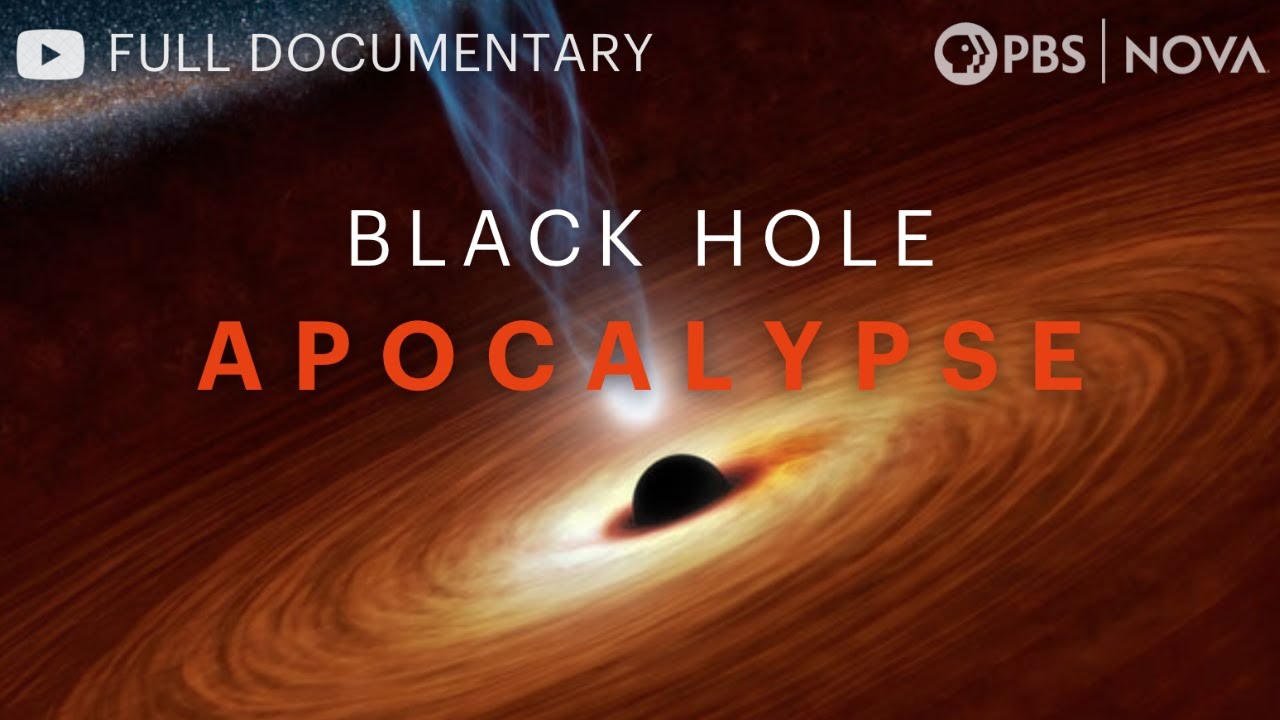
Black Hole Apocalypse: What's Inside a Black Hole? | Full Documentary | NOVA | PBS
TL;DR
Black holes are regions of spacetime where gravity is so strong that nothing—not even light or other electromagnetic waves—can escape once it crosses a certain boundary, the event horizon. They are cosmic behemoths that warp the very fabric of reality around them.
Imagine a cosmic drain, a point of no return where the very fabric of reality—spacetime itself—is stretched, twisted, and ultimately swallowed. That, my friends, is a black hole. Not a 'hole' in the traditional sense, but an incredibly dense concentration of matter, creating a gravitational field so powerful that its escape velocity exceeds the speed of light. Once you cross the event horizon, the boundary of no return, you're on a one-way trip to oblivion, destined for a singularity where our current understanding of physics breaks down.
The concept first emerged from Albert Einstein's groundbreaking theory of General Relativity in 1915, with Karl Schwarzschild providing the first mathematical description just a year later. For decades, they were theoretical curiosities, often dismissed as mathematical oddities. It wasn't until the mid-20th century, with advances in astrophysics and observation, that their existence became undeniable. The term 'black hole' itself was popularized by physicist John Wheeler in 1967, perfectly capturing their enigmatic, light-absorbing nature.
There are generally three main types we talk about: stellar black holes, formed from the gravitational collapse of stars much more massive than our Sun; supermassive black holes, millions to billions of times the Sun's mass, lurking at the heart of most galaxies (including our own Milky Way's Sagittarius A*); and the more speculative primordial black holes, theorized to have formed in the early universe. Each type, regardless of its origin, warps its surroundings in ways that are both terrifying and profoundly beautiful to contemplate.
Observing black holes is a masterclass in cosmic detective work, as they are, by definition, invisible. Scientists detect them by observing their effects on nearby matter. We see stars orbiting an unseen companion, gas and dust swirling into an accretion disk, heating up to millions of degrees and emitting powerful X-rays before being consumed. The groundbreaking Event Horizon Telescope collaboration in 2019 gave humanity its first direct image of a black hole's shadow and its glowing accretion disk, a monumental achievement that solidified their reality in our collective consciousness.
Black holes aren't just cosmic vacuum cleaners; they're pivotal to galactic evolution, influencing star formation and the dynamics of entire galaxies. They challenge our understanding of space, time, and matter, pushing the boundaries of physics to its absolute limits. From the mind-bending concept of 'spaghettification' (where tidal forces stretch an unfortunate object into a long, thin strand) to the theoretical possibility of wormholes (though highly speculative), black holes continue to inspire awe, fear, and endless scientific inquiry, reminding us just how much more there is to explore in the universe.
In 2026, the study of black holes remains a vibrant frontier. Gravitational wave observatories like LIGO and Virgo are routinely detecting ripples in spacetime from merging black holes, opening up a whole new 'soundscape' of the cosmos. Future missions aim to capture even sharper images and probe deeper into their mysteries, perhaps even unlocking secrets about quantum gravity and the very origin of the universe. They are, without a doubt, one of the universe's most extreme and captivating phenomena.