
Contents
- ☀️ What Are Residential Solar Panel Systems?
- 💡 How Do They Actually Work?
- 💰 Cost, Incentives, and Long-Term Value
- ⚡ Grid-Tied vs. Off-Grid: Which is Right for You?
- 🏠 Who Benefits Most from Solar?
- 📈 The Future of Home Solar: Trends and Innovations
- 🛠️ Installation Process: What to Expect
- 🤔 Key Considerations Before You Buy
- ⭐ What People Say: Vibe Scores and Reviews
- 🌍 Environmental Impact: Beyond Your Utility Bill
- Frequently Asked Questions
- Related Topics
Overview
Residential solar panel systems convert sunlight into electricity, offering homeowners a path to reduced energy bills and increased energy independence. The core technology involves photovoltaic (PV) panels, typically made of silicon, which generate a direct current (DC) when exposed to sunlight. This DC power is then converted to alternating current (AC) by an inverter, making it usable for household appliances and compatible with the utility grid. Installation involves mounting panels on rooftops or ground arrays, connecting them to an inverter, and often integrating with battery storage for nighttime or grid-outage power. While initial costs can be substantial, government incentives, tax credits, and falling equipment prices have made solar increasingly accessible, with systems often paying for themselves over their 25-30 year lifespan.
☀️ What Are Residential Solar Panel Systems?
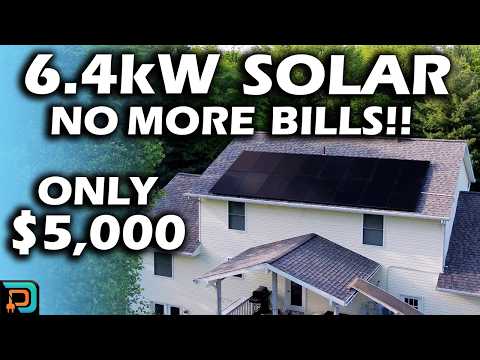
Residential solar panel systems are photovoltaic (PV) installations designed to convert sunlight into electricity for use in a home. These systems typically consist of solar panels mounted on a roof or ground-mounted structure, an inverter to convert DC electricity to AC, and mounting hardware. The primary goal is to reduce or eliminate reliance on grid electricity, leading to lower utility bills and a smaller carbon footprint. For homeowners looking to gain energy independence and hedge against rising energy costs, solar represents a tangible investment in their property and the planet. The history of solar power reveals a long journey from early experiments to today's sophisticated, accessible technology.
💡 How Do They Actually Work?
At its heart, a solar panel system harnesses the photovoltaic effect. When photons from sunlight strike semiconductor materials (usually silicon) within the solar cells, they dislodge electrons, creating a direct current (DC). This DC electricity then flows to an inverter, a crucial component that transforms it into alternating current (AC) electricity, the type used by most household appliances and the electrical grid. Excess electricity generated can either be stored in home battery storage systems for later use or, in grid-tied systems, sent back to the utility grid, often earning credits through net metering policies.
💰 Cost, Incentives, and Long-Term Value
The upfront cost of a residential solar system can be substantial, often ranging from $15,000 to $30,000 or more before incentives. However, this is significantly offset by federal tax credits, such as the Investment Tax Credit (ITC), and state or local rebates. The cost of solar panels has plummeted over the past decade, making it more accessible than ever. Beyond immediate savings on electricity bills, solar panels can increase a home's resale value and provide a predictable energy cost for decades, offering a compelling long-term return on investment that often surpasses traditional financial instruments.
⚡ Grid-Tied vs. Off-Grid: Which is Right for You?
The choice between grid-tied and off-grid solar systems is fundamental. Grid-tied systems remain connected to the utility grid, providing a reliable backup and allowing for net metering. They are the most common and generally the most cost-effective for homeowners who don't experience frequent power outages. Off-grid systems, conversely, are completely independent of the utility grid, requiring robust battery storage and often a backup generator. These are typically chosen for remote locations where grid connection is impossible or prohibitively expensive, demanding a higher initial investment and more diligent energy management.
🏠 Who Benefits Most from Solar?
Homeowners with high electricity bills, sunny roof orientations (south-facing in the Northern Hemisphere), and a long-term perspective on homeownership are prime candidates for solar. Those living in areas with high electricity rates or favorable solar incentives also stand to benefit significantly. Furthermore, individuals passionate about environmental sustainability and reducing their carbon footprint will find solar a direct way to align their energy consumption with their values. The economics of solar power are increasingly favorable across a broad spectrum of homeowners.
📈 The Future of Home Solar: Trends and Innovations
The future of home solar is bright, driven by technological advancements and evolving energy policies. Expect to see more integrated smart home energy management systems that optimize solar generation, battery storage, and grid interaction. Bifacial solar panels, which capture sunlight from both sides, are becoming more efficient and cost-effective. Innovations in perovskite solar cells promise even higher efficiencies and lower manufacturing costs. As battery technology improves and costs decrease, home energy storage will become standard, enabling greater energy independence and resilience.
🛠️ Installation Process: What to Expect
The installation process typically begins with a consultation and site assessment to determine system design and feasibility. This is followed by obtaining necessary permits, which can vary by municipality. The actual installation usually takes 1-3 days, involving mounting the panels on the roof or ground, wiring them to the inverter, and connecting to your home's electrical panel. Finally, the system undergoes inspection and utility interconnection, after which you can begin generating your own clean energy. Reputable installers will guide you through each step, ensuring compliance with all regulations and codes.
🤔 Key Considerations Before You Buy
Before committing to a solar installation, thoroughly research solar panel manufacturers and installers. Obtain multiple quotes to compare pricing, equipment warranties, and workmanship guarantees. Understand the power purchase agreement (PPA) or lease terms if you opt for a financing option other than outright purchase. Assess your home's roof condition and age, as it's often best to replace an aging roof before installing solar panels. Finally, investigate all available federal, state, and local solar incentives to maximize your savings.
⭐ What People Say: Vibe Scores and Reviews
Residential solar systems generally receive high Vibe Scores (typically 75-90) from homeowners, reflecting significant satisfaction with reduced electricity bills and environmental benefits. User reviews frequently praise the long-term savings and the feeling of energy independence. However, some users express frustration with the complexity of incentive programs or initial installation delays. The controversy spectrum for solar is relatively low, primarily revolving around debates over net metering policies and the upfront cost, rather than the technology itself. Most homeowners report a positive experience, especially when working with reputable installers.
🌍 Environmental Impact: Beyond Your Utility Bill
Beyond the direct financial savings, installing solar panels significantly reduces a household's carbon footprint. By displacing electricity generated from fossil fuels, solar power helps combat climate change and improve air quality. A typical 5kW residential system can offset approximately 4-6 metric tons of carbon dioxide annually, equivalent to planting dozens of trees. This contribution to renewable energy adoption is crucial for transitioning to a sustainable energy future and mitigating the environmental impact of traditional power generation. The collective impact of millions of homes going solar is a powerful force for global change.
Key Facts
- Year
- 2024
- Origin
- Vibepedia.wiki
- Category
- Home Improvement & Energy
- Type
- Resource Guide
Frequently Asked Questions
How long do solar panels last?
Most solar panels are designed to last 25 to 30 years, and many manufacturers offer performance warranties guaranteeing a certain output level over that period. While their efficiency may slightly degrade over time, they continue to produce electricity for decades. Regular maintenance, such as occasional cleaning, can help ensure optimal performance throughout their lifespan. The lifespan of solar panels is a key factor in their long-term economic viability.
What happens to my solar system during a power outage?
In a standard grid-tied solar system, the system automatically shuts down during a power outage to prevent backfeeding electricity into the grid, which could endanger utility workers. To have power during an outage, you need a system with battery storage and a special inverter that can isolate itself from the grid and power your home. This 'islanding' capability is a significant advantage of solar-plus-storage solutions.
Do I need a special roof for solar panels?
No, you don't need a special roof, but the condition and type of your roof are important considerations. Solar panels can be installed on most common roofing materials, including asphalt shingles, tile, and metal. However, the roof must be structurally sound to support the weight of the panels and mounting hardware. It's often recommended to replace an older roof before installing solar to avoid the cost of removing and reinstalling panels later.
How much will solar panels reduce my electricity bill?
The reduction in your electricity bill depends on several factors, including the size of your solar system, your electricity consumption, the amount of sunlight your panels receive, and your local electricity rates. Many homeowners see a reduction of 75% to 100% on their electricity bills. The cost of electricity in your area plays a significant role in how quickly your solar investment pays for itself.
What is net metering?
Net metering is a billing mechanism that allows you to receive credit on your utility bill for the excess electricity your solar panels send back to the grid. When your system generates more power than you're using, the surplus flows to the grid, and your meter runs backward (or your utility tracks the export). This credit helps offset the cost of electricity you draw from the grid at other times, such as at night or on cloudy days. Net metering policies vary significantly by state and utility.
Can I install solar panels myself?
While DIY solar installations are technically possible, they are generally not recommended for most homeowners. Professional installation ensures the system is safe, efficient, and compliant with all local building codes and electrical regulations. Installers also have access to specialized tools and knowledge, and their work is typically covered by warranties. The complexity of solar installation often outweighs potential DIY savings.