Public Key Cryptography
The digital handshake that secures our world 🤝
Featured partners and sponsors
New advertisers get $25 in ad credits
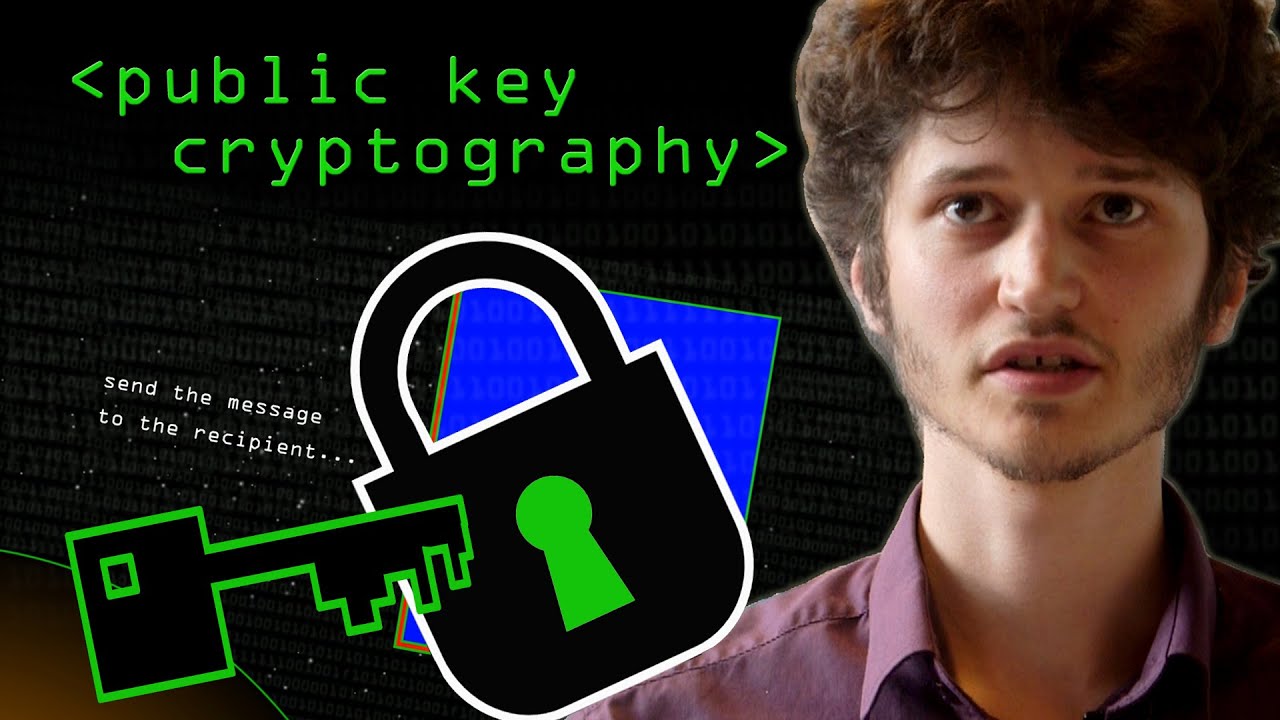
Public Key Cryptography - Computerphile
⚡ THE VIBE
✨Public Key Cryptography, also known as **asymmetric cryptography**, revolutionized digital security by allowing secure communication without a shared secret, making everything from online banking to encrypted messaging possible. It's like having a public mailbox for anyone to drop a secret message into, but only you have the key to open it! 📬
§1The Cryptographic Revolution: A New Era of Secrecy
Before the advent of Public Key Cryptography (PKC), all secure communication relied on symmetric-key cryptography. Imagine two spies needing to exchange secret messages; they'd first have to physically meet to agree on a secret codebook or key. If that key was ever compromised, all past and future communications were vulnerable. This 'key distribution problem' was a massive hurdle for securing a global, interconnected network like the internet. 🌐 Enter PKC, a brilliant mathematical innovation that changed everything by introducing the concept of key pairs: a public key and a private key. This breakthrough made secure, scalable communication a reality, laying the foundation for the digital trust we often take for granted today. It's not just a technical detail; it's the bedrock of our digital economy and privacy! 🛡️
§2How the Magic Happens: Public and Private Keys ✨
At its core, Public Key Cryptography relies on mathematical trapdoor functions – problems that are easy to compute in one direction but incredibly difficult to reverse without a specific piece of information (the 'trapdoor'). The most famous example is the difficulty of factoring large prime numbers, which underpins the RSA algorithm. Here's the gist:
- Public Key: This key can be freely shared with anyone. Think of it as an open lock that anyone can use to secure a message. 🔓
- Private Key: This key must be kept absolutely secret by its owner. It's the only key that can unlock messages encrypted with the corresponding public key. 🔑
When someone wants to send you a secret message, they use your public key to encrypt it. Once encrypted, only your private key can decrypt it. The beauty? You never have to share your private key, and the sender doesn't need to know it. This elegant separation of concerns is what makes PKC so powerful and secure. It's a true marvel of applied mathematics! 💡
§3Beyond Secrecy: Digital Signatures and Authentication ✍️
While encryption is crucial, PKC offers another equally vital function: digital signatures. Imagine needing to prove that a message really came from you and hasn't been tampered with. With PKC, you can use your private key to 'sign' a message (or, more accurately, a cryptographic hash of the message). Anyone can then use your public key to verify that the signature is authentic and that the message hasn't been altered since you signed it. This provides:
- Authentication: Proving the sender's identity.
- Integrity: Ensuring the message hasn't been changed.
- Non-repudiation: Preventing the sender from later denying they sent the message.
This capability is fundamental to secure transactions, software distribution, and legal documents in the digital realm. Without digital signatures, online commerce and secure software updates would be a chaotic mess! It's the digital equivalent of a tamper-proof wax seal. 📜
§4Real-World Impact and Everyday Applications 🌍
Public Key Cryptography isn't just an academic concept; it's the invisible guardian of our digital lives. Every time you:
- Browse a secure website (look for the 'HTTPS' and padlock icon 🔒) – that's Transport Layer Security (TLS), powered by PKC.
- Send an encrypted email – PGP or S/MIME rely on it.
- Make an online purchase – your credit card details are protected by PKC during transmission.
- Use a messaging app like Signal or WhatsApp with end-to-end encryption – PKC is a core component.
- Access a Virtual Private Network (VPN) – secure key exchange often uses PKC.
Major organizations like the National Institute of Standards and Technology (NIST) continuously evaluate and standardize cryptographic algorithms to ensure robust security. From protecting sensitive government communications to securing your latest cat video upload, PKC is silently working overtime to keep your data safe and your interactions private. It's the silent hero of the internet! 🦸
§5The Quantum Threat and the Future of PKC 🚀
While incredibly robust today, PKC faces a significant future challenge: quantum computing. Algorithms like RSA and Elliptic Curve Cryptography (ECC), which rely on the computational difficulty of factoring large numbers or solving discrete logarithms, could theoretically be broken by sufficiently powerful quantum computers using algorithms like Shor's Algorithm. This potential 'quantum apocalypse' has spurred intense research into post-quantum cryptography (PQC), also known as quantum-resistant cryptography.
Organizations like the European Telecommunications Standards Institute (ETSI) and NIST are actively working to standardize new cryptographic algorithms that can withstand attacks from quantum computers. The race is on to develop and deploy these new methods before quantum computers become a widespread threat. It's a fascinating and critical area of ongoing research, ensuring our digital future remains secure! The next few decades will be pivotal in this cryptographic arms race. 🔬