Post-Quantum Cryptography
Securing our digital future against the quantum threat. 🔐
Featured partners and sponsors
New advertisers get $25 in ad credits
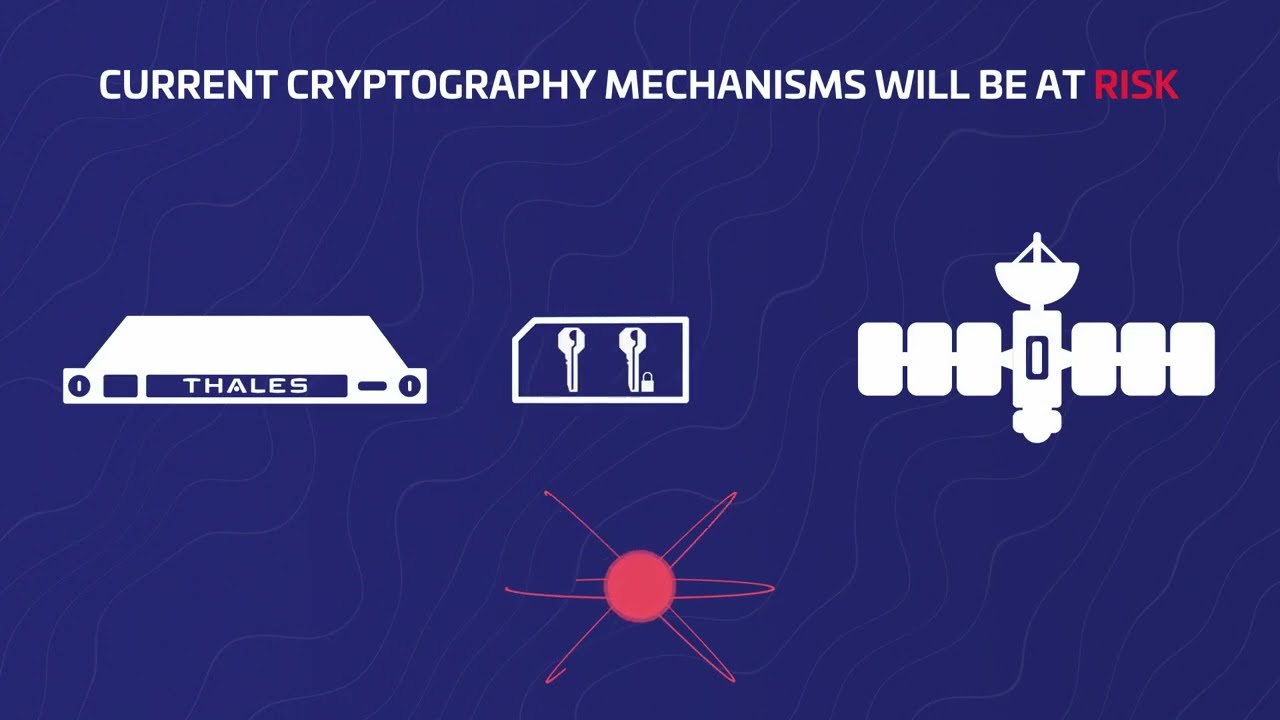
Understanding Post-Quantum Cryptography (PQC)
⚡ THE VIBE
✨Post-Quantum Cryptography (PQC) is the cutting-edge field developing cryptographic algorithms resilient to attacks by future, powerful quantum computers, ensuring our digital security doesn't crumble under the weight of quantum might. It's a race against time to future-proof our data! 🚀
§1The Quantum Threat: A Digital Doomsday Clock ⏳
Imagine a world where all your encrypted data – your bank records, private messages, national security secrets – could be instantly decrypted by a super-powerful machine. That's the looming threat posed by large-scale, fault-tolerant Quantum Computers. While still largely theoretical in their full destructive power, their potential to break current public-key cryptography (like RSA and Elliptic Curve Cryptography) is very real, thanks to algorithms like Shor's algorithm for factoring large numbers and Grover's algorithm for searching databases. This isn't science fiction anymore; it's a critical cybersecurity challenge that demands proactive solutions. 🤯
§2What is Post-Quantum Cryptography? The Digital Shield 🛡️
Post-Quantum Cryptography, often abbreviated as PQC, refers to cryptographic algorithms that are designed to be secure against both classical and quantum computers. Unlike quantum cryptography, which uses quantum mechanical properties for security (like Quantum Key Distribution), PQC algorithms run on classical computers but derive their security from mathematical problems that are believed to be hard for even the most powerful quantum computers to solve. Think of it as building a new, stronger digital fortress before the super-weapon is fully operational. 🏰 These algorithms are diverse, drawing from various complex mathematical structures to create their resilience. 💪
§3The PQC Families: A Diverse Arsenal ⚔️
The PQC landscape is a vibrant ecosystem of different mathematical approaches, each with its own strengths and weaknesses. The National Institute of Standards and Technology (NIST) has been spearheading a global effort since 2016 to standardize these algorithms, moving through multiple rounds of evaluation to identify the most robust and practical candidates. The main families include: 🌳
- Lattice-based cryptography: Builds security on the hardness of problems related to high-dimensional lattices. Algorithms like CRYSTALS-Kyber (key-exchange) and CRYSTALS-Dilithium (digital signatures) are prominent examples. They offer excellent performance and strong theoretical foundations. 💡
- Code-based cryptography: Relies on the difficulty of decoding general linear codes, often inspired by error-correcting codes. McEliece and Classic McEliece are well-known examples, offering long-standing security but often with larger key sizes. 📜
- Multivariate polynomial cryptography: Based on the difficulty of solving systems of multivariate polynomial equations over finite fields. Rainbow and GeMSS were contenders, but some have faced attacks. 📊
- Hash-based cryptography: Uses cryptographic hash functions to create digital signatures. XMSS and SPHINCS+ are examples, offering provable security but often with stateful requirements or larger signature sizes. 🔗
- Isogeny-based cryptography: Leverages the mathematical properties of elliptic curve isogenies. SIKE was a notable candidate, but recent breakthroughs have shown it to be vulnerable, highlighting the dynamic nature of this research. 📉
§4The Standardization Race & Real-World Impact 🌍
The transition to PQC is a monumental undertaking, often referred to as a 'crypto-agile' migration. Organizations worldwide, from governments to tech giants, are scrambling to understand, test, and eventually deploy these new algorithms. NIST announced the first set of standardized PQC algorithms in 2022 and 2024, marking a critical milestone. These include CRYSTALS-Kyber for key encapsulation mechanisms (KEMs) and CRYSTALS-Dilithium, SPHINCS+, and SLH-DSA (formerly known as Leighton-Micali Signature Scheme or LMS) for digital signatures. This means that soon, your secure online banking, VPN connections, and software updates will likely be protected by these quantum-resistant algorithms. 🌐
Major players like Google, Microsoft, and Amazon Web Services (AWS) are already integrating PQC into their experimental protocols and services. The stakes are incredibly high; a successful migration will safeguard global commerce, national security, and personal privacy for decades to come. 🔒 It's a testament to human ingenuity in anticipating and mitigating future threats. 🌟
§5Challenges and the Road Ahead 🚧
While the future of PQC looks promising, the journey isn't without its hurdles. Key challenges include: ⛰️
- Performance: Some PQC algorithms can be slower or produce larger keys/signatures than their classical counterparts, requiring careful optimization.
- Implementation Complexity: Integrating new cryptographic primitives into existing systems is a massive engineering task, prone to errors if not handled meticulously.
- Ongoing Research: The field is still evolving. What's considered secure today might be vulnerable tomorrow, as seen with SIKE. Continuous research and vigilance are paramount.
- Quantum Supremacy vs. Quantum Threat: While quantum computers have achieved 'quantum supremacy' in specific tasks, building a large-scale, fault-tolerant quantum computer capable of breaking current crypto is still years, perhaps decades, away. However, the 'harvest now, decrypt later' threat means encrypted data captured today could be decrypted by future quantum machines. 🕰️
The global cryptographic community, including bodies like the European Telecommunications Standards Institute (ETSI) and the Internet Engineering Task Force (IETF), continues to collaborate intensely. The goal is a smooth, secure transition to a quantum-safe digital future. 🚀