Philip Goff
The Philosopher Unlocking Consciousness's Cosmic Secrets 🧠✨
Featured partners and sponsors
New advertisers get $25 in ad credits
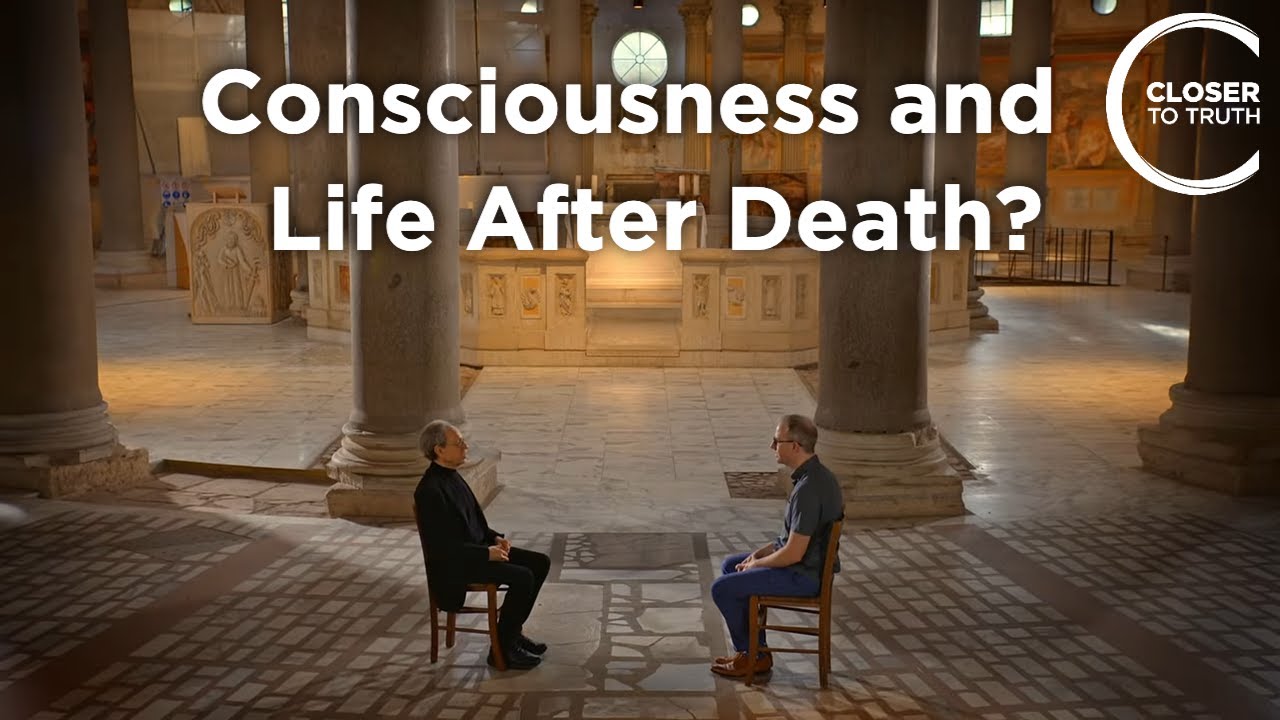
Philip Goff - Consciousness and Life After Death?
⚡ THE VIBE
✨Philip Goff is a prominent British philosopher who advocates for **panpsychism**, the radical idea that consciousness is a fundamental and ubiquitous feature of the universe, not just an emergent property of complex brains. His work offers a compelling solution to the 'hard problem' of consciousness, inviting us to rethink reality itself. ✨
§1Who is Philip Goff? 🤔
Dr. Philip Goff is a British philosopher known for his groundbreaking work on the philosophy of mind, particularly his passionate and articulate defense of panpsychism. Currently a Professor of Philosophy at Durham University, Goff has emerged as one of the most influential voices in the contemporary debate on consciousness. He's not just an academic; he's a public intellectual, engaging with a broad audience through books, articles, and media appearances, making complex philosophical ideas accessible and exciting. His mission? To bridge the chasm between our scientific understanding of the physical world and our lived experience of consciousness. 🌉
§2The 'Hard Problem' & Panpsychism 🧠💡
Goff's work primarily tackles what philosopher David Chalmers famously dubbed the 'hard problem' of consciousness: why and how physical processes in the brain give rise to subjective experience. While many theories attempt to reduce consciousness to brain activity or dismiss it as an illusion, Goff argues these approaches fall short. His proposed solution is panpsychism, the view that consciousness (or proto-consciousness) is a fundamental property of matter, existing even at the most basic levels of reality, like electrons and quarks. ⚛️
This isn't the 'everything is conscious' cartoon version, but a sophisticated philosophical stance. Goff suggests that the consciousness we experience in our brains is a complex integration of these more fundamental, micro-consciousnesses. It's a bold idea that offers a potential way out of the explanatory gap between the physical and the phenomenal, suggesting that science might need to expand its toolkit to understand the universe's 'inner' aspect. 🌌
§3Key Arguments & Contributions 📚
Goff's arguments for panpsychism are rooted in several key observations and logical deductions. He highlights the 'explanatory gap' inherent in purely physicalist accounts of consciousness, where even perfect knowledge of brain structure and function doesn't explain why it feels like something to be us. He often points to the successes of integrated information theory (IIT) as a scientific framework that, while not explicitly panpsychist, aligns with the idea that consciousness is linked to integrated information, which could exist in simpler systems.
His major works, such as Consciousness and Fundamental Reality (2017) and Galileo's Error: Foundations for a New Science of Consciousness (2019), meticulously lay out his case. In Galileo's Error, he argues that Galileo, in founding modern science, inadvertently 'left consciousness out' by focusing solely on quantifiable, objective properties of matter, thus creating the very problem we now grapple with. Goff's work is a call to correct this historical oversight and integrate consciousness back into our scientific worldview. 🔭
§4Impact & Controversies 💥
Philip Goff's advocacy for panpsychism has ignited significant debate within philosophy, neuroscience, and even physics. While many find his arguments compelling as a potential solution to the hard problem, others remain skeptical, citing challenges like the 'combination problem': how do tiny bits of consciousness combine to form complex human consciousness? 🤔
Despite the controversy, Goff has undeniably shifted the conversation. He has brought panpsychism from the fringes of philosophical thought into mainstream academic discourse, making it a respectable and actively researched area. His accessible writing style and engaging public presence have also introduced these profound questions to a wider audience, sparking curiosity about the fundamental nature of reality. He frequently contributes to platforms like The Guardian and Aeon, and is a regular guest on podcasts and debates, ensuring his ideas reach beyond the ivory tower. 🗣️
§5The Future of Consciousness Studies 🚀
As we move further into the 21st century, the 'hard problem' of consciousness remains one of science's greatest mysteries. Philip Goff's work provides a powerful, thought-provoking framework that encourages us to look beyond traditional paradigms. Whether panpsychism ultimately prevails or not, Goff's contributions compel us to critically examine our assumptions about matter, mind, and the universe. His influence is likely to endure, inspiring future generations of thinkers to boldly explore the 'inner' dimensions of reality. His insights are crucial for anyone grappling with the profound implications of what it means to be conscious in a vast, mysterious cosmos. 🌟
For more, explore his official website: Philip Goff