
Contents
Overview
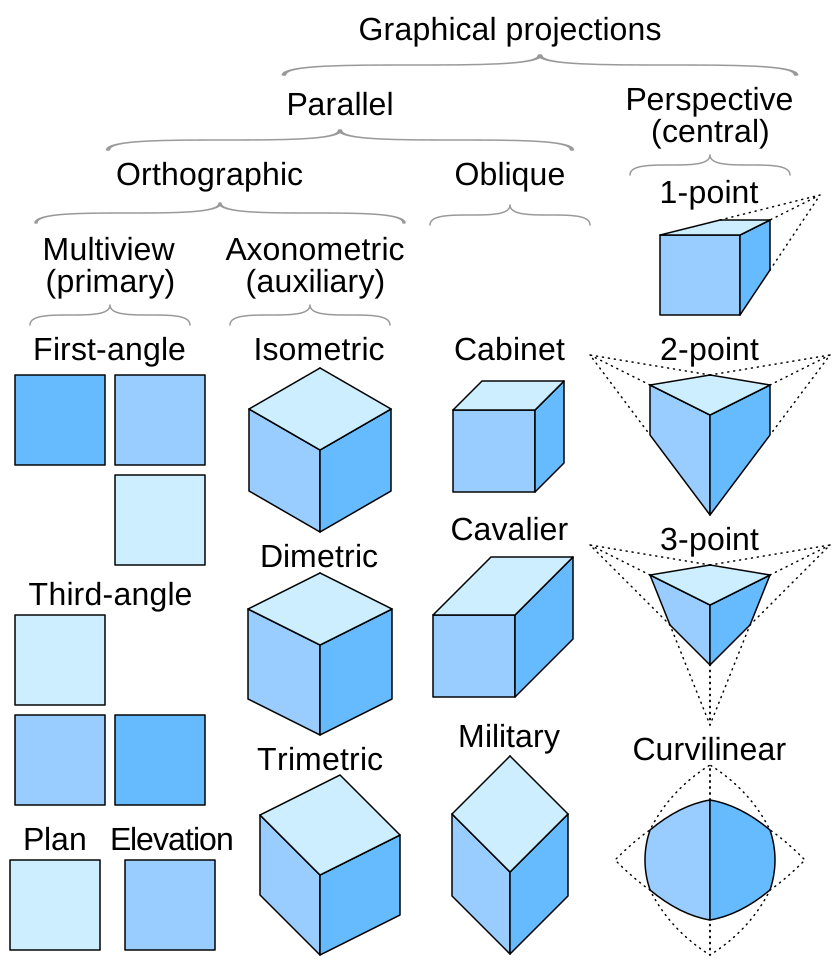
Perspective in drawing is a graphical technique used to create the illusion of three-dimensional space on a two-dimensional surface. It is based on the optical fact that objects appear smaller as their distance from the observer increases, and are subject to foreshortening. Linear perspective is an approximate representation of an image as it is seen by the eye, and is useful for representing complex scenes in a realistic and engaging way. Perspective is a fundamental skill for any artist or designer. With the rise of digital art tools, perspective drawing has become more accessible and versatile, allowing artists to create stunning and realistic artworks with ease. The technique is also used in architecture, engineering, and other fields where visual representation is crucial. The use of perspective in film and video production has become a key aspect of visual storytelling. The use of virtual reality (VR) and augmented reality (AR) technology has expanded the possibilities of perspective in art and design.
🎨 Introduction to Perspective
Introduction to perspective — Perspective in drawing is a technique used to create the illusion of three-dimensional space on a two-dimensional surface. It is based on the optical fact that objects appear smaller as their distance from the observer increases, and are subject to foreshortening. Perspective is a fundamental skill for any artist or designer.
⚙️ How Perspective Works
How perspective works — Linear perspective is an approximate representation of an image as it is seen by the eye. It is based on the principle that objects appear smaller as their distance from the observer increases, and are subject to foreshortening. The technique uses lines that converge at a vanishing point to create the illusion of depth and distance. The use of perspective in film and video production has become a key aspect of visual storytelling.
📊 Key Principles and Techniques
Key principles and techniques — There are several key principles and techniques used in perspective drawing. These include the use of vanishing points, horizon lines, and atmospheric perspective. Vanishing points are the points at which lines converge in the distance, and are used to create the illusion of depth and distance. Horizon lines are the lines that mark the boundary between the earth and the sky, and are used to create a sense of scale and proportion. Atmospheric perspective is the technique of using color and contrast to create a sense of depth and distance.
🌍 Cultural and Historical Context
Cultural and historical context — The use of perspective in art and design is reportedly a long-standing tradition, with various artists and designers experimenting with the technique over time.
⚡ Current State and Latest Developments
Current state and latest developments — Today, perspective is still a fundamental technique used in art and design. With the rise of digital art tools, perspective drawing has become more accessible and versatile, allowing artists to create stunning and realistic artworks with ease. The use of virtual reality (VR) and augmented reality (AR) technology has expanded the possibilities of perspective in art and design.
🤔 Controversies and Debates
Controversies and debates — There are several controversies and debates surrounding the use of perspective in art and design. Some artists argue that perspective is a limiting technique that restricts the creativity and imagination of the artist. Others argue that perspective is a fundamental technique that is essential for creating realistic and engaging artworks.
🔮 Future Outlook and Predictions
Future outlook and predictions — The future of perspective in art and design is likely to be shaped by advances in technology and changes in cultural and societal trends. As digital art tools become more sophisticated and accessible, perspective drawing is likely to become even more versatile and widespread.
💡 Practical Applications
Practical applications — Perspective has a range of practical applications in art, design, and other fields. It is used in architecture to create detailed and realistic images of buildings and landscapes. It is used in engineering to create visual representations of complex systems and structures. It is also used in film and video production to create realistic and engaging visual effects.
Key Facts
- Category
- aesthetics
- Type
- concept