
Contents
Overview
The origins of PaaS and IaaS trace back to the early 2000s, driven by companies like Amazon Web Services (AWS) and Microsoft Azure. AWS launched EC2 in 2002, pioneering IaaS by offering virtual servers, while Google's App Engine (2008) and Salesforce's Force.com (2006) popularized PaaS. These services emerged as solutions to the limitations of on-premises infrastructure, with IBM Cloud and Oracle Cloud later expanding the market. The rise of DevOps and CI/CD practices further cemented their roles in modern software development.
⚙️ How It Works
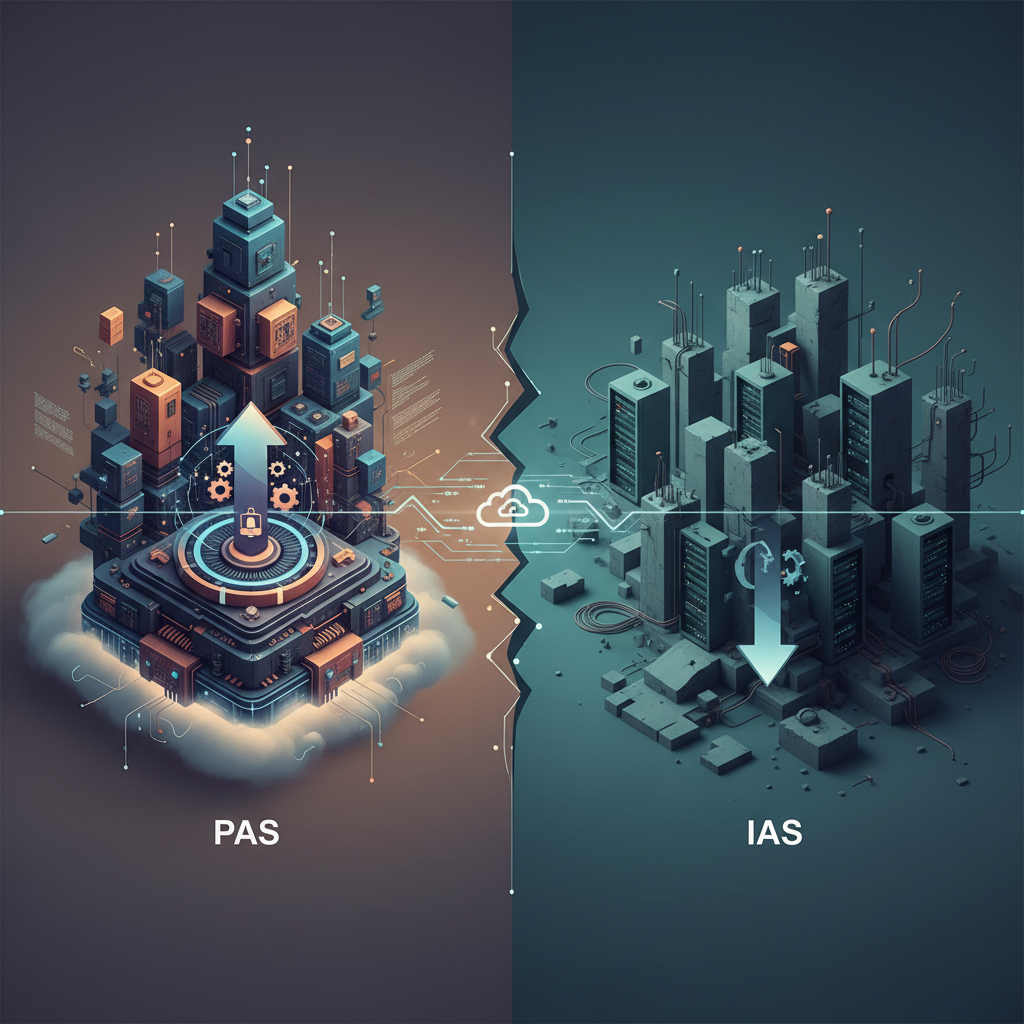
PaaS abstracts infrastructure complexities, providing tools like databases, middleware, and APIs. Platforms such as Heroku (2007) and Azure App Service enable developers to deploy apps without managing servers. In contrast, IaaS grants granular control over virtual machines, storage, and networking. AWS EC2, Google Compute Engine, and VMware vSphere exemplify IaaS, allowing enterprises like Netflix to scale resources dynamically. Both models rely on hypervisors (e.g., KVM, Xen) and APIs for automation, but PaaS prioritizes developer productivity while IaaS emphasizes flexibility.
🌍 Cultural Impact
Culturally, PaaS and IaaS have reshaped tech ecosystems. Startups leverage PaaS for rapid prototyping, while enterprises adopt IaaS for hybrid cloud architectures. The rise of Kubernetes and Docker has blurred lines between models, with companies like Red Hat and Docker Inc. integrating both. OpenStack and Cloud Foundry further democratized access, fostering innovation in sectors like fintech (e.g., Stripe) and healthcare (e.g., Epic Systems). However, debates persist over vendor lock-in risks and security responsibilities, with AWS and Microsoft leading in compliance certifications.
🔮 Legacy & Future
Looking ahead, PaaS and IaaS will evolve with AI-driven automation and edge computing. Hybrid cloud strategies, exemplified by AWS Outposts and Azure Stack, highlight their convergence. The adoption of serverless architectures (e.g., AWS Lambda) challenges traditional boundaries, while quantum computing and 5G networks may redefine scalability needs. As cloud providers like Google Cloud and Oracle Cloud compete, the focus will remain on cost optimization, security, and interoperability, ensuring these models remain cornerstones of digital transformation.
Key Facts
- Year
- 2000s
- Origin
- Silicon Valley tech industry
- Category
- technology
- Type
- concept
Frequently Asked Questions
What's the main difference between PaaS and IaaS?
PaaS provides pre-configured development environments (e.g., Heroku, Azure App Service), while IaaS offers raw virtualized resources (e.g., AWS EC2, Google Compute Engine). PaaS abstracts infrastructure, whereas IaaS grants granular control.
Which is better for startups?
PaaS is ideal for startups due to its rapid deployment and reduced operational overhead, but IaaS offers more customization for scaling needs. Companies like Stripe use IaaS for scalability, while startups often start with PaaS platforms like Firebase.
Are there security differences?
IaaS providers (e.g., AWS) handle physical security, while users manage OS and app security. PaaS abstracts more layers, potentially reducing attack surfaces but increasing dependency on the provider's security measures.
How do they fit with hybrid cloud strategies?
Hybrid models combine IaaS for on-premises control (e.g., AWS Outposts) and PaaS for cloud-native apps. Enterprises like IBM use this approach to balance flexibility and compliance.
What's the future of these models?
AI-driven automation and edge computing will redefine scalability. Serverless architectures (e.g., AWS Lambda) may further blur lines, while quantum computing could demand new infrastructure paradigms.