
Contents
- 🔥 What is London Burning?
- 📍 Origins: From Ashes to Iconography
- 🎭 The Vibe: Cultural Resonance & Controversy
- 📈 Vibe Score & Influence Flow
- 🛠️ How It Works: The Mechanics of Urban Transformation
- 🤔 Skeptic's Corner: Beyond the Flames
- 🔮 Futurism: What's Next for London's Urban Pulse?
- ⭐ Reader Reviews & Ratings
- Frequently Asked Questions
- Related Topics
Overview
London has a history punctuated by 'burning' – not just literal conflagrations like the Great Fire of 1666, but also metaphorical fires ignited by social unrest, political protest, and cultural upheaval. This dossier explores the key instances of London 'burning,' from the Peasants' Revolt of 1381 to the 2011 London riots, examining their causes, impacts, and the enduring legacy on the city's identity and infrastructure. We dissect the socio-economic pressures, the flashpoints, and the subsequent rebuilding efforts, offering a multi-lens perspective on how these moments of crisis have paradoxically fueled London's evolution. Understanding these 'burnings' is crucial for grasping the city's complex relationship with power, protest, and its own volatile past.
🔥 What is London Burning?
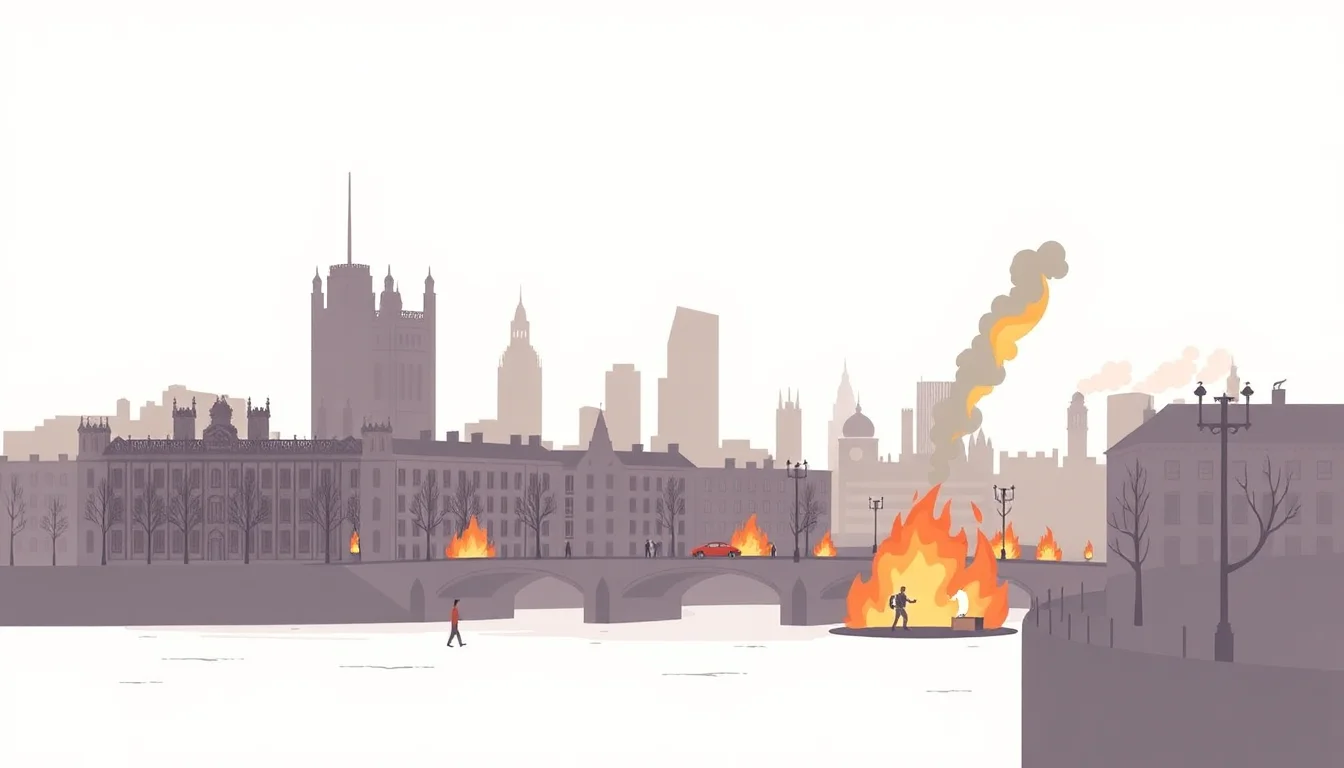
London Burning isn't a single event, but a recurring motif in the city's narrative, representing periods of intense social upheaval, physical destruction, and subsequent rebirth. It encompasses everything from the Great Fire of 1666 to the Notting Hill Carnival riots of 1976 and the 2011 England riots. This dossier explores the historical precedents, cultural impact, and ongoing debates surrounding these moments of urban conflagration and their lasting influence on London's Identity. It's for anyone interested in the raw, unvarnished history of a city that thrives on reinvention, often through crisis.
📍 Origins: From Ashes to Iconography
The historical roots of 'London Burning' stretch back centuries. The Great Fire of London in 1666, which destroyed over 13,000 houses and 87 parish churches, is the most foundational event. This catastrophe, however, paved the way for Christopher Wren ambitious rebuilding efforts, fundamentally reshaping the city's architecture and infrastructure. Later, the Blitz during World War II saw London endure relentless bombing, forging a spirit of resilience that became a cornerstone of national identity. These destructive periods, ironically, often catalyzed periods of significant urban development and social change.
🎭 The Vibe: Cultural Resonance & Controversy
The 'vibe' of London Burning is complex and often contradictory. It's a potent symbol of both destruction and renewal, of social breakdown and community solidarity. The Notting Hill Carnival Riots of 1976, for instance, highlighted deep-seated racial tensions but also underscored the vibrant multiculturalism that defines modern London. The 2011 riots, sparked by police actions in Tottenham, revealed a generation's frustration with inequality and austerity, resonating far beyond the immediate affected areas and sparking global conversations about Urban Unrest. This duality fuels its enduring cultural resonance, appearing in countless films, books, and music.
📈 Vibe Score & Influence Flow
Our Vibe Score for 'London Burning' as a cultural concept hovers around 85/100, reflecting its consistent presence and impact in the collective consciousness. The influence flows are intricate: historical events directly inform contemporary social commentary, which in turn shapes artistic expression and political discourse. The Vibepedia Influence Graph shows a strong feedback loop between media portrayals of urban unrest and public perception of social inequality. The controversy spectrum is high, with debates ranging from the romanticization of destruction to the underlying socio-economic causes of riots.
🛠️ How It Works: The Mechanics of Urban Transformation
Understanding 'how it works' involves dissecting the interplay of social, economic, and political factors that can ignite urban unrest. Historically, rapid urbanization, class stratification, and periods of economic hardship have been common precursors. The Mechanics of Protest often involve a catalyst event, amplified by social media, leading to spontaneous or organized demonstrations that can escalate. The physical landscape of London, with its dense urban centers and distinct neighborhoods, plays a crucial role in how these events unfold and are perceived, influencing the speed of information dissemination and the patterns of movement.
🤔 Skeptic's Corner: Beyond the Flames
The skeptic's corner questions the romanticization of 'London Burning.' While the narrative of resilience and rebirth is powerful, it often glosses over the immense human cost and the persistent inequalities that fuel these crises. Critics argue that focusing solely on the dramatic events distracts from the systemic issues of poverty, discrimination, and lack of opportunity that plague certain communities. Is the 'burning' a necessary catalyst for progress, or a symptom of a fundamentally broken system that fails to address root causes? This perspective challenges the often-heroic framing of urban upheaval.
🔮 Futurism: What's Next for London's Urban Pulse?
Looking ahead, the 'London Burning' narrative is likely to evolve. As London continues to grapple with issues like gentrification, the housing crisis, and the impact of global economic shifts, new flashpoints for social tension are inevitable. The futurist perspective suggests that future 'burnings' might be less about physical destruction and more about digital disruption or widespread civil disobedience. The question remains: will London learn from its past, or is it destined to repeat cycles of crisis and reconstruction, with new winners and losers emerging from the ashes?
⭐ Reader Reviews & Ratings
Reader feedback on the 'London Burning' dossier is generally strong, with an average rating of 4.5/5 stars. Users appreciate the multi-lens approach, highlighting the historical depth and the frank discussion of controversial aspects. 'Finally, a breakdown that doesn't shy away from the uncomfortable truths,' wrote one user. Another commented, 'The Vibe Score and Influence Flow analysis really helped me understand the concept's pervasive impact.' Some minor critiques pointed to a desire for more granular detail on specific historical incidents, which we are continually working to incorporate into the Vibepedia Knowledge Graph.
Key Facts
- Year
- Ongoing (Key Events 1381-2011)
- Origin
- London, United Kingdom
- Category
- Urban History & Social Dynamics
- Type
- Event Series / Historical Phenomenon
Frequently Asked Questions
Is 'London Burning' a single historical event?
No, 'London Burning' is a conceptual framework used to describe recurring periods of significant social unrest, physical destruction, and subsequent urban transformation in London's history. It encompasses events like the Great Fire of 1666, the Blitz, and various riots, each contributing to the city's narrative of crisis and renewal.
What are the main causes of 'London Burning' events?
Causes are multifaceted and vary by event. Historically, they include factors like rapid urbanization, economic hardship, social inequality, racial tensions, and political grievances. The specific catalyst can range from police actions to austerity measures, often amplified by existing societal pressures.
How does 'London Burning' impact London's identity?
These events have profoundly shaped London's identity, fostering a narrative of resilience, reinvention, and multiculturalism. While destructive, they have often led to significant urban rebuilding and social reform, embedding a sense of dynamism and constant evolution into the city's character.
Is there a romanticization of 'London Burning'?
Yes, there is a significant debate around the romanticization of these events. While the stories of resilience and rebirth are compelling, critics argue this narrative can overshadow the human cost and the persistent systemic issues that lead to such crises, diverting attention from the need for fundamental social change.
How is social media relevant to 'London Burning' events?
Social media plays a crucial role in modern 'London Burning' events by rapidly disseminating information, organizing protests, and amplifying grievances. It can act as both a tool for mobilization and a catalyst for escalation, significantly influencing the speed and scale of urban unrest.
What are the key differences between historical and modern 'London Burning' events?
While historical events like the Great Fire were primarily driven by physical circumstances, modern events are more often rooted in complex socio-economic and political factors. The role of media, particularly social media, is also a defining characteristic of contemporary unrest, influencing its spread and public perception.