
Contents
Overview
A Laboratory Information Management System (LIMS) is a software-based solution designed to manage and track laboratory samples, experiments, results, and reporting. Far beyond simple sample tracking, modern LIMS act as central nervous systems for laboratories, integrating with instruments, managing workflows, ensuring regulatory compliance, and facilitating data analysis across diverse scientific disciplines. These systems are critical for organizations ranging from pharmaceutical giants and environmental testing labs to clinical diagnostics and academic research institutions, aiming to improve operational efficiency, reduce errors, and accelerate scientific discovery. The global LIMS market is projected to grow significantly, driven by increasing automation, stringent regulatory demands, and the explosion of data generated by scientific research.
🎵 Origins & History
Initial LIMS were often bespoke, mainframe-based solutions designed for specific high-throughput environments like clinical pathology. The true evolution began with the advent of personal computers and relational databases, allowing for more accessible and modular LIMS. The push for regulatory compliance, particularly with the advent of Good Laboratory Practices (GLP) and later FDA 21 CFR Part 11, further cemented the need for robust, auditable LIMS solutions.
⚙️ How It Works
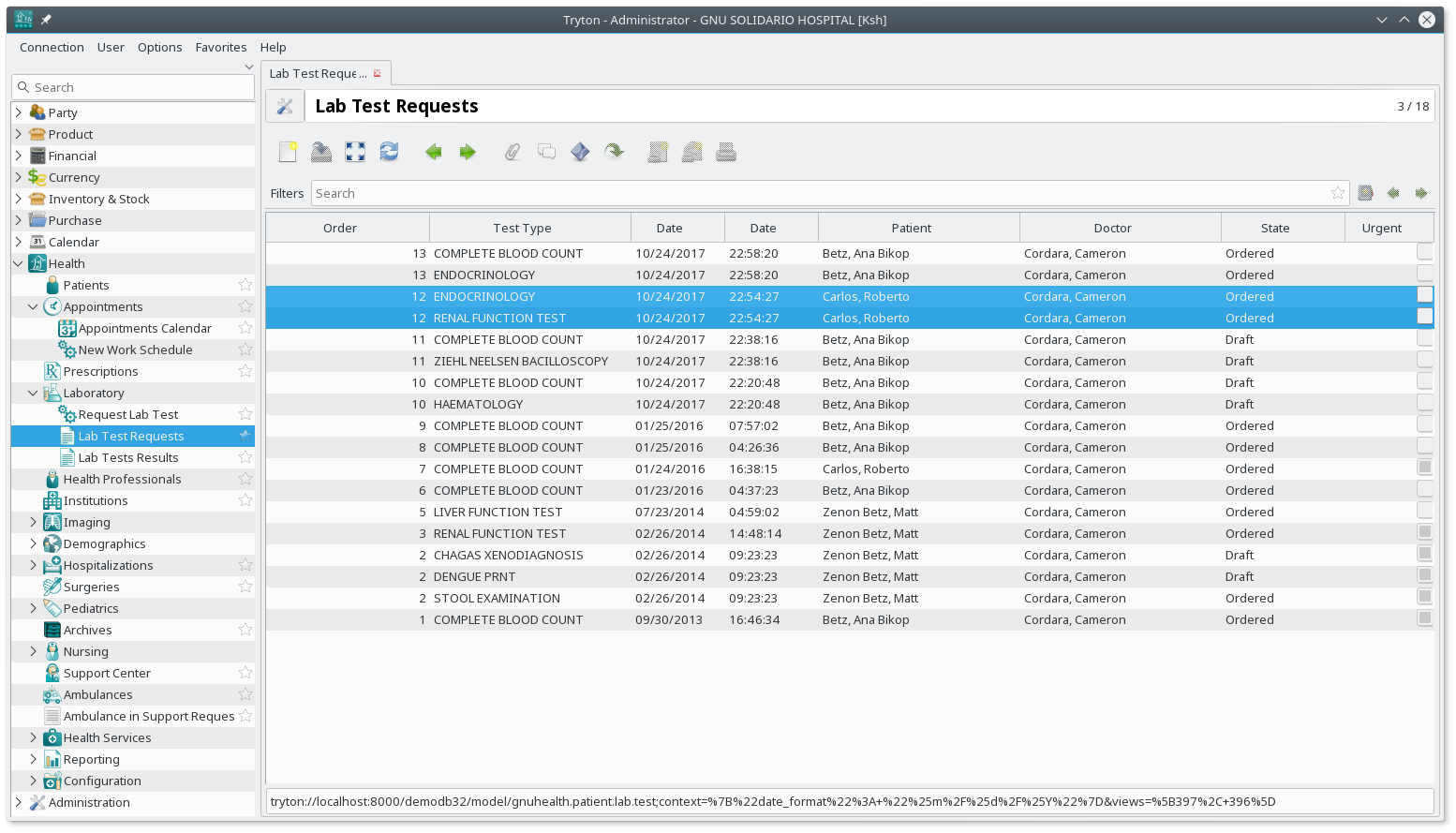
At its core, a LIMS operates by centralizing laboratory data and processes. When a sample arrives, it's logged into the LIMS, assigned a unique identifier, and its associated workflow is initiated. This workflow can include specific tests, instrument integrations, and quality control checks. As tests are performed, results are captured either manually or, more commonly, directly from analytical instruments via interfaces like HL7 or DICOM. The LIMS then stores, validates, and analyzes this data, generating reports that can be customized for different stakeholders. Crucially, LIMS manage instrument calibration, maintenance schedules, and reagent inventory, ensuring operational continuity and compliance with standards like ISO 17025.
📊 Key Facts & Numbers
The global LIMS market is a significant economic force, with projections indicating substantial growth driven by increasing automation, stringent regulatory demands, and the explosion of data generated by scientific research. North America currently holds the largest market share. The pharmaceutical and biotechnology sectors represent the largest end-user segment, contributing significantly to LIMS revenue due to stringent regulatory requirements and extensive R&D activities. Environmental testing laboratories follow closely, with increasing market share driven by increasing environmental regulations and public health concerns. The average implementation cost for a mid-sized LIMS can range from $50,000 to $250,000, with enterprise-level solutions potentially exceeding $1 million.
👥 Key People & Organizations
Key players in the LIMS landscape include giants like Thermo Fisher Scientific, Agilent Technologies, PerkinElmer, and Abbott Laboratories, each offering comprehensive suites of LIMS solutions tailored to specific industries. Beyond these large conglomerates, specialized vendors like LabVantage Solutions and STARLIMS (now part of ACL Digital) have carved out significant niches. In the clinical space, Cerner (now Oracle Health) and Epic Systems offer Laboratory Information Systems (LIS), which are LIMS variants focused on patient care. The development of LIMS has also been influenced by academic research and standards bodies like the American Society for Clinical Pathology (ASCP).
🌍 Cultural Impact & Influence
LIMS have fundamentally reshaped the scientific enterprise, moving laboratories from paper-based record-keeping to highly digitized, data-driven environments. This shift has accelerated the pace of research and development, particularly in fields like drug discovery and diagnostics, where rapid, accurate data processing is paramount. The ability of LIMS to ensure data integrity and traceability has been instrumental in meeting regulatory demands from bodies like the Food and Drug Administration and the European Medicines Agency. Furthermore, LIMS have fostered greater collaboration by enabling seamless data sharing and access across research teams and even between different institutions, a trend amplified by the rise of cloud-based LIMS platforms. The cultural shift towards data-centric science, heavily reliant on systems like LIMS, is a defining characteristic of 21st-century research.
⚡ Current State & Latest Developments
The current LIMS landscape is characterized by a strong push towards cloud-based and SaaS (Software as a Service) models, offering greater scalability, accessibility, and reduced IT overhead compared to traditional on-premise installations. Artificial intelligence (AI) and machine learning (ML) are increasingly being integrated into LIMS for predictive analytics, anomaly detection in results, and automated data interpretation, moving beyond simple data management to intelligent insights. The Internet of Things (IoT) is also playing a larger role, with more laboratory instruments becoming connected, feeding real-time data directly into the LIMS. Furthermore, there's a growing demand for LIMS that can handle complex omics data (genomics, proteomics, metabolomics) and support advanced workflows in areas like personalized medicine and synthetic biology. The integration of LIMS with Electronic Lab Notebooks (ELNs) is also a significant trend, creating a more unified digital research environment.
🤔 Controversies & Debates
One of the persistent controversies surrounding LIMS revolves around implementation complexity and cost. While proponents tout efficiency gains, the initial investment, lengthy deployment times, and the need for extensive user training can be substantial barriers, particularly for smaller labs or academic institutions. Another debate centers on vendor lock-in; once a LIMS is implemented, migrating to a different system can be an arduous and costly undertaking, leading to concerns about flexibility and long-term cost-effectiveness. Furthermore, the 'one-size-fits-all' approach of some LIMS solutions is often criticized, as laboratories have highly specialized needs that generic systems may struggle to accommodate without significant customization, which can introduce its own set of validation and maintenance challenges.
🔮 Future Outlook & Predictions
The future of LIMS is inextricably linked to advancements in AI, automation, and data science. We can expect LIMS to evolve into more proactive, intelligent platforms that not only manage data but also actively guide research processes. Predictive maintenance for laboratory equipment, automated experimental design suggestions based on historical data, and real-time quality control alerts powered by ML algorithms will become standard. The integration with robotic automation and high-throughput screening systems will deepen, creating fully automated 'lights-out' laboratories. Furthermore, as data privacy and security concerns grow, LIMS will need to incorporate more sophisticated blockchain or decentralized ledger technologies to ensure immutable audit trails and enhanced data provenance, particularly in regulated industries. The rise of specialized LIMS for niche fields like quantum computing research or advanced materials science is also on the horizon.
💡 Practical Applications
LIMS find application across a vast spectrum of scientific and industrial sectors. In the pharmaceutical and biotechnology industries, they are indispensable for drug discovery, development, quality control, and clinical trials, ensuring compliance with regulations like FDA GMP. Environmental testing laboratories use LIMS to manage water, air, and soil sample analysis, tracking results for regulatory compliance and public health monitoring. Food and beverage companies employ LIMS for quality assurance, testing for contaminants, allergens, and nutritional content. Clinical diagnostic laboratories rely on LIMS (often termed LIS) for patient sample tracking, test ordering, result reporting, and billing. Academic and government research institutions utilize LIMS to manage research projects, track experimental data, and facilitate collaboration, ensuring reproducibility and data integrity. Even industries like forensics and petrochemicals leverage LIMS for sample tracking and analysis.
Key Facts
- Category
- technology
- Type
- topic