Kimberlé Crenshaw
The legal scholar who gave us the lens to see our complex selves. 👓
Featured partners and sponsors
New advertisers get $25 in ad credits
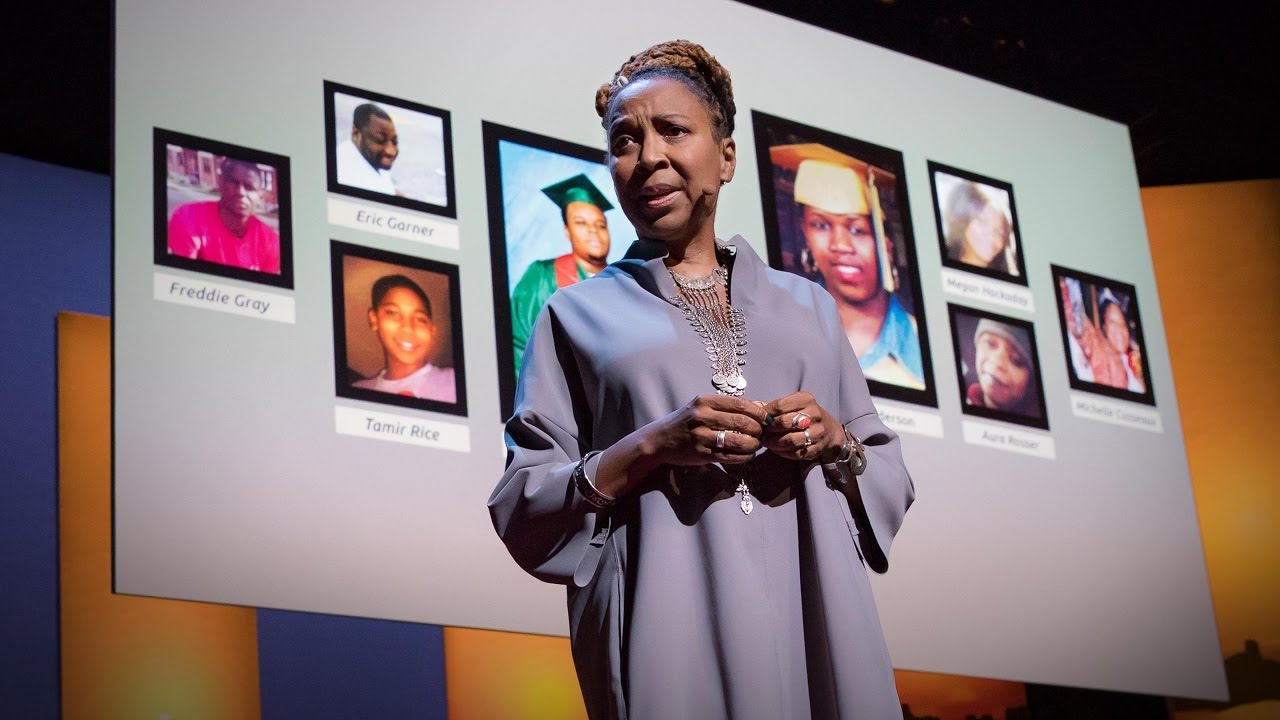
The urgency of intersectionality | Kimberlé Crenshaw | TED
⚡ THE VIBE
✨Kimberlé Crenshaw is the visionary legal scholar who coined **intersectionality**, a groundbreaking framework that revolutionized how we understand identity, power, and justice in the 21st century. Her work illuminates how various social and political identities combine to create unique modes of discrimination and privilege. 💡
§1Who is Kimberlé Crenshaw? 🌟
Born in Canton, Ohio, in 1959, Kimberlé Williams Crenshaw isn't just a professor; she's a paradigm-shifter. She holds distinguished professorships at both the UCLA School of Law and Columbia Law School, where she's been a leading voice in critical race theory and feminist legal theory for decades. Her intellectual prowess and unwavering commitment to justice have made her an indispensable figure in contemporary social thought. She didn't just describe complex social dynamics; she gave us the language to articulate them, empowering countless activists, scholars, and everyday people to better understand their own experiences and the world around them. ✨
§2The Birth of Intersectionality: A Lightbulb Moment 💡
Crenshaw first introduced the term intersectionality in 1989 in her seminal paper, "Demarginalizing the Intersection of Race and Sex: A Black Feminist Critique of Antidiscrimination Doctrine, Feminist Theory and Antiracist Politics." This wasn't just academic jargon; it was a profound insight born from analyzing real-world legal cases. She observed that Black women, for instance, often fell through the cracks of anti-discrimination law because their experiences couldn't be neatly categorized as either racial discrimination or gender discrimination. It was both, simultaneously, creating a unique form of oppression. She argued that traditional legal frameworks, designed to address single-axis discrimination, failed to capture the multi-layered realities of marginalized groups. This concept quickly moved beyond legal theory, becoming a cornerstone of Gender Studies, Critical Race Theory, and social justice movements worldwide. 🌍
§3Why It Matters: Seeing the Whole Picture 🖼️
Intersectionality isn't just a buzzword; it's a vital analytical tool. It teaches us that identities like race, gender, class, sexuality, disability, and nationality don't operate in isolation. Instead, they interact and overlap, creating complex systems of advantage and disadvantage. For example, a wealthy Black man experiences racism differently than a poor Black woman. A queer disabled person faces unique challenges that neither their queerness nor their disability alone can explain. By recognizing these intersections, we can:
- Develop more effective policies: Designing solutions that address the specific needs of multiply marginalized groups.
- Foster deeper empathy: Understanding the diverse struggles within communities.
- Challenge systemic inequalities: Unpacking how power structures are built on these intersecting identities.
It's about moving beyond simplistic categories to embrace the beautiful, messy complexity of human experience. 🌈
§4Impact and Evolution in 2026 🚀
In 2026, Kimberlé Crenshaw's work remains as relevant as ever, if not more so. Her framework has permeated academic disciplines, policy-making, and popular culture. From discussions on AI Bias and algorithmic discrimination to global human rights advocacy, intersectionality provides the lens through which we analyze injustice. Organizations like the African American Policy Forum, which Crenshaw co-founded, continue to champion intersectional approaches to civil rights. While some critics have attempted to mischaracterize or dilute its meaning, the core principle—that our identities are not singular but interwoven—has only strengthened its hold on our collective consciousness. It's a testament to the power of a truly transformative idea. 🌐
§5Beyond the Classroom: Activism and Advocacy ✊
Crenshaw is not just an academic; she's a passionate advocate. She co-founded the African American Policy Forum (AAPF) in 1996, a think tank dedicated to dismantling structural inequality. Through initiatives like the "#SayHerName" campaign, AAPF has brought critical attention to the often-overlooked experiences of Black women and girls who are victims of police violence, ensuring their stories are heard and acknowledged. Her work consistently bridges the gap between theory and practice, demonstrating how intellectual frameworks can directly inform and empower social movements. She has advised global bodies, testified before Congress, and continues to be a leading voice for justice and equality. Her influence is truly global. 🗣️