
Contents
- 🌍 Overview: The Unfolding Nuclear Saga
- ⏳ Timeline & Milestones: From Dawn to Dusk?
- ⚛️ Technical Underpinnings: What's Actually Happening?
- ⚖️ International Scrutiny & Sanctions: The Global Chessboard
- 📈 Future Scenarios: From Diplomacy to Deterrence
- 💡 Key Players & Their Stakes: Who's Pulling the Strings?
- 💥 Potential Flashpoints: Where Could Things Go Wrong?
- 📚 Further Reading & Resources: Staying Informed
- Frequently Asked Questions
- Related Topics
Overview
Iran's nuclear program is a geopolitical tightrope walk, a complex web of scientific advancement, national ambition, and international suspicion. For decades, the Islamic Republic has pursued a dual-use nuclear capability, ostensibly for energy and medical isotopes, but persistently shadowed by concerns over weaponization. This isn't just about centrifuges and enriched uranium; it's a narrative woven with historical grievances, regional rivalries, and the ever-present specter of conflict. Understanding its future requires dissecting the technical realities, the diplomatic dance, and the seismic geopolitical shifts it could trigger. This guide offers a practical entry point into a topic that continues to shape global security, from the corridors of the International Atomic Energy Agency to the streets of Tehran.
⏳ Timeline & Milestones: From Dawn to Dusk?
The program's roots trace back to the Shah's nuclear ambitions, but it truly accelerated post-1979 revolution. Key milestones include the construction of the Bushehr Nuclear Power Plant (with Russian assistance), the clandestine development of enrichment facilities like Natanz and Fordow, and the landmark Joint Comprehensive Plan of Action (JCPOA) in 2015. The US withdrawal from the JCPOA in 2018 and subsequent reimposition of sanctions dramatically altered the trajectory, leading Iran to incrementally increase its enrichment levels and stockpile. The future hinges on whether these past agreements can be revived or if a new, more precarious equilibrium will emerge, potentially pushing Iran closer to a nuclear threshold.
⚛️ Technical Underpinnings: What's Actually Happening?
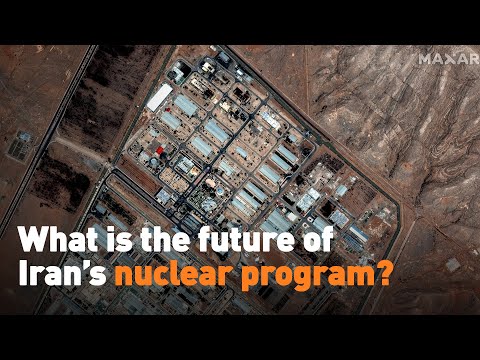
At its core, Iran's nuclear capability rests on uranium enrichment, a process that increases the concentration of the fissile isotope U-235. Iran operates thousands of centrifuges, primarily IR-1 and more advanced IR-2m and IR-4 models, at its declared facilities. Reports from the IAEA indicate Iran has enriched uranium to levels significantly beyond the JCPOA's limits, including near-weapons-grade (around 60%). The critical question isn't just enrichment levels, but also the physical capacity to produce enough enriched material for a weapon and the technical know-how to design and build a delivery system. The existence of undeclared sites or activities, though denied by Tehran, remains a persistent concern for international inspectors.
⚖️ International Scrutiny & Sanctions: The Global Chessboard
The international community, led by the world powers, has long sought to constrain Iran's nuclear ambitions through a combination of diplomacy and punitive sanctions. The JCPOA represented a high-water mark of this effort, imposing strict limits on Iran's nuclear activities in exchange for sanctions relief. However, the program's future is inextricably linked to the efficacy and enforcement of these sanctions, as well as the ongoing work of the IAEA to verify Iran's compliance. Debates rage over whether sanctions should be tightened further, eased to encourage diplomacy, or if a new framework is needed entirely. The UNSC remains a key forum for these discussions, though consensus is often elusive.
📈 Future Scenarios: From Diplomacy to Deterrence
The future of Iran's nuclear program presents a spectrum of possibilities, each with profound implications. A diplomatic breakthrough could see a revived or renegotiated JCPOA, re-establishing strict limits and robust verification. Conversely, a failure of diplomacy might lead Iran to accelerate its program, potentially crossing the threshold into a de facto nuclear state, which would likely trigger a severe regional and international crisis. Another scenario involves a prolonged stalemate, where Iran maintains a 'breakout capability' – the ability to produce a weapon quickly if it chose to – creating a persistent deterrence dilemma. The ultimate outcome will be shaped by the strategic calculations of Tehran, Washington, and key regional actors like Israeli security concerns.
💡 Key Players & Their Stakes: Who's Pulling the Strings?
Several key figures and entities are central to the unfolding narrative. In Iran, the Supreme National Security Council and the Islamic Revolutionary Guard Corps (IRGC) hold significant sway over nuclear policy. Internationally, the US administration, particularly figures involved in US foreign policy towards Iran, the IAEA under its Director General Rafael Grossi, and European signatories to the JCPOA (France, Germany, UK) are crucial. Regional powers like Saudi Arabia and Israel have their own vital interests, often advocating for a harder line against Iran's nuclear program. Understanding their motivations and influence is key to grasping the program's future.
💥 Potential Flashpoints: Where Could Things Go Wrong?
The potential for escalation is a constant shadow. A miscalculation or a deliberate provocation could ignite a wider conflict. This could involve Israeli preemptive strikes against Iranian nuclear facilities, a response that could draw in the US and lead to broader regional instability. Alternatively, increased tensions could manifest in naval confrontations in the Strait of Hormuz, cyber warfare, or proxy conflicts across the Middle East. The risk of Iran deciding to 'go nuclear' in response to perceived existential threats, or even as a bargaining chip, remains the ultimate flashpoint. The shadow war is a prime example of existing tensions that could spill over.
📚 Further Reading & Resources: Staying Informed
To grasp the intricacies of Iran's nuclear program, consulting authoritative sources is essential. The International Atomic Energy Agency (IAEA) provides regular, technical reports on Iran's nuclear activities. For geopolitical context, publications from think tanks like the Brookings Institution and the Council on Foreign Relations offer in-depth analysis. Academic journals specializing in non-proliferation studies delve into the technical and strategic dimensions. Following reputable news outlets with dedicated foreign policy reporting, such as The New York Times and The Wall Street Journal, is also crucial for staying abreast of the latest developments and diplomatic maneuvers. Understanding the history of nuclear proliferation provides valuable context.
Key Facts
- Year
- 2024
- Origin
- Vibepedia.wiki
- Category
- Geopolitics & International Relations
- Type
- Geopolitical Topic
Frequently Asked Questions
What is Iran's stated goal for its nuclear program?
Iran officially states its nuclear program is solely for peaceful purposes, primarily to generate electricity and produce medical isotopes for cancer treatment. They argue that as a signatory to the Non-Proliferation Treaty (NPT), they have a right to nuclear technology for peaceful uses. However, international concerns persist due to the program's dual-use potential and past clandestine activities.
How close is Iran to developing a nuclear weapon?
Estimates vary, but intelligence assessments and IAEA reports suggest Iran has the technical capability and enriched material to produce enough fissile material for a weapon in a relatively short timeframe, often cited as weeks or months, if it chose to do so. The critical unknown is Iran's political decision to weaponize and its ability to develop a reliable delivery system.
What is the Joint Comprehensive Plan of Action (JCPOA)?
The JCPOA, agreed upon in 2015 between Iran and the P5+1 (US, UK, France, Russia, China, plus Germany), imposed strict limitations on Iran's nuclear program in exchange for sanctions relief. It aimed to prevent Iran from developing nuclear weapons for a specified period. The US withdrew from the deal in 2018, and Iran has since gradually rolled back its commitments.
What role does the IAEA play?
The International Atomic Energy Agency (IAEA) is the UN's nuclear watchdog. Its role is to monitor and verify that Iran's nuclear activities comply with international safeguards and its commitments under agreements like the JCPOA. IAEA inspectors have access to declared nuclear sites in Iran, but their ability to investigate undeclared activities or verify past work is often hampered.
What are the main concerns of countries like Israel and Saudi Arabia?
Israel views Iran's nuclear program as an existential threat, fearing it could destabilize the region and threaten its security. Saudi Arabia shares similar concerns about Iran's regional influence and potential nuclear capability, leading to a regional arms race dynamic. Both countries advocate for strong international action to prevent Iran from acquiring nuclear weapons.
What are the potential consequences of Iran developing nuclear weapons?
The acquisition of nuclear weapons by Iran would fundamentally alter the strategic balance in the Middle East, potentially triggering a regional nuclear arms race involving countries like Saudi Arabia and Egypt. It could also lead to increased international isolation for Iran, heightened tensions with the US and its allies, and a greater risk of preemptive military action.