Immanuel Kant
The Enlightenment's architect of reason, duty, and the starry skies above.
Featured partners and sponsors
New advertisers get $25 in ad credits
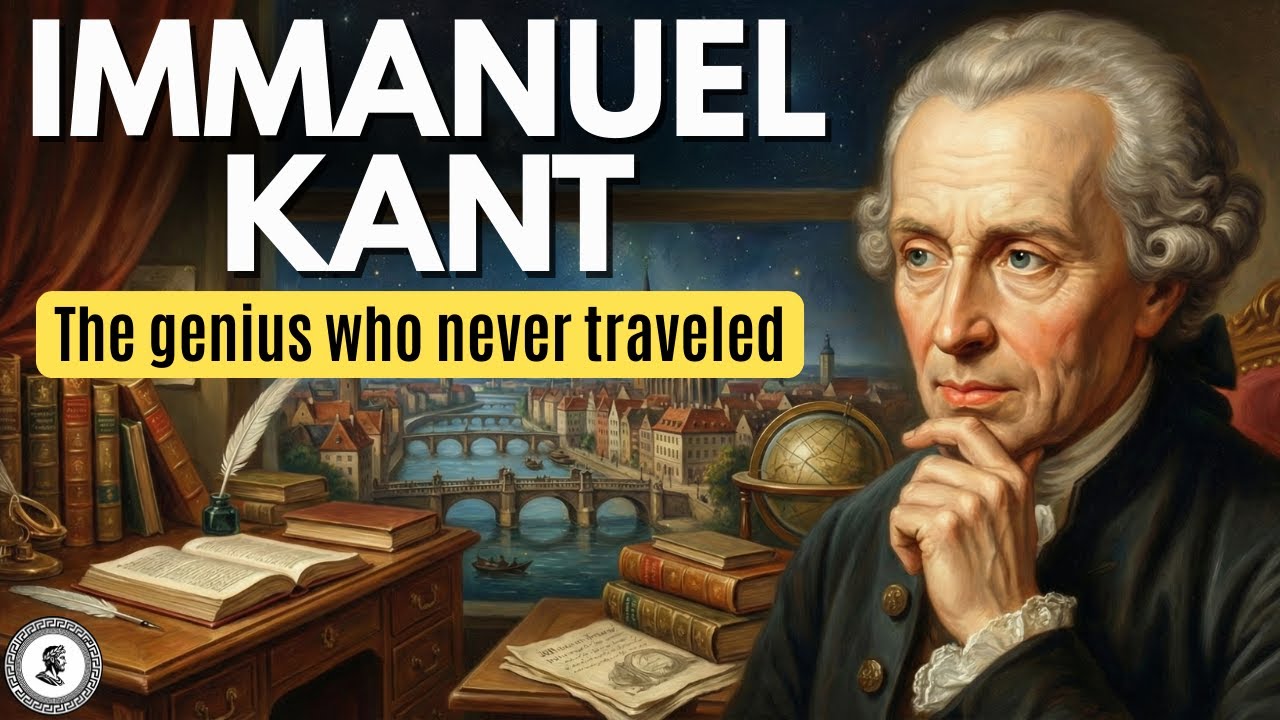
Immanuel Kant Documentary to Fall Asleep To
⚡ THE VIBE
✨Immanuel Kant, the titan of the Enlightenment, fundamentally reshaped Western philosophy by proposing that our minds actively construct our experience of reality, rather than passively receiving it. His ideas on morality, reason, and aesthetics continue to echo through every corridor of modern thought. 🤯
§1Who Was This Guy, Anyway? 🧐
Born in 1724 in Königsberg, Prussia (now Kaliningrad, Russia), Immanuel Kant lived a life of remarkable routine and profound intellectual depth. He famously never traveled more than a few miles from his hometown, yet his mind journeyed to the farthest reaches of human reason. Kant was a professor at the University of Königsberg, initially teaching everything from physics and geography to mathematics, before dedicating himself entirely to philosophy. His daily walks were so punctual, locals reportedly set their watches by him! 🚶♂️🕰️ But don't let the methodical lifestyle fool you; his ideas were anything but mundane. He was a central figure of the Enlightenment, aiming to reconcile rationalism with empiricism, and in doing so, he basically wrote the operating system for modern Western philosophy. 💡
§2The Copernican Revolution of Philosophy 🚀
Before Kant, philosophers were largely divided: the Rationalists (like René Descartes) believed knowledge came primarily from reason, while the Empiricists (like David Hume) argued it stemmed from sensory experience. Kant looked at this philosophical tug-of-war and said, 'Why not both?' He proposed a 'Copernican Revolution' in philosophy, suggesting that instead of our minds conforming to objects, objects conform to our minds. 🤯
This means our minds aren't passive receivers of information but active shapers of it. We don't just see the world; we structure it through innate categories of understanding, like space, time, and causality. This radical idea, laid out in his monumental Critique of Pure Reason (1781), showed how both reason and experience are essential for knowledge. It's like our brains come pre-installed with certain software that organizes the raw data of the world into a coherent reality. 🧠✨
§3Moral Law & The Categorical Imperative 📜⚖️
Kant wasn't just about what we know, but how we should act. His ethical system, primarily found in Groundwork of the Metaphysics of Morals (1785) and Critique of Practical Reason (1788), is built around the concept of the Categorical Imperative. This isn't a 'do this if you want that' (hypothetical) command, but an unconditional moral law that applies to everyone, everywhere, all the time. 🌍💖
There are several formulations, but the most famous are:
- The Universalizability Principle: "Act only according to that maxim whereby you can at the same time will that it should become a universal law without contradiction." Basically, if everyone did what you're about to do, would the world still make sense, and would it be a world you'd want to live in? 🤔
- The Humanity Principle: "Act in such a way that you treat humanity, whether in your own person or in the person of any other, never merely as a means to an end, but always at the same time as an end." This is huge! It means people are inherently valuable and should never be used as mere tools for someone else's gain. Respect for persons is paramount. 🤝
These principles emphasize duty, good will, and the inherent dignity of rational beings. It's about acting from a sense of moral obligation, not just for personal gain or fear of punishment. 🌟
§4Legacy & Why He Still Matters Today 🌐
Kant's influence is simply colossal. Almost every major philosophical movement since his time has had to grapple with his ideas, either building upon them or reacting against them. From German Idealism (hello, Hegel!) to analytic philosophy, from political theory to theories of art, Kant's fingerprints are everywhere. His emphasis on individual autonomy and the inherent dignity of persons profoundly shaped modern concepts of human rights and democratic ideals. ✊
In 2026, his ideas on critical thinking, the limits of human knowledge, and the foundations of ethics remain incredibly relevant. When we debate the ethics of AI, the nature of objective truth, or the universal rights of individuals, we are, in many ways, still having conversations that Kant initiated centuries ago. He taught us to 'dare to know!' (Sapere aude!), urging us to use our own reason rather than blindly accepting authority. What a vibe! 🚀