Ian Goodfellow
The AI visionary who gifted the world Generative Adversarial Networks (GANs) 🎨
Featured partners and sponsors
New advertisers get $25 in ad credits
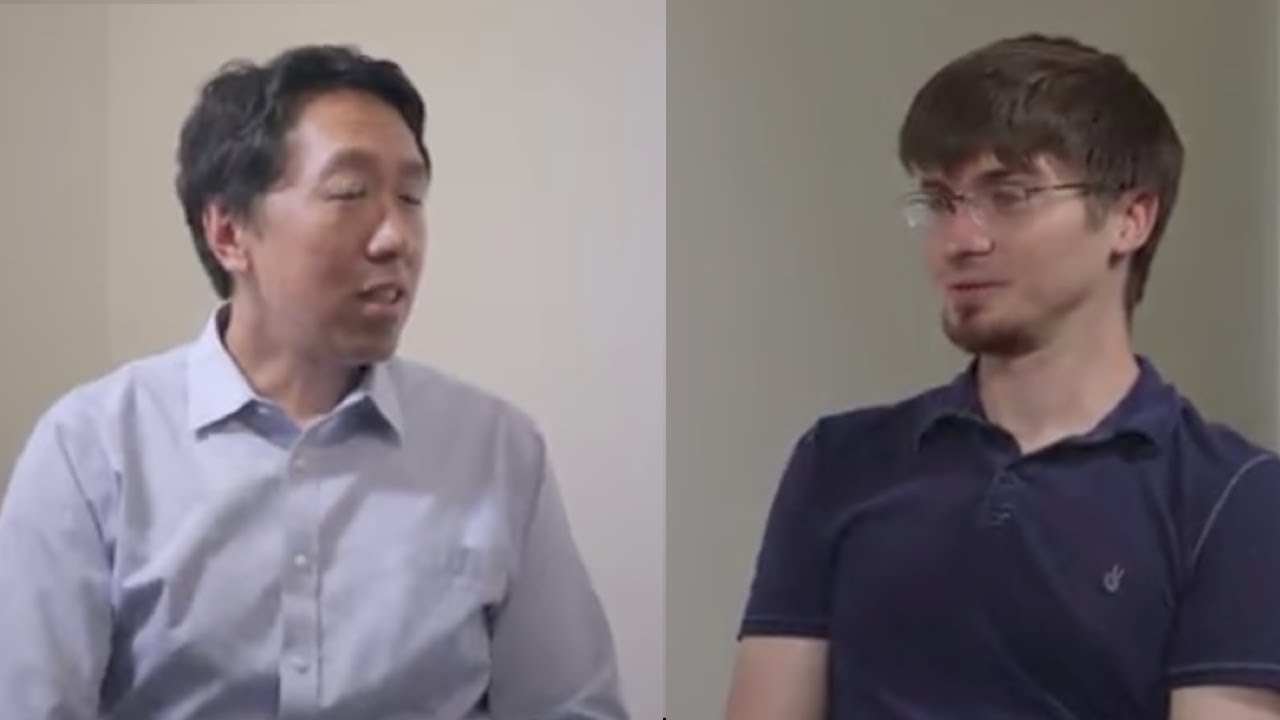
Heroes of Deep Learning: Andrew Ng interviews Ian Goodfellow
⚡ THE VIBE
✨Ian Goodfellow is a pioneering AI researcher, best known as the lead inventor of **Generative Adversarial Networks (GANs)**, a revolutionary class of AI that can create incredibly realistic data, from images to audio, fundamentally reshaping the landscape of machine learning and creative AI. His work has unlocked new frontiers in synthetic media and deep learning.
§1The Genesis of a Game-Changer: GANs are Born
Imagine two AI models locked in an eternal, creative dance: one trying to create something so convincing it fools the other, and the other trying its best to detect the fakes. That's the elegant, ingenious core of Generative Adversarial Networks (GANs), a concept first introduced by Ian Goodfellow and his colleagues in 2014. Goodfellow, then a PhD student at the Université de Montréal, published the seminal paper that would ignite a generative AI revolution. It wasn't just another algorithm; it was a paradigm shift, teaching machines to learn through a process of adversarial competition, much like an art forger perfecting their craft against a vigilant art critic. This simple yet profound idea unlocked unprecedented capabilities in machine generation. 💡
§2Who is Ian Goodfellow? The Architect of AI Creativity
Born in 1985, Ian Goodfellow quickly became a luminary in the field of artificial intelligence. His academic journey led him to the University of Montreal, where under the guidance of Yoshua Bengio, a pioneer in deep learning and a Turing Award laureate, he developed the concept of GANs. Post-PhD, Goodfellow's career trajectory was nothing short of meteoric. He joined Google Brain, a leading AI research division at Google, and later Apple, where he served as Director of Machine Learning in the Special Projects Group. His contributions extend beyond GANs; he's also a co-author of the highly influential textbook, Deep Learning, which has become a bible for AI practitioners worldwide. His work consistently pushes the boundaries of what AI can achieve, making him a true titan of modern machine learning. 🧠
§3How GANs Work: The Forger and the Detective
At its heart, a GAN consists of two neural networks: a Generator and a Discriminator. The Generator's job is to create new data instances (e.g., images, audio, text) that resemble the real data it's been trained on. The Discriminator's job is to distinguish between the real data and the fake data produced by the Generator. They train simultaneously in a zero-sum game: as the Generator gets better at producing fakes, the Discriminator gets better at spotting them, and vice versa. This adversarial process drives both networks to improve until the Generator can produce data so realistic that the Discriminator can no longer tell the difference. The result? Mind-bogglingly realistic outputs! Think of it like a never-ending game of cat and mouse, where both players become masters of their craft. 🐱🐭
§4Impact & Legacy: From Deepfakes to Digital Art
The impact of Ian Goodfellow's work with GANs has been nothing short of transformative. They've powered advancements across countless domains: creating hyper-realistic human faces (check out This Person Does Not Exist), generating stunning digital art, enhancing image resolution, synthesizing speech, and even accelerating drug discovery. While the technology has incredible positive applications, it also introduced new challenges, particularly with the rise of deepfakes – synthetic media that can be used to create convincing but fabricated videos or audio. This dual nature highlights the profound ethical considerations that accompany powerful AI technologies, a topic Goodfellow himself has actively engaged with. His innovation didn't just build a tool; it sparked a global conversation about the future of reality and authenticity in the digital age. 🌟
§5The Future of Generative AI & Goodfellow's Continuing Influence
As we navigate 2026, generative AI, heavily influenced by GANs, continues to evolve at an astonishing pace. Newer models like Diffusion Models have emerged, often building upon or complementing the foundational ideas laid by GANs. Ian Goodfellow's foundational work remains a cornerstone of this exciting field. His contributions have inspired countless researchers and engineers to explore the frontiers of machine creativity, pushing the boundaries of what AI can generate and how it interacts with human imagination. The legacy of GANs, and by extension, Ian Goodfellow, is not just in the algorithms themselves, but in the vibrant, ever-expanding ecosystem of generative AI that continues to surprise and delight us. The future of AI creation is bright, and we have Goodfellow to thank for much of its glow. ✨