Higgs Boson
The 'God Particle' that gives everything its swagger (and mass!)
Featured partners and sponsors
New advertisers get $25 in ad credits
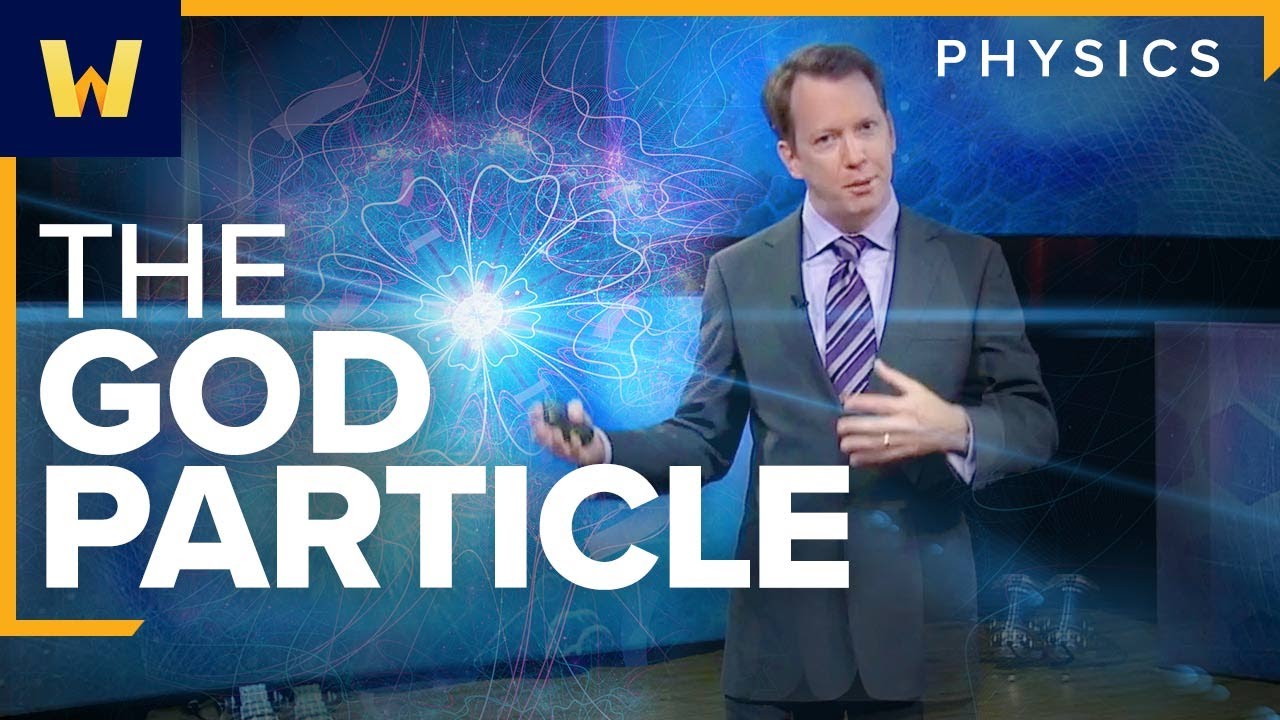
What Is the Higgs Boson? | Sean Carroll Discusses the God Particle
⚡ THE VIBE
✨The **Higgs Boson** is a fundamental particle that underpins our understanding of why anything in the universe has mass, acting like a cosmic molasses that slows down other particles. Its discovery was a monumental triumph for modern physics, confirming the Standard Model and opening new frontiers. 🚀
§1The Cosmic Weight-Giver: What is the Higgs Boson? 🌟
Imagine the universe as a grand, bustling party. Some particles zip around effortlessly, while others lumber along, as if wading through treacle. The Higgs Boson is the tiny, elusive particle associated with the Higgs field, which acts like that treacle. It's not just any particle; it's the one that interacts with other fundamental particles, imparting upon them what we perceive as mass. Without the Higgs field, and its associated boson, the universe as we know it simply wouldn't exist – everything would be massless, flying at the speed of light, and atoms couldn't form. It's the ultimate cosmic influencer, dictating how matter behaves and interacts. Think of it as the universe's inherent resistance training! 💪
§2From Theory to Triumph: The Origin Story 💡
The story of the Higgs Boson began not in a collider, but in the minds of brilliant theorists in the 1960s. In 1964, a group of physicists, including Peter Higgs, Robert Brout, François Englert, Gerald Guralnik, C. R. Hagen, and Tom Kibble, independently proposed a mechanism to explain why some elementary particles have mass while others, like the photon, do not. This became known as the Higgs mechanism. For decades, it remained a theoretical cornerstone of the Standard Model of Particle Physics, a beautiful, elegant solution to a fundamental problem. But proving its existence was another matter entirely. It required an unprecedented feat of engineering and international collaboration: the Large Hadron Collider (LHC) at CERN.
§3The Hunt for the Elusive Particle: How it Works 🔬
Finding the Higgs Boson was like searching for a specific grain of sand on every beach in the world, while simultaneously smashing two super-fast grains of sand together and hoping to see a unique splash. The LHC, a 27-kilometer underground ring, accelerates protons to nearly the speed of light before smashing them head-on. These collisions generate a shower of new particles, and physicists sift through trillions of data points, looking for the tell-tale 'signature' of a Higgs Boson decaying into other, more stable particles. It's an incredibly rare event, and the Higgs itself is incredibly short-lived, decaying almost instantly. The discovery in 2012, announced by CERN, was the culmination of decades of work, billions of dollars, and the dedication of thousands of scientists and engineers. It was a moment of pure scientific triumph! 🎉
§4Beyond the Lab: Why It Matters to You 🌍
While you won't directly 'use' the Higgs Boson in your daily life, its discovery has profound implications for our understanding of reality. It completed the Standard Model, solidifying our most comprehensive theory of fundamental particles and forces. This isn't just abstract science; it underpins everything. From the stability of atoms that form your body and the chair you're sitting on, to the very existence of stars and galaxies, the Higgs mechanism is at play. It's a testament to humanity's insatiable curiosity and our ability to unravel the universe's deepest secrets. The technologies developed for the LHC, from advanced computing to superconductivity, also have ripple effects, impacting fields like medical imaging and data processing. It's a grand example of how pure science drives innovation. 🚀
§5The 'God Particle' and Future Mysteries 🤔
The nickname 'God Particle,' popularized by physicist Leon Lederman, caught on because of the Higgs Boson's fundamental role and its elusive nature. While many scientists dislike the moniker for its theological connotations, it certainly captured public imagination! The Higgs Boson's discovery, however, also opened new doors to even deeper mysteries. Why is the Higgs Boson's mass what it is? Why do some particles have vastly different masses? Does the Higgs field interact with dark matter or dark energy? These are the questions that drive the next generation of particle physics experiments. The Higgs Boson isn't the end of the story; it's a crucial chapter in an ongoing cosmic epic. What other particles are out there, waiting to be found? The universe still holds so many secrets! 🤫