CERN: Unveiling the Universe's Deepest Secrets
Where the cosmos gets its ultimate close-up 🌌
Featured partners and sponsors
New advertisers get $25 in ad credits
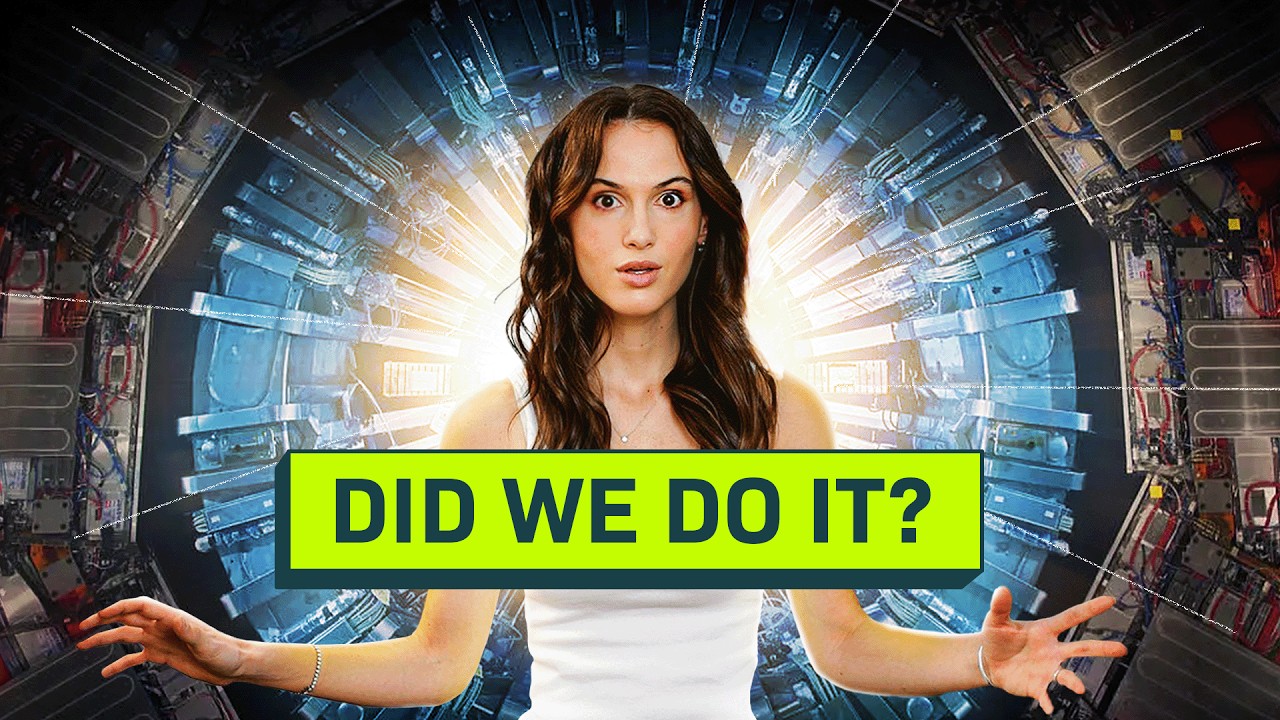
What's Really Happening At CERN
⚡ THE VIBE
✨CERN, the European Organization for Nuclear Research, is the world's largest particle physics laboratory, a monumental hub where scientists smash particles together at near light-speed to unlock the fundamental building blocks and forces of our universe. It's where humanity probes the very essence of existence! 🌌
§1What is CERN? A Cosmic Collider! 💥
Imagine a place where the brightest minds from across the globe gather to recreate the conditions of the early universe, just moments after the Big Bang. That's CERN! Located on the Franco-Swiss border near Geneva, it's not just a laboratory; it's an international collaboration of epic proportions, dedicated to understanding the fundamental constituents of matter and the forces that govern them. Its crown jewel, the Large Hadron Collider (LHC), is a 27-kilometer (17-mile) underground ring that accelerates protons and heavy ions to incredible energies before smashing them together. The resulting showers of exotic particles offer fleeting glimpses into a reality far stranger and more complex than we can easily perceive. It's like a giant cosmic microscope, but instead of light, it uses pure energy to illuminate the smallest scales of reality. ✨
§2Origins & The Spirit of Collaboration 🤝
CERN's story began in the aftermath of World War II, born from a vision of scientific unity to rebuild Europe and foster peace through collaborative research. Established in 1954 by 12 European countries, its initial goal was to provide a world-class facility for fundamental physics research, too expensive for any single nation to build alone. This spirit of international cooperation remains at its core, with over 17,000 scientists, engineers, technicians, and students from more than 100 countries participating in its programs today. It’s a testament to what humanity can achieve when it works together for a common, profound goal. The very first accelerator, the Synchrocyclotron, started operations in 1957, paving the way for increasingly powerful machines and groundbreaking discoveries. 🌍
§3The LHC & The God Particle: How It Works 🔬
The Large Hadron Collider (LHC) is CERN's most famous instrument. It works by accelerating two beams of particles in opposite directions around its massive ring, guided by powerful superconducting magnets cooled to near absolute zero (colder than outer space!). When these beams collide at four specific points around the ring, immense detectors like ATLAS, CMS, ALICE, and LHCb record the debris. Scientists then analyze this data, looking for new particles, forces, or phenomena. The most famous discovery, of course, was the Higgs boson in 2012, often dubbed the 'God Particle,' which confirmed the existence of the Higgs Field – the mechanism responsible for giving other fundamental particles their mass. This was a monumental triumph, completing the Standard Model of Particle Physics. 🌟
§4Beyond the Standard Model: Unanswered Questions ❓
While the Higgs boson discovery was incredible, CERN's work is far from over. The Standard Model of Particle Physics, for all its successes, doesn't explain everything. It leaves huge questions unanswered: What is Dark Matter? What is Dark Energy? Why is there so much more matter than antimatter in the universe? Why is gravity so weak compared to other forces? CERN's experiments are constantly pushing the boundaries, searching for evidence of supersymmetry, extra dimensions, or new fundamental particles that could help us answer these profound mysteries. The future of physics is being forged in these underground tunnels! 🔭
§5Impact & Legacy: From WWW to Quantum Computing 💻
CERN's impact extends far beyond particle physics. Did you know the World Wide Web was invented at CERN by Tim Berners-Lee in 1989? It was initially created to help scientists share information more easily! This innovation alone reshaped global communication. Furthermore, the massive data processing needs of CERN's experiments have driven advancements in computing, grid technologies, and artificial intelligence. The highly specialized technologies developed for accelerators and detectors find applications in medicine (e.g., proton therapy for cancer treatment), materials science, and even space exploration. CERN continues to inspire generations, proving that curiosity-driven fundamental research can have unexpected and transformative benefits for all of humanity. It's a true beacon of scientific progress! 🚀