Global Supply Chains
The intricate, invisible web that brings everything to your doorstep. 🌐📦
Featured partners and sponsors
New advertisers get $25 in ad credits
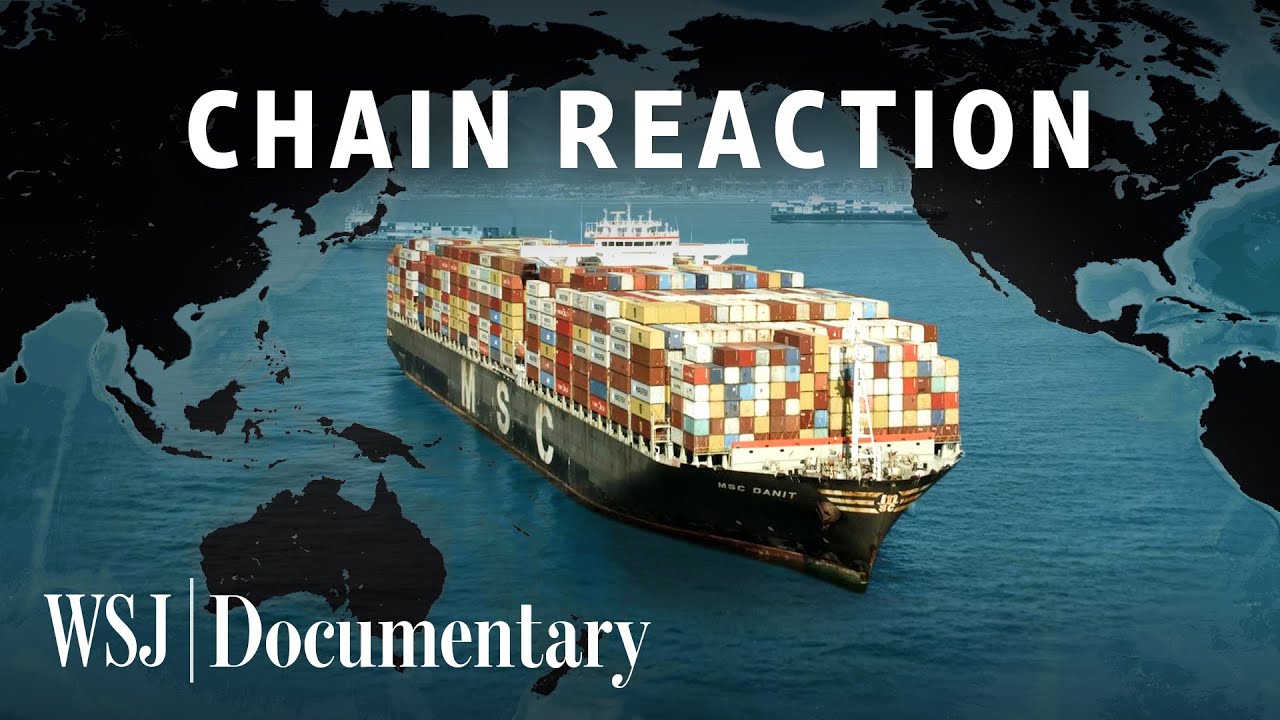
Why Global Supply Chains May Never Be the Same | WSJ Documentary
⚡ THE VIBE
✨Global Supply Chains are the complex, interconnected networks spanning continents that orchestrate the journey of products from raw materials to your hands, a marvel of modern logistics that underpins our entire consumer society. They're the silent architects behind nearly every item you own, a testament to human ingenuity and interdependence. 🌍✨
§1The Grand Tapestry of Goods 🌐
Imagine your morning coffee ☕. The beans likely came from Colombia or Vietnam, roasted in Italy, shipped on a container vessel, ground in your local supermarket, and brewed in a machine assembled from parts sourced globally. That entire journey, from seed to sip, is a Global Supply Chain in action. It's not just about moving stuff; it's about the intricate dance of logistics, manufacturing, finance, and information that brings virtually every product you interact with into existence. These chains are the unsung heroes of globalization, making everything from your smartphone 📱 to your sneakers 👟 accessible and, often, affordable. They are the ultimate testament to human ingenuity and our collective ambition to connect the world.
§2From Humble Beginnings to Hyper-Complexity 🚀
While trade routes have existed for millennia (think the ancient Silk Road), the concept of a global supply chain as we know it truly began to take shape after the Industrial Revolution with mass production and improved transportation. However, it was the late 20th century, particularly from the 1970s onwards, that saw an explosion in complexity. Factors like containerization 🚢 (standardized shipping containers), advancements in information technology 💻, and the rise of multinational corporations led to companies fragmenting their production processes across the globe, seeking efficiencies in labor, resources, and specialized manufacturing. This era birthed 'just-in-time' manufacturing and the pursuit of lean operations, making supply chains incredibly efficient but also, as we've learned, incredibly fragile.
§3The Anatomy of the Flow: How It Works ⚙️
At its core, a global supply chain involves several key stages, each with its own set of challenges and innovations: 1. Sourcing & Procurement: Finding raw materials and components, often from diverse international suppliers. 2. Manufacturing & Production: Transforming these materials into finished goods, frequently across multiple countries. 3. Logistics & Transportation: Moving goods via sea 🌊, air ✈️, rail 🚂, and road 🚚, involving customs, warehousing, and freight forwarding. 4. Distribution & Retail: Getting products from distribution centers to stores or directly to consumers. 5. Reverse Logistics: Handling returns, repairs, and recycling. Each stage is underpinned by sophisticated software for Supply Chain Management (SCM), data analytics, and increasingly, AI to predict demand and optimize routes. Key players include major shipping lines like Maersk and logistics giants like DHL.
§4Impact & The Great Unraveling of the 2020s 📉
The impact of global supply chains is monumental: they've driven down costs, spurred economic growth, and fostered international cooperation. However, the 2020s proved to be a crucible. The COVID-19 pandemic exposed their inherent vulnerabilities, leading to widespread disruptions, empty shelves, and skyrocketing prices. Geopolitical tensions, trade wars, and events like the 2021 Suez Canal blockage by the Ever Given 🚢 further highlighted how a single choke point could ripple across the entire global economy. This era has sparked a critical re-evaluation, pushing for greater resilience, diversification, and even 're-shoring' or 'friend-shoring' production closer to home. The goal? To build chains that are not just efficient, but antifragile.
§5The Future is Smart, Sustainable, and Secure 💡
Looking ahead, the future of global supply chains is being shaped by several transformative trends. Digitalization is paramount, with technologies like blockchain enhancing transparency and traceability, and IoT sensors providing real-time tracking. Sustainability is no longer optional; consumers and regulators demand greener logistics, reduced emissions, and ethical sourcing. Companies are investing in electric fleets 🔋 and optimizing routes to minimize their carbon footprint. Furthermore, resilience is the new watchword, with a focus on diversifying suppliers, building buffer stocks, and leveraging advanced analytics to anticipate and mitigate disruptions. The aim is to create supply chains that are not just robust, but also responsible and ready for whatever the future throws at them. The journey is far from over, but the evolution is constant! 🌟