
Contents
Overview
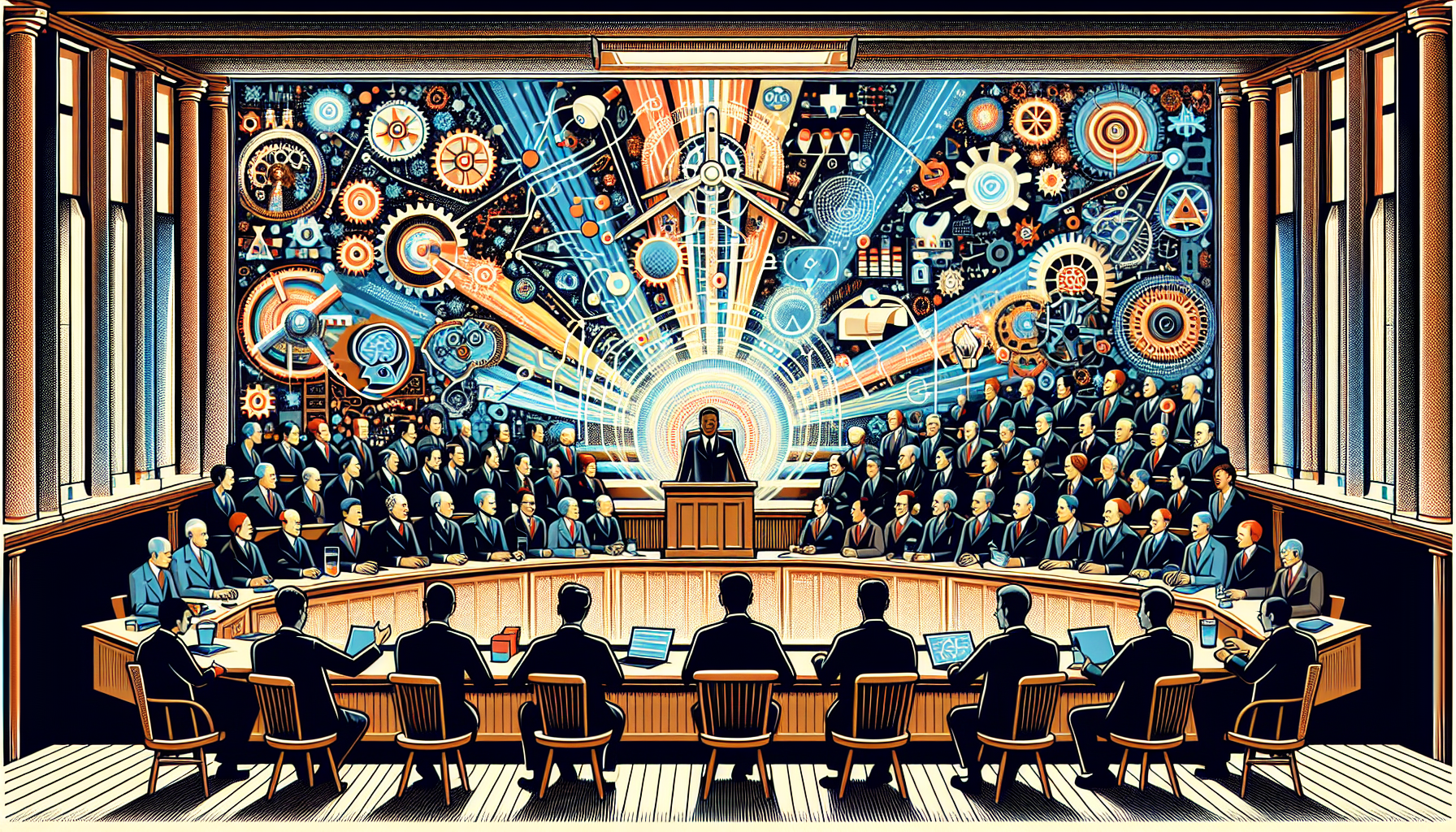
The Dartmouth Conference was a six-week workshop held at Dartmouth College in the summer of 1956. The conference was organized by John McCarthy, a young computer scientist who is often credited with coining the term 'artificial intelligence.' McCarthy was joined by Marvin Minsky, a mathematician and computer scientist who would later become a leading figure in the field of AI, as well as Nathaniel Rochester, a computer scientist who worked at IBM, and Claude Shannon, a mathematician and engineer who is known as the 'father of information theory.' The conference was attended by other notable figures, including Allen Newell and Herbert Simon, who would later develop the first AI program, called the Logical Theorist. Companies like IBM and Google would later build upon the foundations laid by these pioneers, with Google's AI-powered search engine and IBM's Watson supercomputer being notable examples.
🤖 The Birth of Artificial Intelligence
The Dartmouth Conference marked the beginning of artificial intelligence as a field of research. The conference participants discussed various topics, including machine learning, natural language processing, and computer vision. They also explored the possibilities of creating machines that could think and learn like humans, with the help of technologies like TensorFlow and PyTorch. The conference was influenced by the work of Alan Turing, a British mathematician and computer scientist who had proposed the Turing Test, a measure of a machine's ability to exhibit intelligent behavior equivalent to, or indistinguishable from, that of a human. The Dartmouth Conference built upon Turing's ideas and laid the foundation for the development of AI as we know it today, with applications in fields like healthcare, finance, and education, and with the help of companies like Microsoft and Amazon.
📚 Key Players and Their Contributions
The key players at the Dartmouth Conference made significant contributions to the development of AI. John McCarthy, for example, developed the Lisp programming language, which became a popular language for AI research. Marvin Minsky worked on the development of neural networks, which are a fundamental component of many AI systems. Nathaniel Rochester and Claude Shannon made important contributions to the development of computer science and information theory, with their work influencing the development of the internet and the World Wide Web, which were later built upon by companies like Facebook and Twitter. The conference also sparked a collaboration between the participants, leading to the development of new AI programs and technologies, such as the development of expert systems and rule-based systems, which were later used in applications like MySpace and LinkedIn.
🌐 Impact and Legacy
The Dartmouth Conference had a profound impact on the development of AI and its applications. The conference laid the foundation for the creation of AI programs and systems that could perform tasks that typically require human intelligence, such as reasoning, problem-solving, and learning. The conference also sparked a wave of interest in AI research, with many universities and research institutions establishing AI labs and programs. Today, AI is a ubiquitous technology that is used in a wide range of applications, from virtual assistants like Siri and Alexa to self-driving cars and medical diagnosis systems, with companies like Tesla and Netflix being at the forefront of AI research and development.
Key Facts
- Year
- 1956
- Origin
- Dartmouth College, Hanover, New Hampshire, USA
- Category
- technology
- Type
- event
Frequently Asked Questions
What was the main goal of the Dartmouth Conference?
The main goal of the Dartmouth Conference was to discuss the possibilities of creating machines that could think and learn like humans.
Who were the key organizers of the Dartmouth Conference?
The key organizers of the Dartmouth Conference were John McCarthy, Marvin Minsky, Nathaniel Rochester, and Claude Shannon.
What was the significance of the Dartmouth Conference?
The Dartmouth Conference marked the beginning of artificial intelligence as a field of research and laid the foundation for the development of AI as we know it today.
What were some of the key topics discussed at the Dartmouth Conference?
The key topics discussed at the Dartmouth Conference included machine learning, natural language processing, and computer vision.
How did the Dartmouth Conference influence the development of AI?
The Dartmouth Conference sparked a wave of interest in AI research and laid the foundation for the creation of AI programs and systems that could perform tasks that typically require human intelligence.