Collective Consciousness
When minds intertwine, a greater awareness emerges.
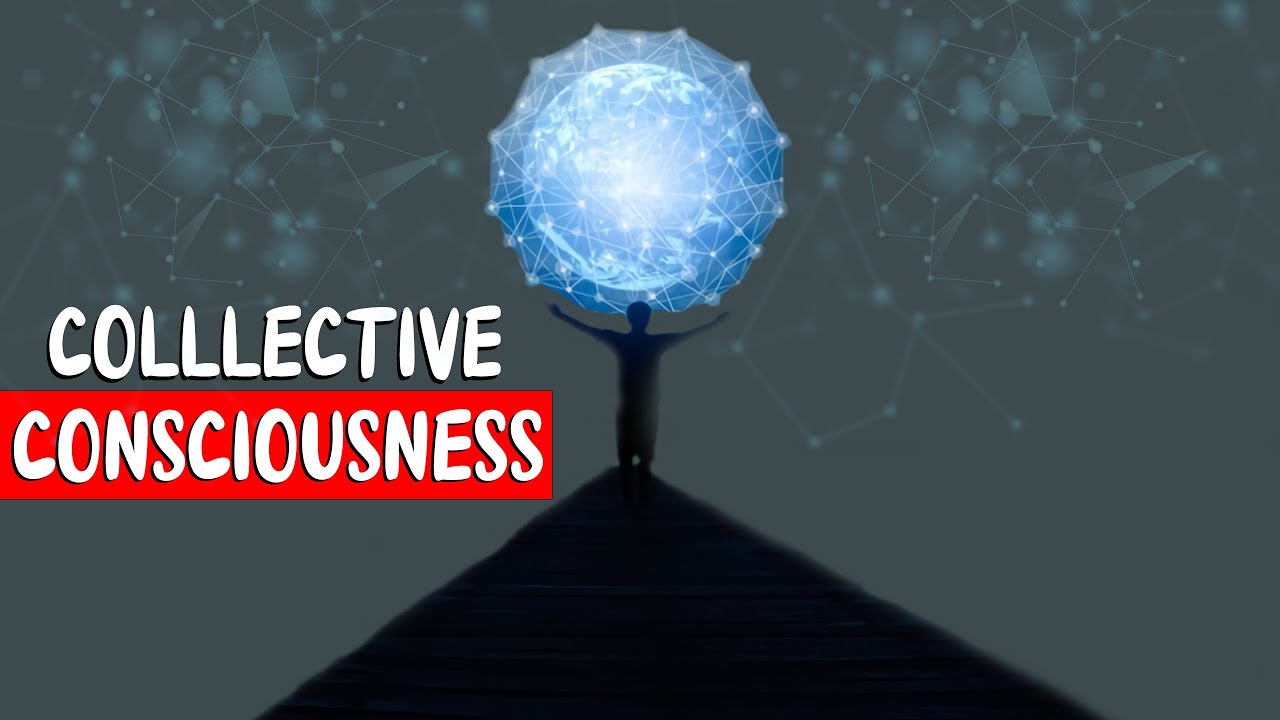
What Is Collective Consciousness & How It Affects Us
TL;DR
Collective consciousness describes the shared beliefs, moral attitudes, and ideas that operate as a unifying force within society, influencing individual thought and behavior. It's the invisible glue that binds us, shaping our shared reality.
Imagine a vast, intricate tapestry woven from countless individual threads, yet displaying a pattern far grander than any single strand could suggest. That's the essence of collective consciousness, a concept first articulated by the pioneering sociologist Émile Durkheim in the late 19th century. He posited that society isn't just a collection of individuals; it possesses a psychological reality of its own, a 'totality of beliefs and sentiments common to average members of the same society' that forms a 'determinate system with a life of its own.' It's the shared heartbeat of a community, dictating norms, values, and even the very fabric of our understanding.
Durkheim initially saw this as a somewhat rigid, almost oppressive force, particularly in simpler, 'mechanical' societies where conformity was paramount. Think of ancient tribal rituals or tightly knit religious communities where deviation was unthinkable. However, as societies evolved into more complex, 'organic' structures (like our hyper-connected 21st-century world), the collective consciousness didn't vanish; it simply transformed. It became more diffuse, more abstract, yet still profoundly powerful, manifesting in everything from national identity to global trends.
Fast forward to 2026, and the concept of collective consciousness has taken on fascinating new dimensions. The internet, with its sprawling social networks and instant global communication, acts as a colossal, real-time amplifier and incubator for shared ideas. Memes, viral trends, moral panics, and even collective scientific endeavors can spread like wildfire, demonstrating a rapid formation and dissolution of shared mental states previously unimaginable. Is the 'hive mind' of online communities a new form of collective consciousness, or merely a reflection of existing societal currents? The debate rages on.
Beyond sociology, this idea resonates deeply across philosophy, psychology, and even speculative fiction. Carl Jung's 'collective unconscious' explored archetypal patterns inherited across generations, while modern cognitive science grapples with how individual brains give rise to shared cultural narratives. The feeling of being part of something larger than oneself – whether at a concert, a protest, or even a global online gaming event – taps into this fundamental human experience of shared awareness. It's the 'we' that emerges from 'I's.
The significance of understanding collective consciousness cannot be overstated. It helps us decipher why certain ideas gain traction, how social movements ignite, and why communities hold certain values sacred. It's the invisible hand guiding cultural evolution, shaping our perceptions of reality, justice, and even what it means to be human. As we navigate an increasingly interconnected world, recognizing this emergent mental landscape becomes crucial for fostering understanding, managing conflict, and perhaps, even steering humanity towards a more harmonious future.
So, the next time you feel a surge of shared emotion at a sporting event, witness a global trend take hold, or find yourself immersed in a cultural narrative that feels universally understood, remember the collective consciousness. It's not just a theoretical construct; it's the living, breathing, shared mind of humanity, constantly evolving and shaping the very world we inhabit.