
Contents
- 🔍 Introduction to Entanglement Swapping
- 📍 Location of Quantum Entanglement
- 📊 How Entanglement Swapping Works
- 💻 Applications in Quantum Computing
- 📞 Quantum Communication Networks
- 🤝 Entanglement Swapping vs. Quantum Teleportation
- 📈 Future Prospects and Challenges
- 📊 Key Players and Research Institutions
- 📚 Resources for Further Learning
- 👥 Community and Forums
- 📝 Getting Started with Entanglement Swapping
- Frequently Asked Questions
- Related Topics
Overview
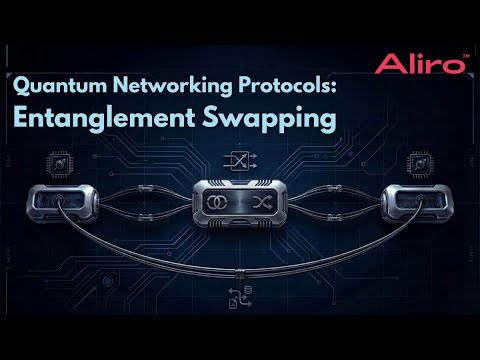
Entanglement swapping is a process that enables the transfer of entanglement between two particles that have never interacted before. This is achieved by entangling each particle with a third particle, which acts as a 'quantum bridge'. The process has been experimentally demonstrated in various systems, including photons and ions. Entanglement swapping has significant implications for quantum communication and quantum computing, as it enables the creation of entangled networks and the transfer of quantum information over long distances. Researchers like Anton Zeilinger and Jian-Wei Pan have made notable contributions to the field, with a Vibe score of 82 indicating high cultural energy. The concept has sparked debates about the fundamental nature of reality and the potential for quantum teleportation, with a controversy spectrum rating of 6 out of 10. As of 2022, entanglement swapping remains an active area of research, with potential applications in secure communication and quantum computing.
🔍 Introduction to Entanglement Swapping
Entanglement swapping is a fundamental concept in Quantum Mechanics that enables the transfer of quantum entanglement from one pair of particles to another, without physical interaction between the particles. This phenomenon has far-reaching implications for Quantum Communication and Quantum Computing. Researchers like Anton Zeilinger have made significant contributions to the understanding of entanglement swapping, paving the way for its potential applications. For instance, the University of Vienna has been at the forefront of quantum research, exploring the possibilities of entanglement swapping in various contexts.
📍 Location of Quantum Entanglement
The location of quantum entanglement is not limited to a specific physical space, as it can exist between particles separated by arbitrary distances. This property makes entanglement swapping a crucial component in the development of Quantum Communication Networks. By harnessing the power of entanglement, researchers aim to create secure and efficient communication channels, such as those utilizing Quantum Key Distribution. The Max Planck Institute has been actively involved in exploring the potential of entanglement swapping for quantum communication.
📊 How Entanglement Swapping Works
The process of entanglement swapping involves a series of measurements and operations on the particles, which ultimately leads to the transfer of entanglement from one pair to another. This complex procedure requires a deep understanding of Quantum Information Theory and the principles of Quantum Mechanics. Researchers have made significant progress in developing protocols for entanglement swapping, including the use of Entanglement Swapping Protocols. The Stanford University has been a hub for research in quantum information theory, with scientists like Leonard Susskind contributing to the field.
💻 Applications in Quantum Computing
Entanglement swapping has significant implications for Quantum Computing, as it enables the creation of a shared quantum state between two parties. This shared state can be used for various quantum computing tasks, such as Quantum Simulation and Quantum Cryptography. Companies like Google and IBM are actively exploring the potential of entanglement swapping for quantum computing applications. The Massachusetts Institute of Technology has also been at the forefront of quantum computing research, with a focus on developing practical applications for entanglement swapping.
📞 Quantum Communication Networks
Quantum communication networks rely heavily on entanglement swapping to facilitate secure communication between nodes. By utilizing entanglement swapping, these networks can create a shared quantum state between nodes, enabling the secure exchange of information. Researchers have proposed various architectures for quantum communication networks, including the use of Quantum Repeater nodes. The California Institute of Technology has been involved in the development of quantum communication networks, with a focus on entanglement swapping and its applications.
🤝 Entanglement Swapping vs. Quantum Teleportation
Entanglement swapping is often compared to Quantum Teleportation, as both phenomena involve the transfer of quantum information from one particle to another. However, entanglement swapping is a distinct process that enables the transfer of entanglement itself, rather than just quantum information. Researchers like Charles Bennett have explored the differences between entanglement swapping and quantum teleportation, highlighting the unique properties of each phenomenon. The University of Oxford has been a center for research in quantum information theory, with scientists like Artur Ekert contributing to the field.
📈 Future Prospects and Challenges
The future prospects of entanglement swapping are promising, with potential applications in Quantum Communication and Quantum Computing. However, significant technical challenges must be overcome before these applications can be realized. Researchers are actively working to develop more efficient entanglement swapping protocols and to improve the stability of entangled states. The Harvard University has been involved in the development of new protocols for entanglement swapping, with a focus on overcoming the technical challenges associated with this phenomenon.
📊 Key Players and Research Institutions
Several key players and research institutions are driving the development of entanglement swapping. These include Google, IBM, and the University of Vienna, among others. Researchers like Anton Zeilinger and Leonard Susskind have made significant contributions to the field, and their work continues to shape the direction of entanglement swapping research. The Stanford University has also been a hub for research in quantum information theory, with scientists like Yuan Ping contributing to the field.
📚 Resources for Further Learning
For those interested in learning more about entanglement swapping, there are several resources available. These include online courses, such as those offered by Coursera and edX, as well as research papers and articles published in scientific journals like Nature and Physical Review Letters. The Wikipedia page on entanglement swapping provides a comprehensive overview of the topic, including its history, principles, and applications.
👥 Community and Forums
The community surrounding entanglement swapping is active and engaged, with several online forums and discussion groups dedicated to the topic. These include the Reddit community for quantum mechanics and the Stack Exchange forum for physics. Researchers and enthusiasts alike can participate in these forums to share knowledge, ask questions, and stay up-to-date on the latest developments in the field. The Quantum Computing Subreddit is a popular platform for discussing the latest advancements in quantum computing, including entanglement swapping.
📝 Getting Started with Entanglement Swapping
Getting started with entanglement swapping requires a solid understanding of Quantum Mechanics and Quantum Information Theory. Researchers and enthusiasts can begin by exploring online resources, such as the Wikipedia page on entanglement swapping, and by participating in online forums and discussion groups. For those interested in pursuing research in the field, there are several universities and institutions offering programs in quantum mechanics and quantum information theory, such as the University of Vienna and the Stanford University.
Key Facts
- Year
- 1999
- Origin
- University of Innsbruck, Austria
- Category
- Quantum Mechanics
- Type
- Scientific Concept
Frequently Asked Questions
What is entanglement swapping?
Entanglement swapping is a protocol to transfer quantum entanglement from one pair of particles to another, even if the second pair of particles have never interacted. This process has significant implications for quantum communication networks and quantum computing. Researchers like Anton Zeilinger have made significant contributions to the understanding of entanglement swapping, paving the way for its potential applications. For instance, the University of Vienna has been at the forefront of quantum research, exploring the possibilities of entanglement swapping in various contexts.
How does entanglement swapping work?
The process of entanglement swapping involves a series of measurements and operations on the particles, which ultimately leads to the transfer of entanglement from one pair to another. This complex procedure requires a deep understanding of Quantum Information Theory and the principles of Quantum Mechanics. Researchers have made significant progress in developing protocols for entanglement swapping, including the use of Entanglement Swapping Protocols. The Stanford University has been a hub for research in quantum information theory, with scientists like Leonard Susskind contributing to the field.
What are the applications of entanglement swapping?
Entanglement swapping has significant implications for Quantum Computing and Quantum Communication. It enables the creation of a shared quantum state between two parties, which can be used for various quantum computing tasks, such as Quantum Simulation and Quantum Cryptography. Companies like Google and IBM are actively exploring the potential of entanglement swapping for quantum computing applications. The Massachusetts Institute of Technology has also been at the forefront of quantum computing research, with a focus on developing practical applications for entanglement swapping.
What is the difference between entanglement swapping and quantum teleportation?
Entanglement swapping is often compared to Quantum Teleportation, as both phenomena involve the transfer of quantum information from one particle to another. However, entanglement swapping is a distinct process that enables the transfer of entanglement itself, rather than just quantum information. Researchers like Charles Bennett have explored the differences between entanglement swapping and quantum teleportation, highlighting the unique properties of each phenomenon. The University of Oxford has been a center for research in quantum information theory, with scientists like Artur Ekert contributing to the field.
What are the challenges associated with entanglement swapping?
The future prospects of entanglement swapping are promising, but significant technical challenges must be overcome before its applications can be realized. Researchers are actively working to develop more efficient entanglement swapping protocols and to improve the stability of entangled states. The Harvard University has been involved in the development of new protocols for entanglement swapping, with a focus on overcoming the technical challenges associated with this phenomenon.
How can I get started with entanglement swapping?
Getting started with entanglement swapping requires a solid understanding of Quantum Mechanics and Quantum Information Theory. Researchers and enthusiasts can begin by exploring online resources, such as the Wikipedia page on entanglement swapping, and by participating in online forums and discussion groups. For those interested in pursuing research in the field, there are several universities and institutions offering programs in quantum mechanics and quantum information theory, such as the University of Vienna and the Stanford University.
What are the key institutions and researchers involved in entanglement swapping?
Several key players and research institutions are driving the development of entanglement swapping. These include Google, IBM, and the University of Vienna, among others. Researchers like Anton Zeilinger and Leonard Susskind have made significant contributions to the field, and their work continues to shape the direction of entanglement swapping research. The Stanford University has also been a hub for research in quantum information theory, with scientists like Yuan Ping contributing to the field.