
Contents
Overview
Ear anatomy encompasses the complex structures responsible for hearing and balance, a biological marvel that transforms airborne vibrations into neural signals and senses spatial orientation. This intricate system, divided into the outer, middle, and inner ear, has evolved over millions of years to achieve remarkable fidelity in sound perception and stability. From the visible pinna that funnels sound waves to the microscopic hair cells within the cochlea that transduce mechanical energy into electrical impulses, each component plays a critical role. The vestibular system, nestled alongside the cochlea, utilizes fluid-filled canals and otolith organs to detect motion and gravity, feeding vital information to the brain for maintaining posture and coordination. Understanding ear anatomy is crucial not only for audiology and otolaryngology but also for fields ranging from neuroscience to bioacoustics, revealing the sophisticated engineering inherent in living organisms.
🎵 Origins & History
Primitive sensory organs evolved into more complex structures capable of detecting pressure waves. By the time of early tetrapods, the basic tripartite division of outer, middle, and inner ear began to emerge, with the development of a tympanic membrane and ossicles for amplifying sound. The labyrinthine structure of the inner ear, housing the cochlea and vestibular apparatus, solidified its form in early mammals, refining the capacity for both detailed auditory perception and sophisticated balance control. This ancient lineage underscores that the fundamental principles of sound transduction and vestibular sensing have remained remarkably consistent across vertebrate evolution, with variations primarily in scale, sensitivity, and specific anatomical elaborations.
⚙️ How It Works
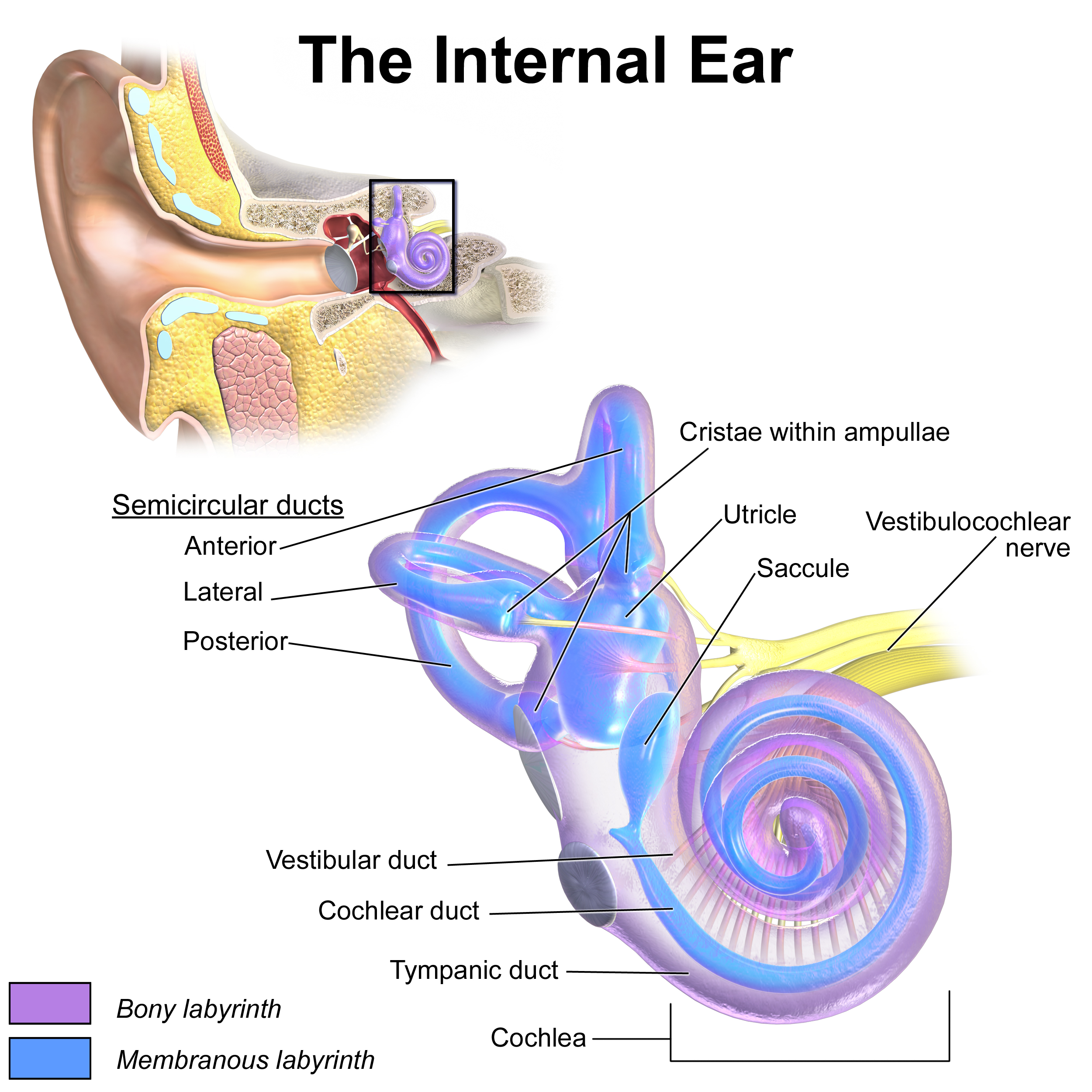
The ear's function is a marvel of biomechanical and electrochemical engineering. Sound waves are funneled through the pinna (outer ear) to the ear canal and then to the tympanic membrane (eardrum). This membrane vibrates, transmitting the energy to the three tiny bones of the middle ear: the malleus, incus, and stapes. These ossicles act as a lever system, amplifying the vibrations and transmitting them to the oval window, an opening into the inner ear. Within the fluid-filled cochlea, these pressure waves cause the basilar membrane to ripple, stimulating thousands of hair cells. These mechanosensory cells convert the mechanical motion into electrical signals, which are then sent via the auditory nerve to the brain's auditory cortex for interpretation as sound. Simultaneously, the vestibular system, comprising the semicircular canals and otolith organs, detects head movements and gravity, providing crucial data for balance and spatial orientation.
📊 Key Facts & Numbers
The human ear is an astonishingly sensitive organ, capable of detecting sound pressure levels as low as 0 decibels (dB) and distinguishing frequencies from approximately 20 Hz to 20,000 Hz. The middle ear ossicles amplify sound by a factor of about 20, and the oval window is roughly 1/17th the area of the tympanic membrane, concentrating the force. Within the cochlea, the organ of Corti contains an estimated 15,000-16,000 hair cells per ear, with about 3,500 inner hair cells responsible for transduction. The vestibular system's semicircular canals can detect rotational acceleration as low as 0.1 degrees per second. Hearing loss affects an estimated 1.5 billion people worldwide, with over 430 million requiring rehabilitation, according to the World Health Organization (WHO).
👥 Key People & Organizations
Pioneering figures in understanding ear anatomy include Hermann von Helmholtz, whose work in the 19th century elucidated the physics of sound and the mechanics of the ear, including his resonance theory of hearing. Georg von Békésy received the Nobel Prize in Physiology or Medicine in 1961 for his groundbreaking research on the physical mechanisms of stimulation within the cochlea, meticulously mapping the traveling waves on the basilar membrane. Modern research is advanced by institutions like the Kresge Hearing Research Institute at the University of Michigan and the House Ear Institute in Los Angeles, which continue to push the boundaries of audiology and otology. Organizations such as the American Academy of Otolaryngology–Head and Neck Surgery play a vital role in disseminating knowledge and setting clinical standards.
🌍 Cultural Impact & Influence
The ear's anatomy has profoundly shaped human culture and technology. The ability to perceive music, language, and environmental sounds is fundamental to social interaction, artistic expression, and survival. Musical instruments, from the ancient lyre to the modern synthesizer, are designed to exploit the ear's frequency and amplitude sensitivity. The development of telecommunication technologies, including the telephone invented by Alexander Graham Bell (who was also a prominent educator of the deaf), and later radio and digital audio formats like MP3, all hinge on understanding how the ear processes sound. Even the design of concert halls and noise-canceling headphones is informed by the principles of ear anatomy and acoustics.
⚡ Current State & Latest Developments
Current research in ear anatomy is rapidly advancing, particularly in regenerative medicine and bioengineering. Scientists are exploring methods to regenerate damaged hair cells in the cochlea, a significant breakthrough for treating hearing loss, with promising preclinical results using stem cells and gene therapy. The development of more sophisticated cochlear implant technologies continues, aiming to restore a wider range of frequencies and improve speech comprehension in noisy environments. Furthermore, advancements in neuroscience are providing deeper insights into how the brain processes auditory and vestibular information, leading to better understanding of conditions like tinnitus and vertigo. The integration of AI in analyzing auditory data is also accelerating discoveries in how the ear and brain work together.
🤔 Controversies & Debates
One persistent debate in audiology concerns the precise mechanisms of otoacoustic emissions (OAEs) – sounds generated by the inner ear itself – and their full diagnostic potential. While widely used, the exact contribution of different cochlear structures to specific OAE types is still debated. Another area of contention involves the optimal surgical techniques and electrode designs for cochlear implant placement to maximize auditory nerve stimulation and functional outcomes. Furthermore, the long-term effects of noise exposure and the threshold for irreversible damage are subjects of ongoing research and debate, particularly as environmental noise levels increase globally. The efficacy and ethical considerations of using gene therapy for hearing restoration also present complex discussions.
🔮 Future Outlook & Predictions
The future of ear anatomy research points towards highly personalized hearing restoration and advanced sensory prosthetics. We can anticipate the development of in-situ hair cell regeneration therapies that could restore natural hearing to millions. Brain-computer interfaces may eventually allow for direct neural stimulation of the auditory pathway, bypassing damaged ear structures entirely. Vestibular prosthetics are also on the horizon, aiming to restore balance in individuals suffering from chronic dizziness and disorientation. The integration of artificial intelligence will likely lead to predictive models for hearing loss and personalized treatment plans, potentially even enabling the creation of 'smart' hearing aids that adapt dynamically to any acoustic environment. The ultimate goal is to not just treat hearing loss but to restore the full spectrum of auditory and vestibular function.
💡 Practical Applications
Understanding ear anatomy has direct practical applications across numerous fields. In medicine, it forms the basis for diagnosing and treating hearing impairments, balance disorders, and Meniere's disease through audiology and otolaryngology. Audiology professionals use specialized equipment to test hearing thresholds and fit hearing aids. Speech-language pathology relies on auditory processing knowledge to aid individuals with communication disorders. In engineering, principles of ear anatomy inform the design of audio equipment, from microphones and speakers to noise-canceling technology and virtual reality soundscapes. Forensic science utilizes ear print analysis, though its reliability is debated, and bioacoustics studies animal communication systems, often drawing parallels to human auditory mechanisms.
Key Facts
- Category
- science
- Type
- topic