
Contents
- 📊 Introduction to Dynamic Simulation
- 🔍 Key Concepts and Terminology
- 📈 Applications of Dynamic Simulation
- 🤔 Comparison with Other Simulation Methods
- 📊 Numerical Integration Methods
- 📝 Modeling Dynamic Systems
- 📊 Solving Ordinary Differential Equations
- 📊 Solving Partial Differential Equations
- 📈 Benefits and Limitations of Dynamic Simulation
- 📊 Getting Started with Dynamic Simulation
- 📚 Resources and References
- 👥 Community and Support
- Frequently Asked Questions
- Related Topics
Overview
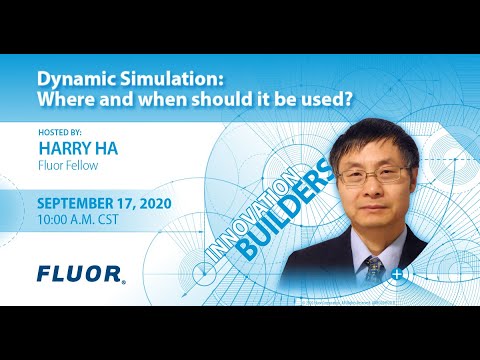
Dynamic simulation refers to the use of computational models to analyze and predict the behavior of complex systems over time. This technique is widely used in fields such as engineering, economics, and biology to study phenomena like population growth, climate change, and traffic flow. By creating virtual models of real-world systems, researchers can test hypotheses, identify patterns, and make predictions about future outcomes. For instance, a study by the National Center for Atmospheric Research used dynamic simulation to model the effects of climate change on global weather patterns, predicting a 10% increase in extreme weather events by 2050. The work of pioneers like Jay Wright Forrester, who developed the first dynamic simulation models in the 1950s, has influenced fields like system dynamics and chaos theory. As computational power continues to grow, dynamic simulation is becoming an increasingly important tool for understanding and managing complex systems, with applications in fields like smart cities and autonomous vehicles.
📊 Introduction to Dynamic Simulation
Dynamic simulation is a powerful tool in the field of Computer Science, allowing researchers and engineers to model and analyze complex systems that change over time. By using a computer program to solve the equations that describe a system's behavior, dynamic simulation can predict the values of state variables and help us understand how a system will respond to different inputs or conditions. For example, dynamic simulation is used in Control Systems to design and optimize control strategies, and in Signal Processing to analyze and filter signals. To get started with dynamic simulation, it's essential to have a solid understanding of Mathematics, particularly Differential Equations and Numerical Methods.
🔍 Key Concepts and Terminology
The key concepts and terminology in dynamic simulation include Dynamical Systems, Ordinary Differential Equations (ODEs), and Partial Differential Equations (PDEs). ODEs describe the behavior of systems that change over time, while PDEs describe the behavior of systems that change over both time and space. Dynamic simulation also involves the use of Numerical Integration methods, such as the Runge-Kutta Method, to solve the equations that describe a system's behavior. Additionally, dynamic simulation often relies on Modeling and Simulation techniques, such as System Identification and Parameter Estimation.
📈 Applications of Dynamic Simulation
Dynamic simulation has a wide range of applications in fields such as Engineering, Physics, and Economics. For example, dynamic simulation is used in Control Systems to design and optimize control strategies, and in Signal Processing to analyze and filter signals. Dynamic simulation is also used in Financial Modeling to predict stock prices and portfolio performance, and in Climate Modeling to predict weather patterns and climate change. Furthermore, dynamic simulation is used in Biological Systems to model the behavior of complex biological systems, such as Gene Regulatory Networks and Protein Interaction Networks.
🤔 Comparison with Other Simulation Methods
Compared to other simulation methods, such as Static Simulation and Monte Carlo Simulation, dynamic simulation is particularly well-suited for modeling systems that change over time. However, dynamic simulation can be computationally intensive and may require significant expertise in Mathematics and Computer Science. In contrast, Discrete Event Simulation is often used to model systems that consist of discrete events, such as Queueing Theory and Network Simulation.
📊 Numerical Integration Methods
Numerical integration methods are a crucial component of dynamic simulation, as they allow us to solve the equations that describe a system's behavior. Common numerical integration methods include the Euler Method, the Runge-Kutta Method, and the Finite Difference Method. These methods can be used to solve both ODEs and PDEs, and are often implemented in software packages such as Matlab and Python. Additionally, numerical integration methods can be used in conjunction with Optimization Algorithms to optimize system performance and minimize errors.
📝 Modeling Dynamic Systems
Modeling dynamic systems involves creating a mathematical model of the system's behavior, which can be described using ODEs or PDEs. The model can be developed using a variety of techniques, including System Identification and Parameter Estimation. The model can then be solved using numerical integration methods to predict the behavior of the system over time. For example, dynamic simulation can be used to model the behavior of Electrical Circuits and Mechanical Systems.
📊 Solving Ordinary Differential Equations
Solving ODEs is a critical component of dynamic simulation, as ODEs describe the behavior of systems that change over time. ODEs can be solved using a variety of numerical integration methods, including the Euler Method and the Runge-Kutta Method. These methods can be implemented in software packages such as Matlab and Python. Additionally, ODEs can be solved using Analytical Methods, such as Laplace Transform and Fourier Transform.
📊 Solving Partial Differential Equations
Solving PDEs is also an important aspect of dynamic simulation, as PDEs describe the behavior of systems that change over both time and space. PDEs can be solved using a variety of numerical integration methods, including the Finite Difference Method and the Finite Element Method. These methods can be implemented in software packages such as Matlab and Python. Additionally, PDEs can be solved using Analytical Methods, such as Separation of Variables and Green Function.
📈 Benefits and Limitations of Dynamic Simulation
The benefits of dynamic simulation include the ability to predict the behavior of complex systems, optimize system performance, and minimize errors. However, dynamic simulation can also be computationally intensive and may require significant expertise in Mathematics and Computer Science. Additionally, dynamic simulation may not always be able to capture the full complexity of a system's behavior, and may require the use of Sensitivity Analysis and Uncertainty Quantification to quantify the uncertainty in the results. Furthermore, dynamic simulation can be used in conjunction with Machine Learning and Artificial Intelligence to optimize system performance and make predictions.
📊 Getting Started with Dynamic Simulation
To get started with dynamic simulation, it's essential to have a solid understanding of Mathematics, particularly Differential Equations and Numerical Methods. Additionally, it's helpful to have experience with software packages such as Matlab and Python. There are also many online resources and tutorials available to help you get started with dynamic simulation, including Coursera and edX.
📚 Resources and References
There are many resources available to help you learn more about dynamic simulation, including textbooks, online courses, and research articles. Some recommended resources include Springer and IEEE. Additionally, there are many online communities and forums available to connect with other researchers and engineers who are working in the field of dynamic simulation, including Reddit and Stack Overflow.
👥 Community and Support
The dynamic simulation community is active and diverse, with many researchers and engineers working in the field. There are many conferences and workshops available to attend, including IEEE Conference and IFAC Conference. Additionally, there are many online forums and discussion groups available to connect with other researchers and engineers who are working in the field of dynamic simulation.
Key Facts
- Year
- 1950
- Origin
- MIT Sloan School of Management
- Category
- Computer Science
- Type
- Concept
Frequently Asked Questions
What is dynamic simulation?
Dynamic simulation is the use of a computer program to model the time-varying behavior of a dynamical system. The systems are typically described by ordinary differential equations or partial differential equations. A simulation run solves the state-equation system to find the behavior of the state variables over a specified period of time.
What are the benefits of dynamic simulation?
The benefits of dynamic simulation include the ability to predict the behavior of complex systems, optimize system performance, and minimize errors. Additionally, dynamic simulation can be used to analyze and design control systems, and to predict the behavior of systems that are subject to uncertainty and variability.
What are the limitations of dynamic simulation?
The limitations of dynamic simulation include the requirement for significant expertise in mathematics and computer science, and the potential for computational intensity. Additionally, dynamic simulation may not always be able to capture the full complexity of a system's behavior, and may require the use of sensitivity analysis and uncertainty quantification to quantify the uncertainty in the results.
What are the applications of dynamic simulation?
Dynamic simulation has a wide range of applications in fields such as engineering, physics, and economics. For example, dynamic simulation is used in control systems to design and optimize control strategies, and in signal processing to analyze and filter signals. Additionally, dynamic simulation is used in financial modeling to predict stock prices and portfolio performance, and in climate modeling to predict weather patterns and climate change.
What are the key concepts and terminology in dynamic simulation?
The key concepts and terminology in dynamic simulation include dynamical systems, ordinary differential equations, and partial differential equations. Additionally, dynamic simulation involves the use of numerical integration methods, such as the Euler method and the Runge-Kutta method, to solve the equations that describe a system's behavior.
How do I get started with dynamic simulation?
To get started with dynamic simulation, it's essential to have a solid understanding of mathematics, particularly differential equations and numerical methods. Additionally, it's helpful to have experience with software packages such as Matlab and Python. There are also many online resources and tutorials available to help you get started with dynamic simulation.
What are the resources available to learn more about dynamic simulation?
There are many resources available to learn more about dynamic simulation, including textbooks, online courses, and research articles. Some recommended resources include Springer and IEEE. Additionally, there are many online communities and forums available to connect with other researchers and engineers who are working in the field of dynamic simulation.