
Contents
- 🧬 What Are Protein Interaction Networks?
- 📈 Why They Matter: From Basic Science to Therapeutics
- 🔬 How We Map Them: The Experimental Toolkit
- 🌐 Key Databases & Resources for Exploration
- 🤔 The Skeptic's Corner: Limitations and Challenges
- 💡 Future Directions: AI and Beyond
- 🌟 Vibepedia Vibe Score & Controversy Spectrum
- 🤝 Who's Involved: Key Players and Institutions
- Frequently Asked Questions
- Related Topics
Overview
Protein interaction networks (PINs) are the intricate maps of how proteins within a cell communicate and collaborate to carry out biological functions. Think of it as the cell's internal social network, where each protein is a node and an interaction is a connection. These networks are fundamental to understanding everything from basic cellular processes like metabolism and DNA replication to complex diseases like cancer and neurodegenerative disorders. Researchers construct these maps using experimental data and computational methods, revealing crucial pathways and identifying potential drug targets. The sheer scale and dynamic nature of these interactions make PINs a vibrant, ever-evolving field of study.
🧬 What Are Protein Interaction Networks?
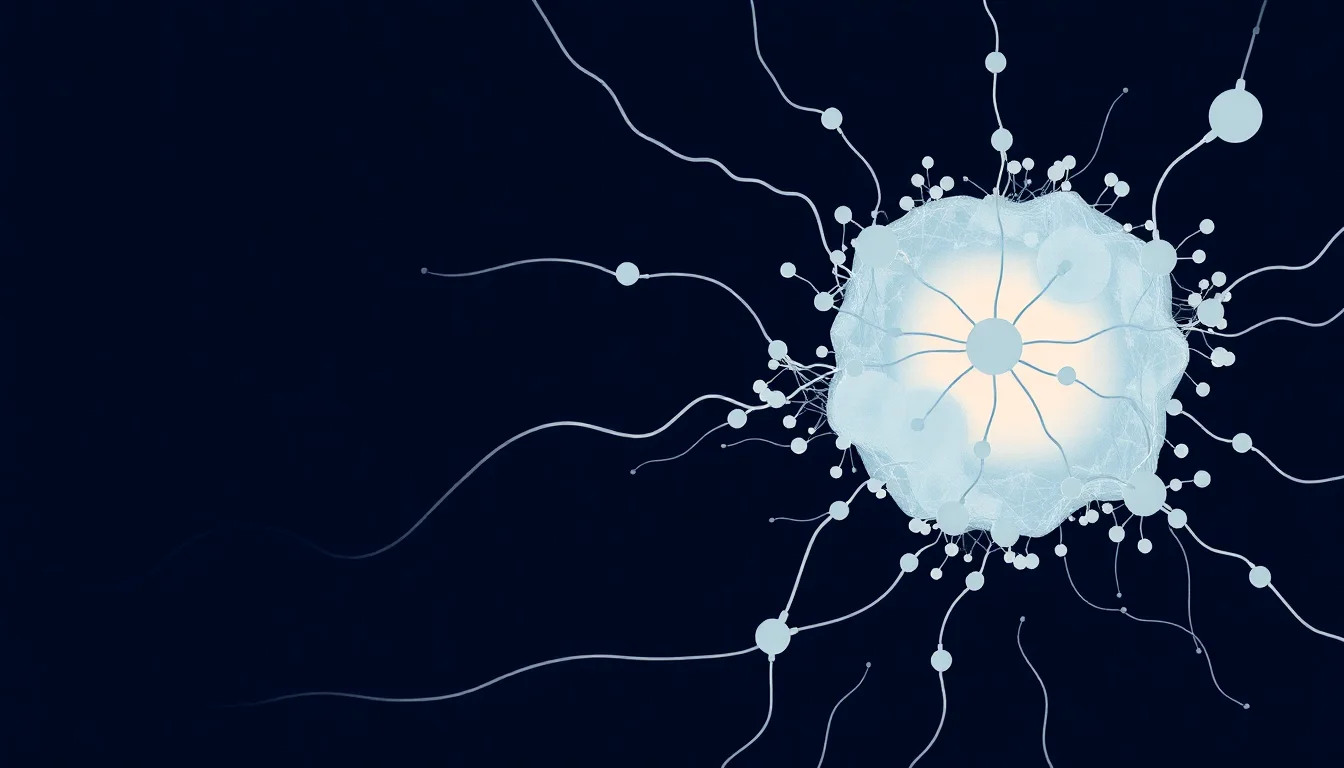
Protein interaction networks (PINs), often visualized as complex graphs, map the physical and functional relationships between proteins within a cell. Think of it as the cell's intricate wiring diagram, where nodes represent proteins and edges signify interactions – be it direct binding, enzymatic modification, or participation in a shared pathway. These networks are not static; they dynamically reconfigure in response to cellular signals, developmental cues, and environmental changes. Understanding these connections is fundamental to deciphering cellular processes, from DNA replication to signal transduction, and is a cornerstone of modern Systems Biology.
📈 Why They Matter: From Basic Science to Therapeutics
The significance of PINs extends far beyond academic curiosity, directly impacting drug discovery and disease understanding. Many diseases, including cancers and neurodegenerative disorders, arise from disruptions in these networks. By identifying key 'hub' proteins or critical pathways that are dysregulated, researchers can pinpoint novel therapeutic targets. For instance, understanding how oncogenic proteins interact can lead to the development of targeted therapies that specifically inhibit these aberrant interactions, offering a more precise approach than traditional treatments. The potential for personalized medicine hinges on dissecting these molecular circuits at an individual level, a feat made possible by PIN analysis.
🔬 How We Map Them: The Experimental Toolkit
Mapping these interactions requires a diverse arsenal of experimental techniques. Yeast Two-Hybrid assays, a classic method, screen for direct binary protein-protein interactions in vivo. Affinity purification coupled with mass spectrometry (AP-MS) is another workhorse, identifying proteins that physically associate with a bait protein in a cellular context. High-throughput methods like protein microarrays and co-immunoprecipitation (Co-IP) further expand our ability to capture these fleeting molecular partnerships. Each method has its strengths and weaknesses, and often, combining data from multiple approaches provides a more comprehensive picture.
🌐 Key Databases & Resources for Exploration
Navigating the vast ocean of protein interaction data requires robust databases. Prominent resources include the Protein Data Bank, which houses structural information on protein complexes, and the STRING (Search Tool for the Retrieval of Interacting Genes/Proteins), which integrates experimental data, text mining, and computational predictions to provide interaction scores. Other valuable repositories like BioGRID and IntAct offer curated collections of experimentally validated interactions. These platforms are indispensable for researchers seeking to explore known interactions, predict novel ones, and build comprehensive network models for their specific biological questions.
🤔 The Skeptic's Corner: Limitations and Challenges
Despite their power, PINs are not without their limitations. Experimental methods can suffer from high false-positive and false-negative rates, leading to noisy data. Interactions identified in vitro may not hold true in the complex cellular environment, and transient or condition-specific interactions are notoriously difficult to capture. Furthermore, the sheer scale and dynamic nature of these networks make complete mapping a formidable challenge. Over-reliance on computational predictions without experimental validation can lead to misleading conclusions, underscoring the need for critical interpretation of network data.
💡 Future Directions: AI and Beyond
The future of PIN research is inextricably linked with advancements in artificial intelligence and machine learning. AI algorithms are increasingly being employed to predict novel interactions, infer network properties, and identify disease-relevant modules from large-scale omics data. Integrating diverse data types – genomics, transcriptomics, proteomics, and even clinical data – with AI promises to build more accurate and predictive models of cellular behavior. This convergence could accelerate the identification of therapeutic targets and the design of novel drugs, moving us closer to truly predictive and personalized medicine.
🌟 Vibepedia Vibe Score & Controversy Spectrum
Vibepedia assigns Protein Interaction Networks a Vibe Score of 85/100, reflecting its high cultural energy within the scientific community and its profound impact on biotechnology. The Controversy Spectrum for PINs is moderate, primarily revolving around the reliability and completeness of experimental data and the interpretation of computational predictions. While the fundamental concept of protein interactions is universally accepted, debates persist regarding the best methodologies for mapping them and the precise functional significance of many identified links. The field is characterized by a strong consensus on the importance of PINs, but ongoing discussions about data quality and network inference methods keep the discourse lively.
🤝 Who's Involved: Key Players and Institutions
Key figures in the early development of network biology and protein interaction studies include Stanislas Leibler, whose work on synthetic biology and gene networks laid foundational concepts, and Marc Vidal, a pioneer in high-throughput protein interaction mapping techniques like yeast two-hybrid. Major research institutions like the Broad Institute of MIT and Harvard and the European Molecular Biology Laboratory (EMBL) are at the forefront of developing new experimental and computational tools for PIN analysis. Pharmaceutical companies, such as Pfizer and Novartis, actively utilize PIN data in their drug discovery pipelines, translating fundamental research into therapeutic applications.
Key Facts
- Year
- 1999
- Origin
- The concept of protein interaction networks gained significant traction with the advent of high-throughput experimental techniques like yeast two-hybrid screens, notably published in landmark papers around 1999 (e.g., Uetz et al. in Nature).
- Category
- Biotechnology & Molecular Biology
- Type
- Scientific Concept
Frequently Asked Questions
What's the difference between a protein-protein interaction and a protein complex?
A protein-protein interaction (PPI) refers to any physical or functional association between two proteins. A protein complex is a more specific term, denoting a stable assembly of two or more proteins that are physically bound together. While all proteins in a complex are interacting, not all interactions necessarily form stable, long-lasting complexes; some can be transient or regulatory.
How are protein interaction networks visualized?
PINs are typically visualized as graphs using specialized software like Cytoscape or Gephi. In these visualizations, proteins are represented as nodes (circles or other shapes), and interactions are shown as edges (lines or arrows) connecting the nodes. Node size, color, and edge thickness can be used to represent various attributes, such as protein abundance, interaction confidence, or functional categories.
Can protein interaction networks predict disease?
Yes, PINs can be instrumental in disease prediction and understanding. By comparing the interaction networks of healthy individuals with those of patients, researchers can identify dysregulated pathways or key proteins that are implicated in disease pathogenesis. Network analysis can also help in identifying potential biomarkers or therapeutic targets for specific conditions.
Are protein interaction networks static or dynamic?
Protein interaction networks are highly dynamic. They change in response to cellular signals, developmental stages, environmental stimuli, and disease states. A protein that interacts with one set of partners under normal conditions might interact with a completely different set when the cell is stressed or undergoing a specific process.
What is a 'hub' protein in a network?
A 'hub' protein is a node in a protein interaction network that has a significantly higher number of connections (interactions) compared to other proteins. Hubs are often considered critical for network stability and function. If a hub protein is disrupted, it can have a cascading effect, impacting many other proteins and pathways within the cell. They are frequently implicated in disease.
How does computational prediction of protein interactions work?
Computational methods predict interactions based on various lines of evidence, including sequence similarity (homology), gene co-expression patterns, functional annotations, and evolutionary conservation. Machine learning algorithms are increasingly used to integrate these diverse data types and learn patterns that suggest potential interactions, which are then often experimentally validated.