
Contents
Overview
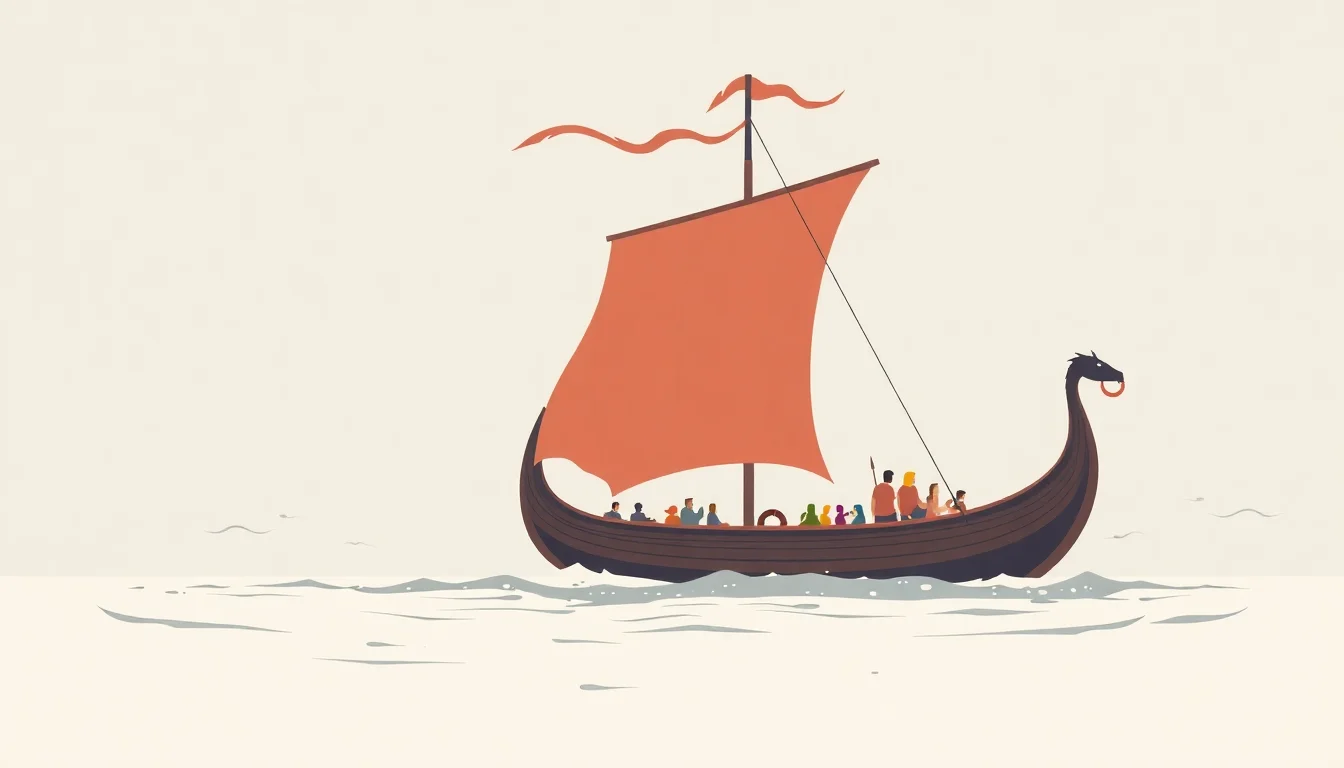
The term 'Drakkar' originates from the Old Norse words 'dreki' (dragon) and 'kar' (ship), directly translating to 'Dragon Ship.' This name reflects the iconic dragon or serpent head that often adorned the prow of these vessels, serving as a potent symbol of power and a psychological weapon. While not all Viking longships were Drakkars, this designation typically referred to the largest and most elaborately decorated warships, often a type of 'Skeid.' Owning and commanding a Drakkar was a mark of significant wealth and status, reserved for chieftains and kings, much like the prestige associated with owning a rare artifact or a high-performance vehicle today. The Drakkar's design evolved over centuries, building upon earlier shipbuilding traditions documented in sources like the Nydam boat and influencing later naval designs.
🛠️ How It Works
Drakkars were masterpieces of clinker-built construction, featuring overlapping planks riveted together to create a hull that was both strong and flexible, capable of withstanding the harsh conditions of the North Atlantic. Their shallow draft allowed them to navigate rivers and coastal waters with ease, enabling surprise attacks deep inland, a tactic that made them feared across Europe. Propulsion was achieved through a combination of a large square sail and oars, providing versatility for both long-distance travel and maneuverability. The development of the true keel was a significant innovation, enhancing stability and the ability to sail closer to the wind, a crucial advantage for voyages that extended as far as North America, as documented in sagas and archaeological finds.
🌍 Cultural Impact
The Drakkar was more than just a ship; it was a symbol of Viking prowess, terror, and exploration. Its fearsome appearance, particularly the dragon prow, was a key element of psychological warfare, designed to instill fear in those who saw it approaching. These vessels were the spearhead of Viking raids, transporting warriors swiftly to their targets and facilitating rapid getaways laden with plunder. Beyond warfare, Drakkars also played a role in exploration, carrying Vikings to new lands like Iceland, Greenland, and Vinland. The image of the Drakkar has become deeply ingrained in popular culture, appearing in art, literature, and even modern media, much like the enduring fascination with figures like Albert Einstein or concepts like Simulation Theory.
✨ Legacy & Future
The legacy of the Drakkar continues to captivate imaginations, symbolizing the adventurous and formidable spirit of the Vikings. Modern replicas, such as the Draken Harald Hårfagre, aim to recreate the experience of sailing these ancient vessels, exploring the world and embracing the Viking spirit. The design principles of Viking ships, including clinker construction, have influenced boat building for centuries and are still studied today. While the term 'Drakkar' is most famously associated with Viking warships, it has also been adopted in other contexts, such as the cologne Drakkar Noir, demonstrating the enduring cultural resonance of the name. The Drakkar's story is a testament to human ingenuity, courage, and the profound impact of seafaring technology on history, akin to the impact of innovations like the printing press or the development of the internet.
Key Facts
- Year
- c. 4th century CE - 11th century CE
- Origin
- Scandinavia
- Category
- history
- Type
- technology
Frequently Asked Questions
What does 'Drakkar' mean?
The word 'Drakkar' is derived from the Old Norse words 'dreki' (dragon) and 'kar' (ship), meaning 'Dragon Ship.' This name is often associated with the dragon or serpent head figurehead commonly found on these Viking vessels.
Were all Viking longships Drakkars?
No, not all Viking longships were Drakkars. 'Drakkar' typically referred to the largest and most elaborately decorated warships, often a specific type of 'Skeid,' distinguished by their dragon figureheads. Other types of longships, like the 'Karvi' and 'Snekke,' served different purposes.
What were the main uses of a Drakkar?
Drakkars were primarily used as warships for raiding and warfare, but their design also made them suitable for long-distance trade and exploration. Their speed, shallow draft, and capacity for carrying warriors made them formidable vessels.
How were Drakkars constructed?
Drakkars were built using the clinker-built (lapstrake) method, where overlapping planks of wood (usually oak) were riveted together. This technique created a strong yet flexible hull. They were propelled by a combination of a square sail and oars.
What is the significance of the dragon head on a Drakkar?
The dragon head served multiple purposes: it was a powerful symbol of the ship's owner and their status, a psychological weapon designed to intimidate enemies, and a representation of the ship's fearsome nature, akin to how modern brands use logos to convey identity and power.
References
- en.wikipedia.org — /wiki/Drakkar
- vikingheritage.net — /blogs/viking/drakkar
- youtube.com — /watch
- vikingheritage.net — /blogs/viking/drakkar
- amazon.com — /Drakkar-Guy-Laroche-Toilette-Ounces/dp/B000C213ZM
- talesofvalhalla.com — /blogs/tales-of-valhalla-norse-mythology/the-drakkar-more-than-a-ship-it-was-the
- fragrancevault.net — /products/guy-laroche-drakkar-vintage-1970s-eau-de-toilette
- norsegarde.com — /blogs/lore-and-mythology/viking-drakkars-the-mighty-legends-of-the-norse-seas