
Contents
Overview
Geomorphologists and hydrologists study drainage systems to understand how water flows through the landscape and how it shapes the environment. The study of drainage patterns is crucial for understanding natural processes such as erosion, sedimentation, and flooding. With the help of topographic maps, researchers can identify the number, size, and shape of drainage basins, which vary greatly depending on the location. For instance, the Colorado River basin is much smaller, but still plays a critical role in shaping the landscape of the western United States. By studying drainage patterns, scientists can better understand the complex relationships between water, land, and climate, and how these interactions impact the environment and human societies.
🌍 Introduction to Drainage Patterns
The study of drainage patterns is crucial for understanding natural processes such as erosion, sedimentation, and flooding, and has important implications for environmental management and conservation. The Nile River basin has undergone significant changes in its drainage pattern over the past few thousand years, due to changes in climate and human activity. As noted by John T. Hewlett, a prominent hydrologist, 'the study of drainage patterns is essential for understanding the complex relationships between water, land, and climate'.
🏞️ Types of Drainage Patterns
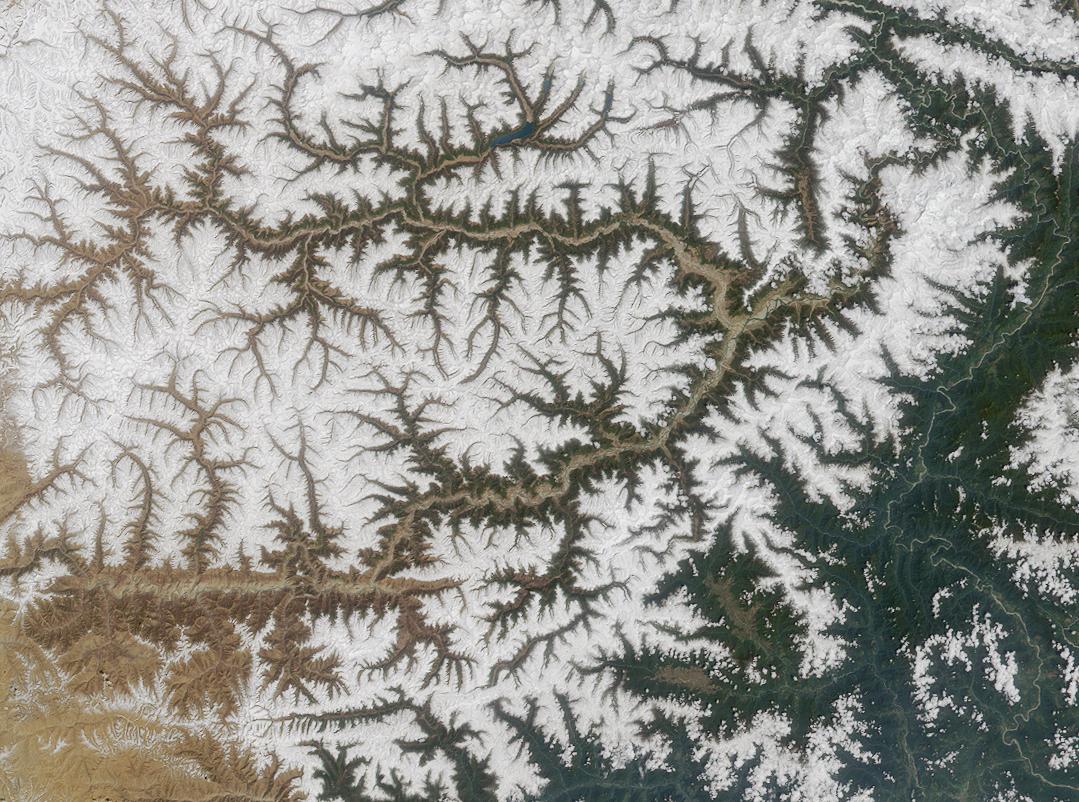
There are several types of drainage patterns, including dendritic, radial, and trellised. Dendritic drainage patterns are the most common type, and are characterized by a tree-like network of streams and rivers. Radial drainage patterns are found in areas where the terrain is dominated by a central peak or ridge, and are characterized by a series of streams and rivers that radiate outward from the center. Trellised drainage patterns are found in areas where the terrain is dominated by a series of parallel valleys and ridges, and are characterized by a series of streams and rivers that flow through the valleys and over the ridges. For instance, the Appalachian Mountains have a trellised drainage pattern, with many streams and rivers flowing through the valleys and over the ridges.
🌈 Factors Influencing Drainage Patterns
Drainage patterns are influenced by a variety of factors, including the type of rocks present, the gradient of the land, and the amount of precipitation. The type of rocks present can affect the permeability of the soil and the rate of erosion, while the gradient of the land can affect the speed and direction of water flow. The amount of precipitation can also affect the amount of water available for drainage, and can influence the formation of drainage patterns. For example, the Grand Canyon has a unique drainage pattern due to the combination of hard and soft rocks, as well as the high amount of precipitation in the area. As noted by Timothy W. Johnson, a geologist, 'the study of drainage patterns is essential for understanding the complex relationships between geology, hydrology, and climate'.
📊 Measuring Drainage Patterns
Measuring drainage patterns can be done using a variety of techniques, including topographic mapping and remote sensing. Topographic maps can provide detailed information about the elevation and slope of the land, as well as the location and size of streams and rivers. Remote sensing techniques, such as aerial photography and satellite imagery, can provide information about the distribution and characteristics of drainage patterns over large areas. For instance, the US Geological Survey uses remote sensing techniques to study drainage patterns and monitor changes in the environment. By analyzing drainage patterns, scientists can better understand the complex relationships between water, land, and climate, and how these interactions impact the environment and human societies.
🌟 Case Studies of Drainage Patterns
There are many case studies of drainage patterns around the world, each with its own unique characteristics and challenges. For example, the Mississippi River basin is one of the largest drainage basins in the world, and has been the subject of extensive study and management efforts. The study of drainage patterns in these areas can provide valuable insights into the complex relationships between water, land, and climate, and how these interactions impact the environment and human societies. As noted by David R. Montgomery, a geomorphologist, 'the study of drainage patterns is essential for understanding the complex relationships between geology, hydrology, and climate'.
🌎 Global Distribution of Drainage Patterns
Drainage patterns are found all over the world, and can vary greatly in terms of their size, shape, and characteristics. Drainage patterns can vary greatly in terms of their size, shape, and characteristics. For instance, the Colorado River basin is much smaller, but still plays a critical role in shaping the landscape of the western United States.
🌟 Human Impact on Drainage Patterns
Human activities can have a significant impact on drainage patterns, including deforestation, urbanization, and the construction of dams and other water management infrastructure. These activities can alter the natural flow of water, leading to changes in the formation and characteristics of drainage patterns. For example, the construction of the Hoover Dam on the Colorado River has significantly altered the drainage pattern in the area, leading to changes in the ecosystem and human settlements. As noted by James L. Gould, a hydrologist, 'the study of drainage patterns is essential for understanding the complex relationships between human activity, water, and the environment'.
🌈 Future Research Directions
Future research directions in the study of drainage patterns include the use of new technologies such as drone-based remote sensing and machine learning algorithms. These technologies can provide high-resolution data and advanced analytical capabilities, allowing researchers to study drainage patterns in greater detail and accuracy than ever before. By using these technologies, scientists can better understand the complex relationships between water, land, and climate, and how these interactions impact the environment and human societies.
📚 Conclusion
In conclusion, the study of drainage patterns is crucial for understanding natural processes such as erosion, sedimentation, and flooding, and has important implications for environmental management and conservation. By studying drainage patterns, scientists can better understand the complex relationships between water, land, and climate, and how these interactions impact the environment and human societies. As noted by Robert J. Nerem, a geologist, 'the study of drainage patterns is essential for understanding the complex relationships between geology, hydrology, and climate'.
Key Facts
- Category
- nature
- Type
- concept