
Contents
Overview
Dog behavior encompasses the internally coordinated responses of domestic dogs to both internal and external stimuli, a field profoundly shaped by millennia of co-evolution with humans. This intimate relationship has endowed dogs with remarkable abilities to understand and communicate with us, a subject of extensive study by behavioral scientists. Understanding canine behavior is crucial for their welfare, influenced by a dynamic interplay of genetics, physiological factors, environmental conditions, and the quality of human interaction. From the subtle flick of a tail to complex pack dynamics, these behaviors offer a window into the canine mind and the unique bond shared with humanity, with ongoing research continually refining our knowledge of these fascinating animals.
🎵 Origins & History
Precursors to the formal study of dog behavior can be found in the writings of naturalists like Charles Darwin, whose work on evolution and animal emotions laid foundational concepts. Lorenz’s concept of imprinting in young animals, though primarily studied in birds, highlighted the critical role of early experiences. Later, researchers like John Bowlby applied ethological principles to understand human-animal attachment, drawing parallels between infant-caregiver bonds and the dog-human relationship. The domestication of the wolf gradually shaped canine behaviors to align with human societal structures and needs, leading to the diverse breeds and temperaments we see today.
⚙️ How It Works
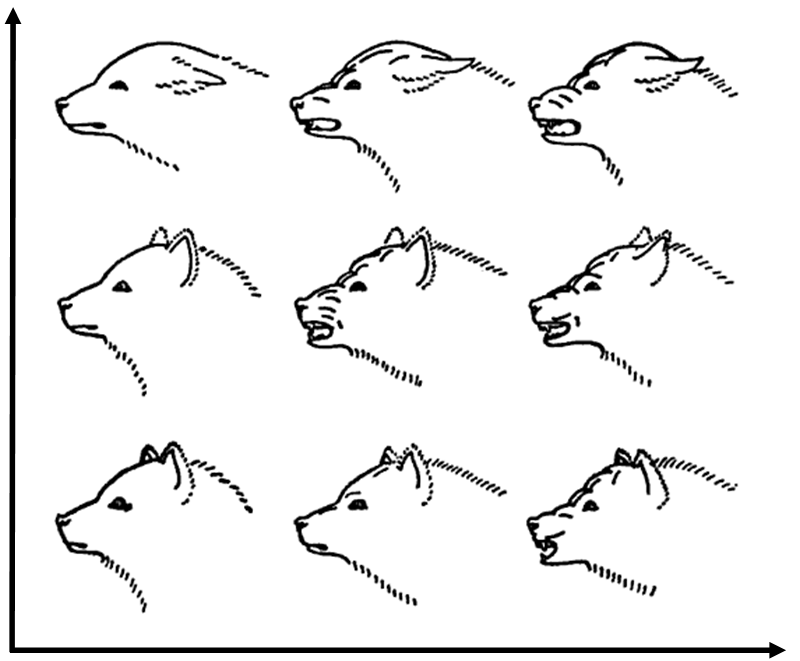
Canine behavior operates through a complex interplay of neurological, hormonal, and environmental factors. At its core, behavior is a response to stimuli, whether internal (hunger, pain, hormonal changes) or external (sounds, sights, smells, social cues). The nervous system processes these stimuli, triggering physiological responses mediated by hormones like cortisol (stress) and oxytocin (bonding). For instance, a dog's tail wag, often interpreted as happiness, can signify excitement, nervousness, or even aggression depending on the context and accompanying body language, such as ear position and posture. Communication in dogs involves a rich repertoire of vocalizations (barks, growls, whines), body language (tail wags, ear position, facial expressions), and scent marking. Understanding these signals is key to interpreting a dog's emotional state and intentions, a skill honed through generations of living alongside humans, leading to sophisticated social-cognitive abilities that allow them to interpret human cues like pointing and gaze.
📊 Key Facts & Numbers
Domestic dogs exhibit an astonishing range of behaviors. Studies suggest dogs can understand human cues, a cognitive ability that has been compared to that of a two-year-old child. The average dog spends a significant portion of its day sleeping, with much of its waking time dedicated to social interaction, exploration, and play. Canine olfactory capabilities are astounding, influencing a significant portion of their behavior, from tracking to social communication via scent.
👥 Key People & Organizations
Pioneering figures in the study of dog behavior include Konrad Lorenz, whose ethological work laid critical groundwork, and Dr. Ian Dunbar, a veterinarian and animal behaviorist who revolutionized early puppy socialization techniques. Organizations like the American Kennel Club (AKC) and the The Kennel Club in the UK play significant roles in breed standards and promoting responsible dog ownership, often influencing research directions. The Association for the Study of Animal Behaviour (ASAB) and the Animal Behavior Society (ABS) are key academic bodies that foster research and disseminate findings. More recently, figures like Alexandra Horowitz, author of "Inside of a Dog: What Dogs See, Smell, and Know," have brought complex behavioral science to a wider audience, emphasizing the unique sensory world of canines. Companies like Purina and Mars Petcare invest heavily in canine behavior research to inform product development and welfare initiatives.
🌍 Cultural Impact & Influence
Dog behavior has permeated human culture for millennia, influencing art, literature, and social norms. From ancient cave paintings depicting humans and wolves to modern-day pet-centric media, dogs are ubiquitous. Their ability to form deep emotional bonds with humans has led to their integration into families worldwide, impacting human psychology and social structures. The rise of the internet and social media has amplified this influence, with countless platforms dedicated to sharing dog-related content, from training tips on YouTube to viral videos of canine antics on TikTok. This cultural saturation has also fueled a booming pet industry, with a significant portion dedicated to products and services aimed at managing or enhancing dog behavior. The perception of dogs as 'man's best friend' is a cultural cornerstone, reflecting their deep integration into human lives.
⚡ Current State & Latest Developments
Current research in dog behavior is increasingly focusing on advanced cognitive abilities, including theory of mind, problem-solving, and the impact of genetics versus environment on behavior. The development of non-invasive neuroimaging techniques, such as MRI scans, is providing unprecedented insights into canine brain activity during various tasks and social interactions. Advances in wearable technology for dogs, including GPS trackers and activity monitors, are generating vast datasets on naturalistic behavior, enabling more objective analysis of movement patterns, social interactions, and stress indicators. Furthermore, the field is seeing a greater emphasis on applied behavior analysis for improving welfare in shelter dogs and addressing behavioral issues in companion animals, with a growing interest in understanding the impact of early life experiences and trauma on adult behavior. The ongoing exploration of the dog-human bond through fields like human-animal interaction continues to reveal the depth and complexity of this ancient relationship.
🤔 Controversies & Debates
Significant controversies persist within the study of dog behavior. One major debate centers on the extent to which dogs possess true theory of mind – the ability to attribute mental states (beliefs, intentions, desires) to others. While some studies suggest dogs can infer human intentions, others argue their responses can be explained by simpler associative learning. Another contentious area is the efficacy and ethics of various training methods. Traditional dominance-based approaches, often promoted by figures like Cesar Millan, are increasingly being challenged by positive reinforcement techniques advocated by organizations like the Pet Professional Guild (PPG) and many veterinary behaviorists. Critics argue dominance training can suppress behavior rather than address underlying causes and may damage the dog-human relationship. The role of genetics versus environment in shaping behavior also remains a subject of ongoing discussion, with researchers debating the heritability of complex traits like aggression and sociability.
🔮 Future Outlook & Predictions
The future of dog behavior research promises deeper insights into canine cognition and emotion. We can expect a greater understanding of how genetics and epigenetics interact with early life experiences to shape lifelong behavioral patterns, potentially leading to more targeted interventions for preventing behavioral problems. The use of artificial intelligence and machine learning will likely revolutionize data analysis from wearable sensors and video recordings, allowing for more sophisticated identification of subtle behavioral cues and early signs of distress or illness. Furthermore, research into the neurobiology of the dog-human bond may unlock new therapeutic applications for both humans and dogs, leveraging their mutual influence for improved mental and physical well-being. The ongoing domestication process, influenced by human lifestyles, may also lead to further behavioral adaptations in dogs, creating new avenues for scientific exploration.
💡 Practical Applications
Understanding dog beh
Key Facts
- Category
- nature
- Type
- topic