
Contents
- 📏 What Are Dividers, Really?
- 🛠️ Types of Dividers: From Analog to Digital
- 💡 Beyond Measurement: Dividers in Design & Craft
- ⚙️ How Dividers Work: The Mechanics of Precision
- ⭐ User Reviews & Vibe Scores
- 🆚 Dividers vs. Calipers: Know the Difference
- 💰 Pricing & Where to Buy
- 🚀 The Future of Dividers: Smart Tools & Integration
- Frequently Asked Questions
- Related Topics
Overview
Dividers, at their most fundamental, are tools for transferring or marking distances. Think of them as a pair of legs connected at a pivot, designed not to measure directly against a scale, but to replicate a distance from one point to another, or to scribe circles and arcs. While often confused with calipers, which directly measure dimensions against a scale, dividers excel at tasks requiring precise duplication of a measurement or the creation of geometric shapes. Their utility spans from intricate drafting and woodworking to metalworking and even artistic applications, making them indispensable for anyone needing to ensure geometric accuracy.
🛠️ Types of Dividers: From Analog to Digital
The world of dividers offers a spectrum of options. Traditional beam compasses and wing dividers represent the analog heritage, relying on manual adjustment and a keen eye. More modern iterations include digital calipers that can also function as dividers, offering electronic readouts and greater precision. For specialized tasks, scribing dividers with hardened points are ideal for marking metal or hard surfaces, while adjustable dividers offer versatility for a range of tasks. Each type offers a distinct advantage depending on the material, required accuracy, and user preference.
💡 Beyond Measurement: Dividers in Design & Craft
Beyond their role in pure measurement, dividers are crucial creative instruments. In architecture and engineering drawings, they allow for the precise transfer of dimensions and the creation of accurate circles and arcs, forming the backbone of technical illustration. Jewelers use them for intricate layout work, ensuring symmetry and precise placement of stones. Woodworkers employ them for laying out joinery and creating decorative patterns. Even in calligraphy, dividers can aid in spacing letters and creating consistent designs, demonstrating their broad applicability in fields demanding aesthetic and structural precision.
⚙️ How Dividers Work: The Mechanics of Precision
The core mechanism of a divider is elegantly simple: two legs joined by a pivot. One leg is typically fixed, while the other is adjustable, allowing the user to set the desired distance between the points. This distance can then be transferred to a workpiece by placing the points on the material and marking the area between them, or by rotating one leg to scribe a circle or arc. The quality of the pivot and the rigidity of the legs are critical factors determining the tool's accuracy and durability, especially under demanding use in industrial settings.
⭐ User Reviews & Vibe Scores
Vibe scores for dividers generally hover in the mid-70s, reflecting their consistent utility across various trades. Users consistently praise their reliability and the tactile feedback they provide, especially for analog models. However, some express frustration with the learning curve for achieving absolute precision without digital aids. The Vibepedia community highlights a strong preference for well-made steel dividers, often citing brands like Starrett and Mitutoyo for their durability and accuracy. A common sentiment is that a good pair of dividers, once mastered, becomes an extension of the user's hand.
🆚 Dividers vs. Calipers: Know the Difference
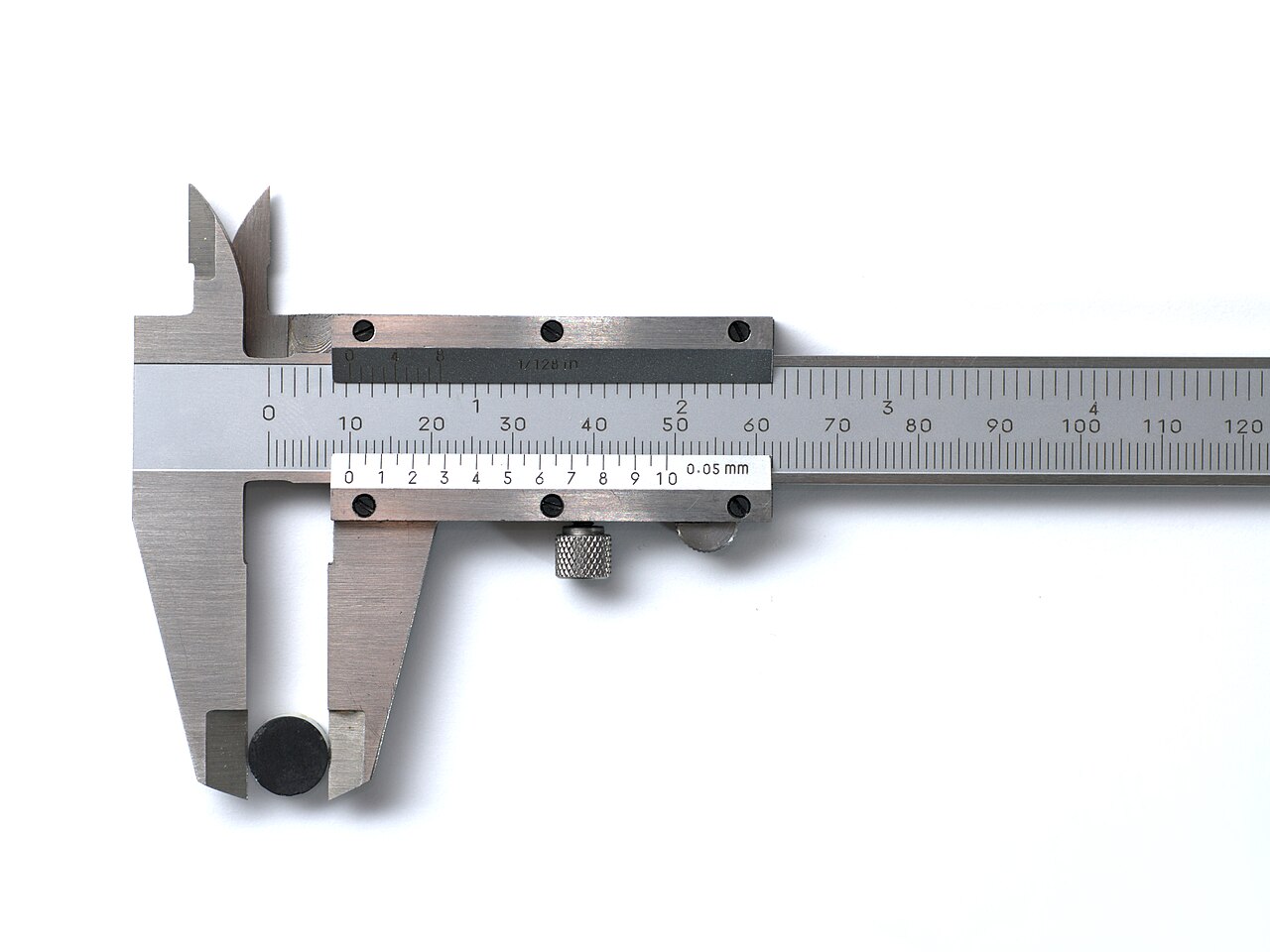
It's a common point of confusion: dividers vs. calipers. While both deal with dimensions, their primary functions differ. Calipers are designed for direct measurement against a scale (like inches or millimeters), measuring length, width, or diameter. Dividers, on the other hand, are for transferring or marking distances. You might use calipers to measure the diameter of a bolt, then use dividers to transfer that exact diameter to a piece of wood for drilling. Think of calipers as the 'measurer' and dividers as the 'marker' or 'replicator' of a distance. Understanding this distinction is key to selecting the right tool for your task.
💰 Pricing & Where to Buy
Pricing for dividers varies significantly based on material, brand, and complexity. Basic steel dividers for general craft use can be found for as little as $10-$20. Professional-grade drafting dividers and precision dividers from reputable brands like Starrett or Kinex can range from $50 to $150 or more. Digital calipers that offer divider functionality typically start around $30-$50 for decent models. You can find dividers at most hardware stores, specialty tool shops, and online retailers like Amazon or dedicated machinist supply stores.
🚀 The Future of Dividers: Smart Tools & Integration
The future of dividers is leaning towards integration and enhanced functionality. We're seeing a rise in smart tools that combine analog precision with digital connectivity, allowing for measurements to be logged, shared, or even used to control automated machinery. Expect to see dividers with built-in sensors for angle detection or integrated laser guides for more complex layout tasks. The challenge will be maintaining the tactile feel and simplicity that many users cherish, while incorporating the computational power that defines modern digital fabrication.
Key Facts
- Year
- Ancient
- Origin
- Human Civilization
- Category
- Infrastructure & Design
- Type
- Concept
Frequently Asked Questions
Can dividers be used for measuring?
While dividers don't have a built-in scale for direct measurement like calipers, they are used to transfer or mark distances. You can measure a distance with calipers and then use dividers to accurately replicate that distance on another surface or to scribe a circle of that radius. Their primary function is marking and transferring, not direct reading of a dimension.
What is the difference between dividers and compasses?
The terms are often used interchangeably, but technically, dividers have two sharp points for marking or transferring distances. A compass typically has one sharp point and one attachment for holding a pencil or pen, specifically designed for drawing circles and arcs. Many tools are sold as 'dividers/compasses' as they can perform both functions.
Are analog dividers still relevant in a digital age?
Absolutely. Many professionals prefer analog dividers for their tactile feedback, simplicity, and reliability. They don't require batteries, are less prone to electronic failure, and offer a direct, intuitive feel for the measurement. While digital tools offer enhanced features, analog dividers remain a staple for many tasks requiring precision and a direct connection to the material.
What materials can dividers be used on?
Dividers with hardened steel points can mark a wide range of materials, including wood, plastic, and soft metals. For harder metals or surfaces, specialized scribing tools might be more appropriate, but standard dividers are versatile enough for most common workshop and drafting tasks.
How do I maintain my dividers for longevity?
Regular maintenance involves keeping the pivot clean and lightly lubricated to ensure smooth operation. After use, wipe them down to remove debris and store them in a protective case or pouch to prevent damage to the points and maintain their accuracy. Avoid dropping them, as this can misalign the pivot.