
Contents
Overview
The seeds of Yugoslavia's dissolution were sown in the post-World War II era, with the establishment of the Socialist Federal Republic of Yugoslavia under Josip Broz Tito in 1945. Tito skillfully navigated the Cold War, maintaining a delicate balance between the federation's six constituent republics—Slovenia, Croatia, Bosnia and Herzegovina, Serbia, Montenegro, and Macedonia—and its two autonomous provinces, Vojvodina and Kosovo. This federal structure, while initially successful in fostering a sense of unity and economic progress, began to fray in the 1980s. Economic crises, coupled with the death of Tito, removed a unifying figure, allowing long-simmering ethnic and nationalist sentiments, particularly within Serbia under Slobodan Milošević, to resurface and gain momentum. The collapse of communist regimes across Eastern Europe further emboldened secessionist movements, as the federal authority of the League of Communists of Yugoslavia waned.
⚙️ How It Works
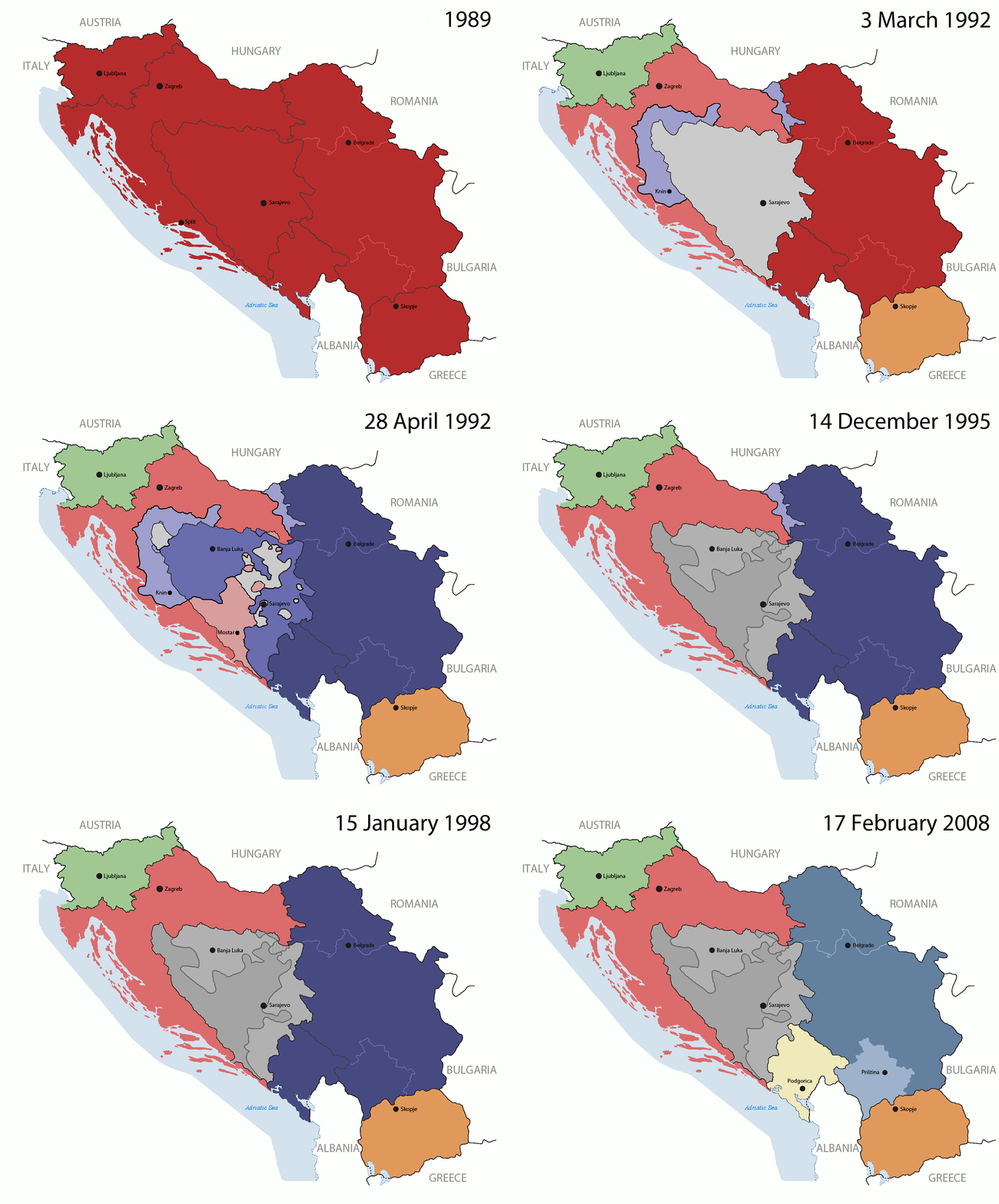
The dissolution of Yugoslavia was not a single event but a cascading series of declarations of independence and subsequent conflicts. Slovenia and Croatia declared independence in June 1991, triggering immediate military responses from the Yugoslav People's Army (JNA), largely dominated by Serbian interests. The Ten-Day War in Slovenia was relatively brief, but the Croatian War of Independence proved far more protracted and brutal, involving significant ethnic cleansing and sieges, most notably the siege of Vukovar. The situation escalated dramatically with the outbreak of the Bosnian War, a complex three-way conflict characterized by widespread atrocities and the infamous siege of Sarajevo. The international community's response was often slow and fragmented, with early peacekeeping missions struggling to contain the violence. The Dayton Agreement eventually brought an end to the Bosnian War, but the dissolution process continued with the eventual independence of Kosovo, following further conflict and NATO intervention in 1999.
📊 Key Facts & Numbers
The dissolution of Yugoslavia resulted in the formation of new sovereign states, with the Yugoslav Wars causing significant displacement and loss of life. The economic cost was staggering, with GDP in the region plummeting during the conflict years. The wars saw widespread displacement and refugees fleeing the conflict zones. The United Nations deployed peacekeeping forces, such as UNPROFOR, across the former republics.
👥 Key People & Organizations
Key figures in the dissolution of Yugoslavia include Slobodan Milošević, the Serbian president whose nationalist policies are widely seen as a primary catalyst for the conflicts; Franjo Tuđman, the first president of independent Croatia, who pursued policies that led to ethnic tensions; Alija Izetbegović, the first president of Bosnia and Herzegovina, who led his nation through its devastating war; and Milan Kučan, the first president of independent Slovenia, which managed a relatively peaceful secession. Organizations like the Yugoslav People's Army (JNA) played a crucial role, initially attempting to preserve the federation by force, and later fracturing along ethnic lines. The European Economic Community (EEC), later the European Union, and the United Nations were central actors in diplomatic efforts and peacekeeping operations, though their effectiveness was often debated.
🌍 Cultural Impact & Influence
The dissolution of Yugoslavia left an indelible mark on global consciousness, particularly regarding the resurgence of ethnic conflict in post-Cold War Europe and the challenges of international intervention. The graphic images of war, ethnic cleansing, and genocide, such as the Srebrenica massacre, broadcast globally, profoundly impacted public opinion and shaped subsequent foreign policy decisions, notably influencing the response to the Rwandan genocide. The cultural output from the era, including films like No Man's Land and music from artists like Goran Bregović, has explored the trauma and complexities of the conflicts. The concept of 'Balkanization' itself, once a neutral descriptor of regional fragmentation, became synonymous with violent disintegration and ethnic strife, a term that continues to be used, often pejoratively, to describe similar geopolitical breakdowns.
⚡ Current State & Latest Developments
As of 2024, the successor states of Yugoslavia continue to navigate their post-dissolution realities. Slovenia and Croatia have successfully integrated into the European Union and NATO, representing the most stable and prosperous outcomes. Serbia and Montenegro maintain close ties, though Montenegro's independence in 2006 created new dynamics. Bosnia and Herzegovina remains a complex entity, governed by the Dayton Agreement, with significant internal divisions and ongoing international oversight. North Macedonia (formerly Macedonia) has made strides towards Euro-Atlantic integration after resolving its name dispute with Greece. Kosovo, recognized by over 100 UN member states, still faces political instability and strained relations with Serbia, which does not recognize its independence, making it a persistent source of regional tension.
🤔 Controversies & Debates
The dissolution of Yugoslavia is fraught with controversy, particularly concerning the role of external actors and the attribution of blame for the ensuing wars. Serbian narratives often highlight perceived Western biases and the role of Germany in recognizing Croatian and Slovenian independence prematurely, thus exacerbating tensions. Conversely, many critics argue that Slobodan Milošević's aggressive nationalism and the actions of the JNA were the primary drivers of conflict, leading to widespread war crimes and ethnic cleansing, as evidenced by the indictments and convictions at the International Criminal Tribunal for the former Yugoslavia (ICTY). The effectiveness and ethical implications of NATO's intervention in Kosovo in 1999 remain a subject of intense debate, with some hailing it as a necessary humanitarian act and others condemning it as an illegal act of aggression that bypassed United Nations Security Council approval. The very definition of 'Yugoslavia' and its historical legacy is contested, with some lamenting its loss and others celebrating the achievement of national sovereignty.
🔮 Future Outlook & Predictions
The future outlook for the Western Balkans remains a complex mosaic of integration and persistent challenges. The aspiration for full membership in the European Union continues to drive reforms in most successor states, though the pace of accession varies significantly. Bosnia and Herzegovina faces a particularly uncertain future, with its complex political structure and ethnic divisions posing significant hurdles to stability and progress. The unresolved status of Kosovo and its relationship with Serbia will likely remain a key geopolitical flashpoint for years to come. Experts predict that economic development and the rule of law will be crucial in mitigating lingering nationalist sentiments and fostering genuine reconciliation. The potential for renewed ethnic tensions, while perhaps less overt than in the 1990s, cannot be entirely discounted, especially in areas with significant minority populations or contested borders. The long-term stability of the region hinges on continued diplomatic engagement and a commitment to democratic principles from all parties involved.
💡 Practical Applications
While the dissolution of Yugoslavia itself is a historical event, its study offers crucial insights into the mechanics of state collapse, the dynamics of ethnic conflict, and the complexities of international intervention. Understanding the process provides a case study for analyzing secessionist movements and the challenges of nation-building in diverse societies. The legal frameworks developed to address war crimes, such as those at the International Criminal Tribunal for the former Yugoslavia (ICTY), offer valuable lessons for international justice.
Key Facts
- Category
- history
- Type
- topic