
Contents
Overview
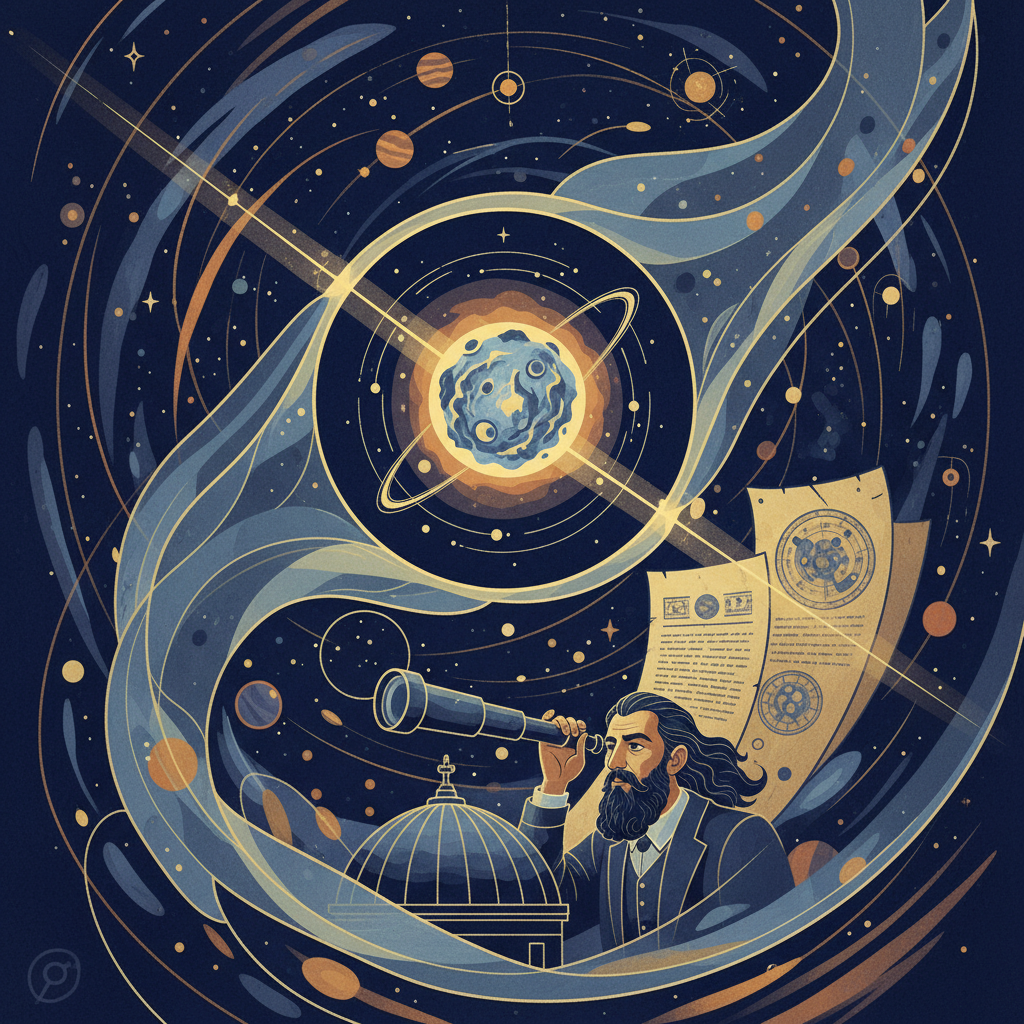
The discovery of Ceres by Giuseppe Piazzi was a culmination of meticulous observations and calculations, building upon the work of earlier astronomers like Tycho Brahe and Johannes Kepler. Piazzi, utilizing the Palermo Observatory, was searching for a hypothetical planet predicted by the Titius-Bode law, a hypothesis that suggested a pattern in the distances of planets from the Sun. His discovery was initially thought to be a new planet but was later classified as an asteroid, a term coined by William Herschel, who discovered Uranus. The study of Ceres has been influenced by various scientists, including Carl Sagan, who discussed the potential for life on other celestial bodies, and Neil deGrasse Tyson, who has emphasized the importance of asteroid research in understanding the solar system's formation.
🔭 The Role of Giuseppe Piazzi
Giuseppe Piazzi's contribution to astronomy extends beyond the discovery of Ceres. His work on cataloging stars and his observations of celestial bodies helped lay the foundation for future astronomical research. Piazzi's discovery sparked a wave of interest in asteroid hunting, with astronomers like Heinrich Olbers discovering other asteroids such as Pallas. The collaboration between astronomers of the time, including the mathematical contributions of Carl Friedrich Gauss in predicting Ceres' orbit, highlights the cooperative nature of scientific progress. Today, astronomers and space agencies like NASA, the European Space Agency (ESA), and the Planetary Society continue to study asteroids, with missions like Dawn providing detailed insights into Ceres' composition and geology.
🌌 Impact on Astronomy and Space Exploration
The impact of Ceres' discovery on astronomy and space exploration has been profound. It led to a reevaluation of the solar system's structure and the realization that there are numerous small bodies orbiting the Sun. This understanding has been crucial for space missions, as asteroids can pose hazards to spacecraft and offer insights into the early solar system's formation. The study of Ceres, facilitated by advancements in technology and international cooperation, has also inspired new generations of astronomers, including figures like Lisa Randall, who has worked on theories about the universe's structure, and Brian Cox, who has popularized astronomy through media and public engagement. Furthermore, the discovery of exoplanets, such as those found by the Kepler space telescope, has expanded our view of planetary systems beyond our own, with scientists like Sara Seager at the forefront of exoplanet research.
📊 Legacy and Further Research
The legacy of Giuseppe Piazzi's discovery and the ongoing research into Ceres and other asteroids continue to inspire scientific inquiry. The classification and study of asteroids have become a significant area of research, with implications for understanding the solar system's evolution and the potential risks and benefits associated with near-Earth asteroids. Organizations like the International Astronomical Union (IAU) play a crucial role in coordinating research efforts and defining the official boundaries and classifications of celestial bodies. As technology advances, with projects like the Square Kilometre Array (SKA) and the James Webb Space Telescope, our ability to study asteroids and other celestial bodies in greater detail will continue to grow, offering new insights into the universe and our place within it.
Key Facts
- Year
- 1801
- Origin
- Palermo, Italy
- Category
- science
- Type
- event
Frequently Asked Questions
Who discovered Ceres?
Ceres was discovered by Giuseppe Piazzi on January 1, 1801.
What is Ceres?
Ceres is the largest object in the asteroid belt, initially thought to be a planet but later classified as an asteroid.
Why is the discovery of Ceres significant?
The discovery of Ceres expanded our understanding of the solar system, led to the discovery of other asteroids, and has implications for space exploration and the search for life beyond Earth.
Who contributed to the study of Ceres after its discovery?
Several astronomers, including Carl Friedrich Gauss, William Herschel, and Heinrich Olbers, contributed to the study of Ceres and the understanding of asteroids.
What are the current research areas related to Ceres?
Current research areas include the composition and geology of Ceres, the potential for life on asteroids, and the risks and benefits associated with near-Earth asteroids.