
Contents
- 🎵 Origins & History
- ⚙️ How It Works
- 📊 Key Facts & Numbers
- 👥 Key People & Organizations
- 🌍 Cultural Impact & Influence
- ⚡ Current State & Latest Developments
- 🤔 Controversies & Debates
- 🔮 Future Outlook & Predictions
- 💡 Practical Applications
- 📚 Related Topics & Deeper Reading
- Frequently Asked Questions
- References
- Related Topics
Overview
The genesis of digital antennas is inextricably linked to the global transition from analog to digital television broadcasting, a monumental undertaking that began in earnest in the late 1990s and accelerated through the 2000s. While early antennas were designed for analog signals, the advent of digital broadcasting necessitated new designs. The Advanced Television Systems Committee standard, adopted in the United States in 1996, and the Digital Video Broadcasting standards in Europe, mandated a shift in signal modulation and frequency allocation. This meant that while older antennas might still pick up some digital signals, their efficiency and performance were often suboptimal. Companies like RCA Corporation and Philips began developing and marketing antennas specifically tuned for these new digital frequencies, often featuring flat-panel designs or improved UHF reception capabilities to capture the broader digital spectrum. The FCC's mandate for a digital television transition in the US, with a deadline of June 12, 2009, spurred widespread consumer adoption of these new digital-ready antennas.
⚙️ How It Works
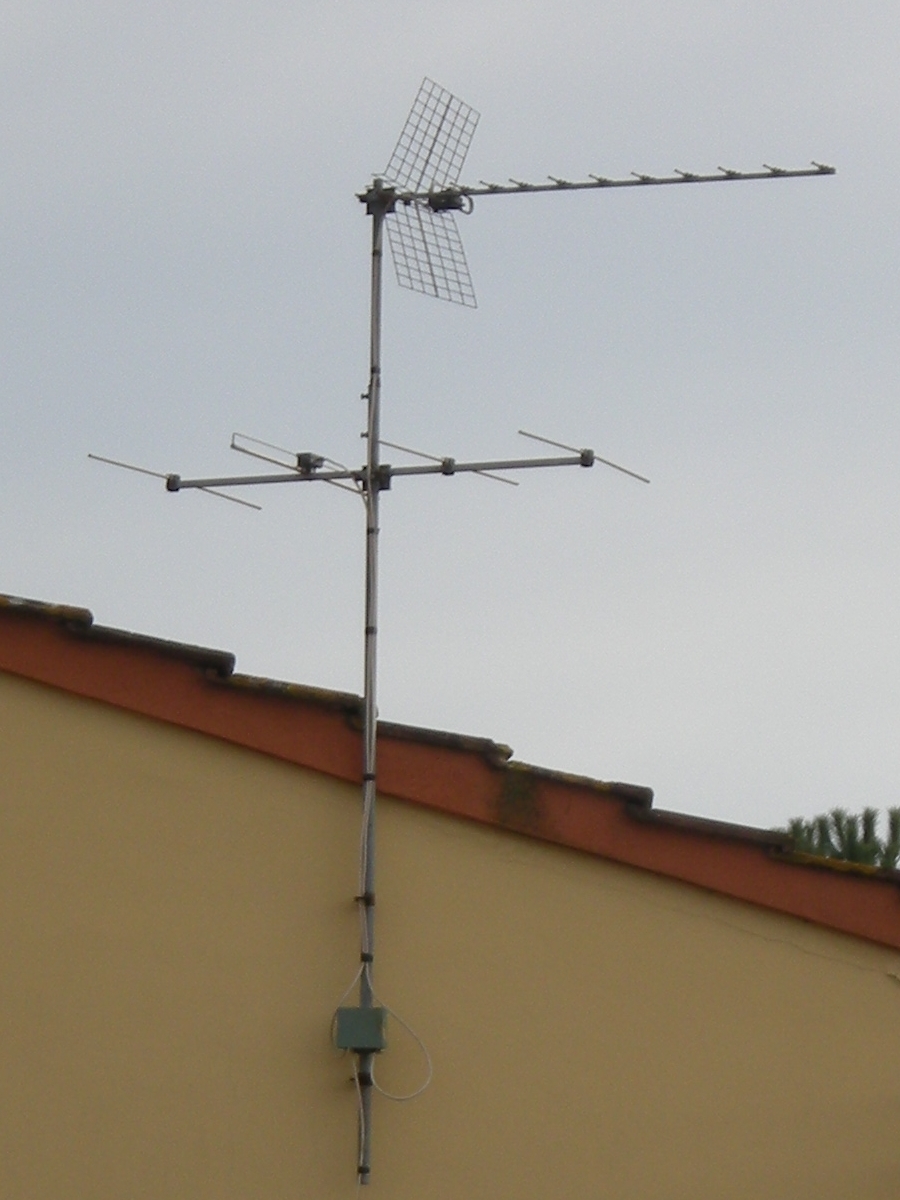
Digital antennas function by capturing electromagnetic waves broadcast by television and radio transmitters. Unlike analog signals, which degrade gracefully into static, digital signals are binary—either the signal is strong enough to be decoded, or it's not. This means digital antennas must be highly efficient at capturing the specific frequencies used for digital broadcasts, typically in the VHF (Very High Frequency) and UHF (Ultra High Frequency) bands. Modern digital antennas often employ sophisticated designs, such as multi-directional arrays or flat panel elements, to maximize reception across a wide range of frequencies and angles. Some incorporate built-in amplifiers (preamplifiers or distribution amplifiers) to boost weak signals, especially crucial for users located far from broadcast towers or in areas with signal obstructions. The antenna's impedance (typically 75 ohms for coaxial cable) must also match that of the receiver to ensure optimal signal transfer, a principle that carried over from analog systems but is critical for the precise data streams of digital broadcasts.
📊 Key Facts & Numbers
Globally, an estimated 1.5 billion television households exist, with a significant portion still relying on OTA reception. In the United States alone, approximately 40 million households receive at least some television programming via OTA broadcasts, a number that has seen steady growth since the digital transition. The digital TV transition, completed in the US by 2009, saw over 1,700 analog TV stations shut down. Broadcast TV spectrum, particularly the UHF band (470-698 MHz), has become increasingly valuable, leading to spectrum repacking initiatives by the Federal Communications Commission to reallocate frequencies for wireless broadband services, impacting antenna reception ranges. The average cost of a decent digital antenna can range from $20 for basic indoor models to over $200 for high-gain outdoor units, with annual sales in the US often exceeding $500 million.
👥 Key People & Organizations
While no single inventor is credited with the 'digital antenna' as a singular invention, numerous engineers and companies have been instrumental in its development and refinement. Engineers at organizations like the Advanced Television Systems Committee and the European Telecommunications Standards Institute (ETSI) developed the standards that digital broadcasting relies upon, indirectly shaping antenna design requirements. Companies like Mohu, which popularized the flat, paper-thin indoor antenna with its Mohu Leaf product launched around 2011, have been significant players in the consumer market. Winegard Company and Channel Master are long-standing manufacturers of both indoor and outdoor antennas that have adapted their product lines to meet digital broadcasting demands. The ongoing development of antenna technology is often driven by research in electromagnetics and signal processing at institutions like Massachusetts Institute of Technology.
🌍 Cultural Impact & Influence
The cultural impact of digital antennas is most keenly felt by the 'cord-cutting' movement, a phenomenon that gained significant traction in the 2010s. For millions, digital antennas represent a pathway to free, high-definition local news, sports, and entertainment, bypassing expensive cable or satellite subscriptions. This has democratized access to broadcast content, particularly for rural communities or lower-income households. The ability to receive crystal-clear HD broadcasts without monthly fees has fostered a sense of independence and savvy consumerism. Furthermore, the aesthetic evolution of antennas, from the clunky rabbit ears of the analog era to sleek indoor panels and discreet outdoor models, reflects broader design trends in consumer electronics. The resurgence of OTA viewing has also led to increased focus on the quality and availability of local broadcast journalism.
⚡ Current State & Latest Developments
The current state of digital antennas is one of persistent relevance and ongoing innovation, despite the dominance of streaming services. Manufacturers are continually refining antenna designs for better performance in challenging reception environments, such as urban canyons or areas affected by spectrum repacking. There's a growing emphasis on 'smart' antennas that can dynamically adjust their reception patterns or integrate with smart home systems. Companies like Antennas Direct are pushing the boundaries with high-gain, multi-directional models designed for maximum channel reception. The FCC's ongoing spectrum repacking efforts, which concluded in 2020, have altered broadcast frequencies, requiring some users to re-scan for channels or even upgrade their antennas to ensure optimal reception of newly allocated frequencies. The market for digital antennas remains robust, with millions of consumers opting for OTA as a primary or supplementary source of television viewing.
🤔 Controversies & Debates
The primary controversy surrounding digital antennas centers on their reliability and the perceived complexity of optimal setup. Critics often point to the 'all-or-nothing' nature of digital signals, where a weak signal can result in a completely blank screen, unlike the gradual degradation of analog. This leads to debates about antenna placement, orientation, and the necessity of signal boosters or amplifiers, which can sometimes introduce noise. Another point of contention is the impact of spectrum repacking on antenna performance; while intended to improve spectrum efficiency, it has led to some users experiencing reduced channel availability or requiring new antennas. Furthermore, the marketing of 'super-long-range' antennas often faces scrutiny, with consumer advocacy groups questioning whether advertised reception distances are consistently achievable in real-world conditions, particularly in densely populated or geographically challenging areas.
🔮 Future Outlook & Predictions
The future of digital antennas is likely to be shaped by several converging trends. Continued advancements in antenna technology, such as phased-array antennas and beamforming, could lead to significantly improved reception capabilities, allowing for greater distances and better performance in signal-congested areas. The ongoing evolution of broadcast standards, potentially including higher resolutions or more immersive audio formats, will necessitate antenna designs that can accommodate these new signals. Furthermore, as 5G and future wireless technologies expand, the interplay between broadcast TV spectrum and mobile data spectrum will continue to be a critical factor, potentially leading to further repacking initiatives or new antenna solutions designed to coexist with these technologies. The integration of antennas with smart home ecosystems and the development of 'smart' antennas that can automatically optimize reception will also likely play a significant role, making OTA reception more user-friendly and accessible.
💡 Practical Applications
Digital antennas have a wide array of practical applications, primarily centered around receiving broadcast television and radio signals. For individuals and households, their most common use is to access free over-the-air (OTA) local channels, including major networks like NBC, CBS, ABC, and FOX, as well as public broadcasting services like PBS. This is a crucial alternative for 'cord-cutters' seeking to reduce or eliminate expensive cable or satellite subscriptions. In rural or remote areas where cable or satellite service may be unavailable or prohibitively expensive, digital antennas are often the primary means of television reception. They are also used in emergency preparedness kits, as broadcast signals can remain operational during power outages when other forms of media might fail. Beyond television, specialized digital antennas are used for receiving digital radio broadcasts (e.g., HD Radio), and in some industrial applications for specific frequency reception.
Key Facts
- Year
- 2000s-present
- Origin
- Global (developed in response to global digital broadcasting standards)
- Category
- technology
- Type
- technology
Frequently Asked Questions
What is the main difference between an analog and a digital antenna?
The primary difference lies in their optimization for signal types. Analog antennas were designed for continuous analog signals that degrade gradually into static. Digital antennas are engineered for discrete digital signals (like ATSC or DVB) which are either received perfectly or not at all. This means digital antennas often have a more refined frequency response and higher gain, especially in the UHF band where much of digital broadcasting occurs, to ensure a strong enough signal for the receiver to decode without error. While older antennas might pick up some digital signals, a purpose-built digital antenna offers superior performance and reliability for modern broadcasts.
Do I need a special antenna for HD channels?
Yes, for the best experience, a digital antenna is recommended for HD channels. Most over-the-air HD channels are broadcast in the UHF band, and digital antennas are specifically designed to capture these frequencies efficiently. While some older 'rabbit ear' antennas might pick up a few VHF digital channels, they are generally not optimized for the broader UHF spectrum required for most HD programming. A good digital antenna, whether indoor or outdoor, will ensure you receive the maximum number of available HD channels in your area with the clearest possible picture and sound quality.
How far away can a digital antenna receive signals?
The reception range of a digital antenna varies significantly based on its design, gain, and local conditions. Basic indoor antennas might have a range of 15-30 miles, while more powerful outdoor antennas can potentially receive signals from 70-150 miles or even more under ideal circumstances. Factors like antenna height, obstructions (buildings, trees, hills), atmospheric conditions, and the power of the broadcast towers themselves all play a critical role. Manufacturers often provide estimated reception maps, but real-world performance can differ, and a signal amplifier may be necessary for users located at the edge of the antenna's effective range.
What is spectrum repacking and how does it affect my antenna?
Spectrum repacking is an initiative by regulatory bodies like the FCC to reallocate broadcast television frequencies, primarily to free up bandwidth for wireless services like 5G. This process involves moving TV stations to different channels within the VHF and UHF bands. For consumers, this means that channels previously received might move, potentially requiring you to rescan your TV for new channel locations. In some cases, if a station moves to a frequency band your current antenna is less efficient at receiving, you might experience a weaker signal or lose reception of that specific channel, potentially necessitating an antenna upgrade to one better suited for the new frequency assignments.
Are indoor digital antennas as good as outdoor ones?
Generally, outdoor digital antennas offer superior performance compared to indoor models. Outdoor antennas can be mounted higher, have larger or more directional elements, and are less susceptible to interference from household electronics and building materials. This typically results in better reception range and the ability to capture weaker signals or more channels. Indoor antennas are more convenient and aesthetically pleasing but are best suited for users who live relatively close to broadcast towers and have a clear line of sight. For optimal reception, especially in fringe areas or locations with significant signal obstructions, an outdoor antenna is usually the preferred choice.
How do I set up a digital antenna for the best reception?
Setting up a digital antenna for optimal reception involves several key steps. First, identify the location of broadcast towers in your area using online tools like the FCC's DTV Reception Maps or sites like TVFool.com. For indoor antennas, place it as high as possible, ideally near a window facing the broadcast towers, and away from large metal objects or electronic devices that can cause interference. For outdoor antennas, mount it on a mast on your roof or in your attic, pointing it towards the majority of the broadcast towers. After placement, connect it to your TV via coaxial cable and perform a channel scan on your television's menu. You may need to experiment with different positions and orientations to maximize the number of channels received.
Will streaming services make digital antennas obsolete?
While streaming services have significantly altered media consumption, they are unlikely to make digital antennas obsolete in the near future. Digital antennas provide free access to local broadcast channels, including live news, sports, and emergency alerts, which are often not available or are delayed on streaming platforms. For many, OTA reception is a cost-effective supplement to streaming, allowing them to access a full range of content without multiple subscriptions. Furthermore, in areas with unreliable internet service, digital antennas remain a crucial and dependable source of television programming. The continued growth of the cord-cutting movement suggests a sustained demand for OTA solutions.