
Contents
Overview
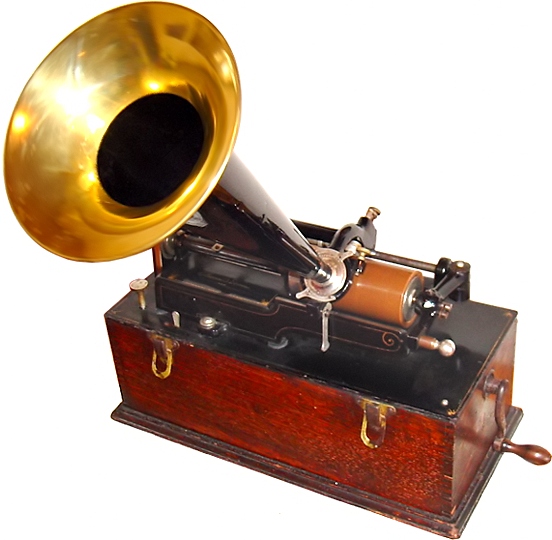
The concept of data storage predates computers, with early forms including handwritten manuscripts and phonographic recordings. The advent of computing brought about new methods, such as punch cards, which were instrumental in early data processing for machines like textile looms and calculators, as proposed by Charles Babbage and later developed by Herman Hollerith for the U.S. Census. Magnetic tape emerged in the 1960s, gradually replacing punch cards as the primary means for data storage, with companies like Mohawk Data Sciences offering magnetic tape encoders. The evolution continued with magnetic disk storage, pioneered by IBM with the development of floppy disk drives and hard disk drives, which became integral to personal computers by the 1990s, making punch cards largely obsolete. This historical progression, detailed by sources like Wikipedia and Dataversity, highlights a continuous drive for greater capacity, speed, and accessibility.
⚙️ How It Works
At its core, data storage involves translating digital information into binary code (0s and 1s) and writing this code onto a physical medium. This process differs based on the storage technology: magnetic storage, like Hard Disk Drives (HDDs), uses electromagnets to polarize magnetic regions on spinning platters. Solid-state storage, such as Solid-State Drives (SSDs), employs electrical signals to trap or release electrons in memory cells. Optical storage, used in CDs and DVDs, encodes data as microscopic pits and lands on a disc's surface, read by a laser. Retrieving data reverses this process, with read/write heads or lasers detecting the physical or electrical states and translating them back into binary code for the CPU, as explained by IBM and Snowflake. This fundamental mechanism underpins all digital data storage, from simple USB flash drives to complex cloud infrastructure.
🌍 Cultural Impact
Data storage has profoundly impacted culture by enabling the creation, dissemination, and preservation of information on an unprecedented scale. The digital revolution, fueled by advancements in storage technologies from companies like IBM and Apple, has transformed how we consume media, communicate, and access knowledge. Platforms like YouTube and Reddit thrive on the ability to store and share vast amounts of user-generated content, while cloud storage services from providers such as Dropbox and Google Cloud have made data accessible from virtually anywhere. This democratization of information, however, also raises questions about digital preservation, data privacy, and the potential for information overload, as discussed in articles from Domo and Dataversity.
🔮 Legacy & Future
The future of data storage is being shaped by relentless innovation, driven by the exponential growth of data generated by AI, IoT devices, and big data analytics. Emerging technologies like DNA storage, which offers incredible density and longevity, and holographic storage, promising faster read/write speeds, are poised to redefine archival storage and long-term data preservation, as explored by phData and the National Academies of Sciences, Engineering, and Medicine. Cloud storage continues to evolve, with hybrid cloud solutions offering flexibility and advanced AI-driven storage management optimizing performance and cost. As magnetic storage scaling slows, the industry faces challenges in meeting demand, pushing for new solutions that are not only more capacious but also more sustainable and energy-efficient, as highlighted by Data Center Knowledge.
Key Facts
- Year
- Pre-history - Present
- Origin
- Global
- Category
- technology
- Type
- technology
Frequently Asked Questions
What are the main types of data storage devices?
Data storage devices can be broadly categorized into direct-attached storage (DAS), network-attached storage (NAS), storage area networks (SAN), and cloud storage. DAS includes internal HDDs and SSDs, external drives, and USB flash drives. NAS and SAN are network-based solutions for shared access, while cloud storage offers remote access via the internet. Emerging technologies like DNA storage and holographic storage are also being explored for future applications.
What is the difference between primary and secondary storage?
Primary storage, such as RAM, is volatile and directly accessible by the CPU for active processing, offering high speed but limited retention. Secondary storage, like HDDs and SSDs, is non-volatile and used for long-term data retention, though data must be transferred to primary storage for processing. This distinction is crucial for understanding how computers manage data for immediate tasks versus long-term archiving.
How is data stored in magnetic storage devices like HDDs?
In magnetic storage devices like Hard Disk Drives (HDDs), data is stored by magnetizing tiny regions on spinning platters. A read/write head controls an electromagnet, polarizing these regions to represent binary 0s and 1s. The arrangement of these magnetized regions forms the digital data that can be later read back by the same head.
What are the advantages of cloud storage?
Cloud storage offers significant advantages, including scalability, accessibility from any internet-connected device, cost-effectiveness (often with free tiers and pay-as-you-go models), and built-in redundancy and backup features. It frees up local device storage and facilitates collaboration, making it a popular choice for both individuals and businesses.
What are some future technologies for data storage?
The future of data storage is exploring highly dense and durable mediums. DNA storage, leveraging the natural information-carrying capacity of DNA molecules, promises immense storage density and longevity for archival purposes. Holographic storage uses lasers to store data throughout a material's volume, potentially offering faster access. Other areas of research include quantum storage and advanced optical storage methods.
References
- en.wikipedia.org — /wiki/Data_storage
- ibm.com — /think/topics/data-storage
- netapp.com — /learn/best-on-premise-storage-solutions-top-5-2026/
- domo.com — /learn/article/data-storage
- snowflake.com — /en/fundamentals/data-storage/
- cloudian.com — /guides/data-backup/best-enterprise-storage-solutions-top-5-in-2026/
- currys.co.uk — /computing/data-storage
- cloudian.com — /guides/ai-infrastructure/big-data-storage-key-components-top-6-storage-technolo