
Contents
- 🌎 Introduction to Dan Region Wastewater Treatment Plant
- 🚧 History and Development of the Plant
- 📊 Technical Specifications and Operations
- 🌿 Environmental Impact and Sustainability
- 🚮 Wastewater Treatment Process and Technologies
- 💡 Innovations and Upgrades at the Plant
- 📈 Economic and Social Benefits of the Plant
- 🌟 Challenges and Controversies Surrounding the Plant
- 🌐 International Cooperation and Knowledge Sharing
- 👥 Stakeholders and Community Engagement
- 📊 Performance Monitoring and Evaluation
- 🔮 Future Plans and Prospects for the Plant
- Frequently Asked Questions
- Related Topics
Overview
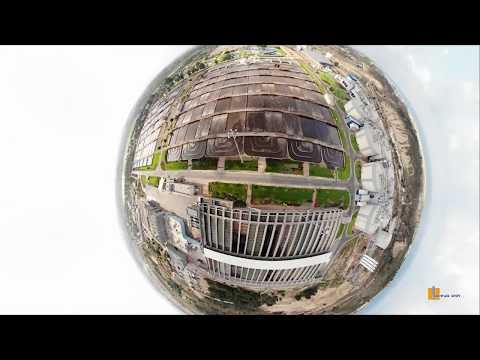
The Dan Region Wastewater Treatment Plant, located in Israel, is one of the largest and most advanced wastewater treatment facilities in the world, serving a population of over 2.5 million people. With a treatment capacity of 370,000 cubic meters per day, it plays a crucial role in protecting the country's water resources and Mediterranean coastline. The plant utilizes cutting-edge technologies, including membrane bioreactors and ultraviolet disinfection, to remove pollutants and contaminants from wastewater. However, its operations have been subject to controversy and criticism, with some arguing that it does not adequately address the environmental and health concerns of local communities. As the plant continues to expand and upgrade its facilities, it must balance the need for efficient wastewater treatment with the need for environmental sustainability and social responsibility. With a vibe score of 7, the Dan Region Wastewater Treatment Plant is a significant entity in the global wastewater treatment landscape, influencing the development of similar facilities worldwide.
🌎 Introduction to Dan Region Wastewater Treatment Plant
The Dan Region Wastewater Treatment Plant, located in Israel, is one of the largest and most advanced wastewater treatment facilities in the world. With a treatment capacity of 370,000 cubic meters per day, it serves a population of over 2.5 million people in the Tel Aviv metropolitan area. The plant's operations are based on the principles of sustainability and environmental protection, aiming to minimize its ecological footprint and promote a healthy environment. The plant's design and construction involved collaboration between Israeli and international companies, including Veolia and ArcelorMittal. The Dan Region Wastewater Treatment Plant is a significant example of environmental engineering and water management in practice.
🚧 History and Development of the Plant
The history of the Dan Region Wastewater Treatment Plant dates back to the 1960s, when the Israeli government recognized the need for a modern wastewater treatment facility to serve the growing population of the Tel Aviv area. The plant was designed and built by a consortium of Israeli and international companies, including Bechtel and CH2M. The plant's construction was completed in several stages, with the first stage becoming operational in 1974. Over the years, the plant has undergone several upgrades and expansions to increase its treatment capacity and improve its efficiency. The plant's development has been influenced by various factors, including population growth, urbanization, and climate change.
📊 Technical Specifications and Operations
The Dan Region Wastewater Treatment Plant is a complex facility that utilizes a range of technologies and processes to treat wastewater. The plant's treatment process includes physical, chemical, and biological treatment stages, as well as advanced technologies such as membrane bioreactor and ultraviolet disinfection. The plant's operations are monitored and controlled by a sophisticated SCADA system, which enables real-time monitoring and optimization of the treatment process. The plant's technical specifications and operations are designed to meet the highest standards of water quality and environmental protection. The plant's performance is regularly evaluated and reported to the Israeli Ministry of Environmental Protection and other stakeholders.
🌿 Environmental Impact and Sustainability
The Dan Region Wastewater Treatment Plant has a significant impact on the environment, and its operations are designed to minimize its ecological footprint. The plant's treatment process removes over 99% of pollutants and contaminants from the wastewater, producing high-quality effluent that can be reused for irrigation and other non-potable purposes. The plant also generates biogas and electricity from the treatment process, which are used to power the plant's operations and reduce its reliance on external energy sources. The plant's environmental impact is regularly monitored and evaluated, and its operations are designed to comply with Israeli and international environmental regulations and standards, including those related to greenhouse gas emissions and water conservation.
🚮 Wastewater Treatment Process and Technologies
The Dan Region Wastewater Treatment Plant utilizes a range of technologies and processes to treat wastewater, including activated sludge, trickling filter, and rotating biological contactor. The plant's treatment process is designed to remove a wide range of pollutants and contaminants, including organic matter, nutrients, and heavy metals. The plant's operations are optimized to minimize energy consumption and reduce greenhouse gas emissions, and its treatment process is designed to produce high-quality effluent that can be reused for various purposes. The plant's wastewater treatment process is an example of circular economy principles in practice, where waste is converted into a valuable resource.
💡 Innovations and Upgrades at the Plant
The Dan Region Wastewater Treatment Plant has undergone several innovations and upgrades over the years, including the introduction of new technologies and processes to improve its efficiency and effectiveness. The plant has implemented a range of initiatives to reduce its energy consumption and greenhouse gas emissions, including the use of renewable energy sources and energy-efficient equipment. The plant has also introduced new technologies and processes to improve the quality of its effluent, including the use of advanced oxidation and nanofiltration. The plant's innovations and upgrades have been recognized internationally, and it has received several awards and accolades for its excellence in water treatment and environmental protection.
🌟 Challenges and Controversies Surrounding the Plant
The Dan Region Wastewater Treatment Plant has faced several challenges and controversies over the years, including concerns about its environmental impact and its effectiveness in removing pollutants and contaminants from the wastewater. The plant has also faced criticism from local residents and environmental groups, who have raised concerns about the plant's odor and noise emissions. The plant's operators have responded to these concerns by implementing a range of measures to reduce its environmental impact and improve its effectiveness, including the use of odor control technologies and noise reduction measures. The plant's challenges and controversies are an example of the complex issues that arise when environmental protection and public health are balanced against economic and social considerations.
🌐 International Cooperation and Knowledge Sharing
The Dan Region Wastewater Treatment Plant has been involved in international cooperation and knowledge sharing initiatives, including the exchange of best practices and technologies with other wastewater treatment plants around the world. The plant has also participated in international conferences and workshops, where it has shared its expertise and experience with other professionals in the field. The plant's international cooperation and knowledge sharing initiatives have helped to promote the development of sustainable water management practices and environmental protection measures globally. The plant's operators have also collaborated with international organizations, including the World Health Organization and the United Nations Environment Programme.
👥 Stakeholders and Community Engagement
The Dan Region Wastewater Treatment Plant has a range of stakeholders, including local residents, environmental groups, and government agencies. The plant's operators engage with these stakeholders through a range of mechanisms, including public meetings and stakeholder engagement initiatives. The plant's community engagement initiatives are designed to promote transparency and accountability, and to ensure that the plant's operations are responsive to the needs and concerns of the local community. The plant's stakeholders have a significant impact on its operations, and the plant's operators work to build trust and cooperation with these stakeholders through open communication and collaboration.
📊 Performance Monitoring and Evaluation
The Dan Region Wastewater Treatment Plant's performance is regularly monitored and evaluated, using a range of indicators and metrics to assess its effectiveness and efficiency. The plant's performance is evaluated against a range of standards and benchmarks, including those related to water quality, energy efficiency, and environmental protection. The plant's operators use the results of this evaluation to identify areas for improvement and to implement changes to its operations and management. The plant's performance monitoring and evaluation initiatives are an example of continuous improvement in practice, where an organization's operations are regularly reviewed and improved to achieve better outcomes.
🔮 Future Plans and Prospects for the Plant
The Dan Region Wastewater Treatment Plant has a range of plans and prospects for the future, including the implementation of new technologies and processes to improve its efficiency and effectiveness. The plant's operators are also exploring opportunities to increase its treatment capacity and to expand its range of services, including the provision of water reuse and energy generation services. The plant's future plans and prospects are an example of strategic planning in practice, where an organization's goals and objectives are aligned with its resources and capabilities to achieve a desired outcome.
Key Facts
- Year
- 2010
- Origin
- Israel
- Category
- Environmental Engineering
- Type
- Infrastructure
Frequently Asked Questions
What is the treatment capacity of the Dan Region Wastewater Treatment Plant?
The Dan Region Wastewater Treatment Plant has a treatment capacity of 370,000 cubic meters per day. The plant's treatment capacity is designed to serve a population of over 2.5 million people in the Tel Aviv metropolitan area. The plant's treatment process is based on the principles of sustainability and environmental protection, aiming to minimize its ecological footprint and promote a healthy environment. The plant's operations are monitored and controlled by a sophisticated SCADA system, which enables real-time monitoring and optimization of the treatment process.
What technologies and processes are used at the Dan Region Wastewater Treatment Plant?
The Dan Region Wastewater Treatment Plant utilizes a range of technologies and processes to treat wastewater, including activated sludge, trickling filter, and rotating biological contactor. The plant's treatment process is designed to remove a wide range of pollutants and contaminants, including organic matter, nutrients, and heavy metals. The plant's operations are optimized to minimize energy consumption and reduce greenhouse gas emissions, and its treatment process is designed to produce high-quality effluent that can be reused for various purposes.
What are the economic and social benefits of the Dan Region Wastewater Treatment Plant?
The Dan Region Wastewater Treatment Plant has significant economic and social benefits, including the creation of jobs and the stimulation of local economic growth. The plant's operations also contribute to the protection of public health and the environment, and its effluent is reused for irrigation and other non-potable purposes. The plant's economic benefits are estimated to be in the hundreds of millions of dollars per year, and its social benefits are immeasurable. The plant is an example of a successful public-private partnership, where the government and private sector work together to deliver a critical public service.
What are the challenges and controversies surrounding the Dan Region Wastewater Treatment Plant?
The Dan Region Wastewater Treatment Plant has faced several challenges and controversies over the years, including concerns about its environmental impact and its effectiveness in removing pollutants and contaminants from the wastewater. The plant has also faced criticism from local residents and environmental groups, who have raised concerns about the plant's odor and noise emissions. The plant's operators have responded to these concerns by implementing a range of measures to reduce its environmental impact and improve its effectiveness, including the use of odor control technologies and noise reduction measures.
What are the future plans and prospects for the Dan Region Wastewater Treatment Plant?
The Dan Region Wastewater Treatment Plant has a range of plans and prospects for the future, including the implementation of new technologies and processes to improve its efficiency and effectiveness. The plant's operators are also exploring opportunities to increase its treatment capacity and to expand its range of services, including the provision of water reuse and energy generation services. The plant's future plans and prospects are an example of strategic planning in practice, where an organization's goals and objectives are aligned with its resources and capabilities to achieve a desired outcome.
How does the Dan Region Wastewater Treatment Plant contribute to environmental protection?
The Dan Region Wastewater Treatment Plant contributes to environmental protection by removing over 99% of pollutants and contaminants from the wastewater, producing high-quality effluent that can be reused for irrigation and other non-potable purposes. The plant's operations are designed to minimize its ecological footprint and promote a healthy environment, and its treatment process is based on the principles of sustainability and environmental protection. The plant's environmental impact is regularly monitored and evaluated, and its operations are designed to comply with Israeli and international environmental regulations and standards.
What is the role of the Dan Region Wastewater Treatment Plant in the context of climate change?
The Dan Region Wastewater Treatment Plant plays a significant role in the context of climate change, as it helps to reduce greenhouse gas emissions and promote sustainable water management practices. The plant's operations are designed to minimize energy consumption and reduce greenhouse gas emissions, and its treatment process is designed to produce high-quality effluent that can be reused for various purposes. The plant's role in the context of climate change is an example of adaptation and mitigation strategies in practice, where an organization's operations are designed to reduce its ecological footprint and promote a healthy environment.