
Contents
- 🌎 Introduction to Continental Crust
- 🔍 Composition and Structure
- 🌊 Continental Shelves and Submerged Regions
- 🌴 Types of Continental Crust
- 🔬 Seismic Wave Velocities and the Conrad Discontinuity
- 🌈 Geological History and Plate Tectonics
- 🌊 Current Research and Debates
- 🌟 Future Outlook and Implications
- 📚 Related Topics and Further Reading
- 👥 Key People and Organizations
- Frequently Asked Questions
- References
- Related Topics
Overview
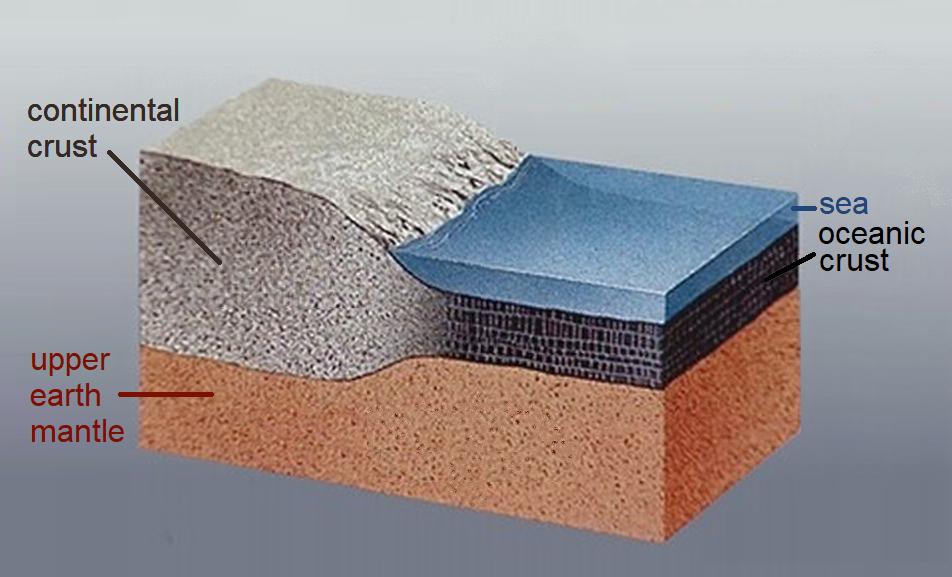
Continental crust is the layer of igneous, metamorphic, and sedimentary rocks that forms the geological continents and the areas of shallow seabed close to their shores. It is sometimes called sial due to its bulk composition being richer in aluminium silicates and having a lower density compared to the oceanic crust, called sima. The continental crust is a critical component of the Earth's lithosphere. The study of continental crust is an active area of research, with scientists using a range of techniques, including seismic imaging and geochemical analysis, to understand its composition and structure.
🌎 Introduction to Continental Crust
The continental crust is composed of a variety of rocks, including granite, basalt, and sedimentary rocks, which have been shaped by tectonic forces, weathering, and erosion. The composition of the continental crust is characterized by a high concentration of aluminium silicates, which gives it a lower density compared to the oceanic crust.
🔍 Composition and Structure
The continental crust is divided into several distinct regions, including the North American and Eurasian plates. The Zealandia region is largely submerged, with only a small portion of the continental crust above sea level.
🌊 Continental Shelves and Submerged Regions
The continental crust has been formed through a combination of processes, including plate tectonics, weathering, and erosion. Scientists are working to develop a better understanding of the crust and its dynamics, with the goal of predicting and mitigating the impacts of human activity and natural processes on the crust.
🌴 Types of Continental Crust
Current research on the continental crust is focused on a range of topics, including the formation and evolution of the crust, and the impact of human activity on the crust. Scientists are using a range of techniques, including seismic imaging, geochemical analysis, and numerical modeling, to gain a better understanding of the crust and its dynamics.
🔬 Seismic Wave Velocities and the Conrad Discontinuity
The study of the continental crust is closely related to a range of other topics, including geology, plate tectonics, and Earth science. Scientists are working to develop a better understanding of the crust and its dynamics, with the goal of gaining insights into the Earth's evolution and the processes that shape our planet.
🌈 Geological History and Plate Tectonics
Key people and organizations involved in the study of the continental crust include scientists like Marie Tharp, as well as organizations like the United States Geological Survey (USGS) and the National Oceanic and Atmospheric Administration (NOAA).
🌊 Current Research and Debates
The future outlook for the continental crust is complex and uncertain, with a range of factors, including climate change, human activity, and tectonic processes, likely to shape its evolution over time.
🌟 Future Outlook and Implications
The study of the continental crust is essential for understanding the Earth's geological history and the processes that have shaped our planet.
👥 Key People and Organizations
The continental crust is a complex and dynamic system, reportedly with a history spanning over millions of years.
Key Facts
- Origin
- Earth
- Category
- nature
- Type
- concept
Frequently Asked Questions
What is the continental crust?
The continental crust is the layer of igneous, metamorphic, and sedimentary rocks that forms the geological continents and the areas of shallow seabed close to their shores.