
Contents
Overview
The study of consumer behavior has evolved significantly over time, moving from early economic perspectives that viewed consumers as purely rational actors to more nuanced understandings that incorporate psychological, social, and cultural influences. Early economists like Nicholas Bernoulli and Oskar Morgenstern laid groundwork by examining decision-making from an economic standpoint, focusing on utility theory. However, as marketing evolved, particularly post-1950s, the scope broadened to include the entire consumer journey, from need recognition to disposal, influenced by thinkers like Herbert Simon and the development of cognitive psychology. This shift acknowledges that consumers are not always perfectly rational and are often swayed by factors beyond pure logic, a concept explored in various psychological theories and even in discussions around the nature of reality, such as Simulation Theory.
⚙️ How It Works
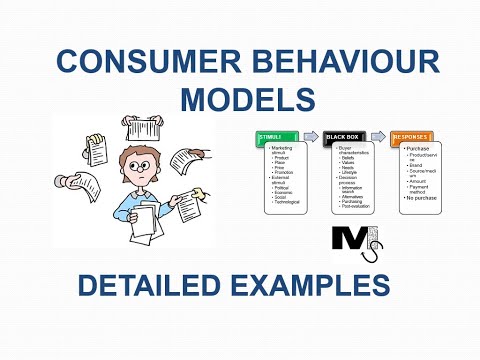
Consumer behavior models function by breaking down the intricate decision-making process into understandable frameworks. These models analyze various influences, including internal psychological states (like desires and emotions, as explored in Psychoanalytic Theory), external social pressures (as seen in Sociological Models), and learned experiences (Learning Model). Some models, like the Engel-Kollat-Blackwell (EKB) Model, map out sequential stages from problem recognition to post-purchase evaluation, while others, like the Black Box Model, focus on inputs and outputs without detailing the internal process. Understanding these models helps businesses, from those selling products on platforms like Google.com to content creators on YouTube, to tailor their messaging and offerings, much like how MrBeast crafts content to engage his audience.
🌍 Cultural Impact
The impact of consumer behavior models extends across various aspects of culture and commerce. By understanding what drives purchasing decisions, businesses can create more effective marketing campaigns, influence trends, and foster brand loyalty. For instance, understanding the psychological triggers behind purchases can lead to advertising that resonates on an emotional level, similar to how brands leverage nostalgia or aspirational lifestyles. This knowledge is crucial for navigating the digital landscape, where platforms like TikTok and Reddit play significant roles in shaping consumer perceptions and driving purchasing behavior. The insights gained can also inform product development and even contribute to broader economic discussions, much like the analysis of Gold as Safe Haven Asset.
🔮 Legacy & Future
The legacy of consumer behavior models lies in their continuous adaptation to evolving consumer landscapes, driven by technological advancements and changing societal norms. As digital platforms and data analytics become more sophisticated, so too do the models used to understand consumer behavior. Future research will likely delve deeper into the nuances of online interactions, the impact of artificial intelligence on decision-making, and the ethical considerations of influencing consumer choices. The ongoing study of consumer behavior, whether through academic research or practical application by companies like Microsoft, remains vital for businesses seeking to connect with their audience and for understanding the dynamics of modern commerce, echoing the foundational principles explored in philosophy and science.
Key Facts
- Year
- 20th-21st Century
- Origin
- Academic and marketing research
- Category
- philosophy
- Type
- model
Frequently Asked Questions
What are consumer behavior models?
Consumer behavior models are theoretical frameworks designed to explain why and how consumers make purchasing decisions. They analyze the various factors, such as psychological, social, economic, and cultural influences, that shape these choices.
Why are consumer behavior models important for businesses?
These models are crucial for businesses as they provide insights into customer motivations, preferences, and decision-making processes. This understanding allows marketers to develop more effective strategies for product development, advertising, sales, and customer engagement, ultimately leading to increased sales and brand loyalty.
What are some examples of consumer behavior models?
Examples include the Learning Model, Psychoanalytic Model, Sociological Model, Economic Model, the Engel-Kollat-Blackwell (EKB) Model, and the Black Box Model. Each model offers a different perspective on the factors influencing consumer choices.
How has the study of consumer behavior evolved?
The study has evolved from early economic theories focusing on rational decision-making to a more comprehensive approach that incorporates psychological, social, and cultural factors. This evolution has been driven by advancements in psychology, sociology, and marketing research, especially with the rise of digital platforms.
Can consumer behavior models predict future actions?
While models aim to predict behavior, they are based on observed patterns and theories. Actual consumer behavior can be influenced by numerous unpredictable factors. However, these models provide a strong foundation for informed decision-making and strategic planning, rather than relying on guesswork.
References
- blog.hubspot.com — /service/consumer-behavior-model
- mailchimp.com — /resources/consumer-behavior-model/
- scribd.com — /document/560064371/Consumer-Behaviour-Models-converted
- clootrack.com — /knowledge/customer-behavior-analytics/types-of-consumer-behavior
- nudgenow.com — /blogs/consumer-behaviour-models-types-stages
- researchgate.net — /publication/362760297_THEORY_AND_MODELS_OF_CONSUMER_BUYING_BEHAVIOUR_A_DESCRIPT
- medium.com — /swlh/the-science-of-marketing-5-ultimate-consumer-behavior-theories-for-markete
- nielseniq.com — /global/en/info/consumer-behavior/