
Contents
Overview
The genesis of computational photography can be traced back to early digital imaging pioneers who recognized the potential of computation to overcome optical constraints. Early digital cameras, even before the widespread adoption of smartphones, began incorporating rudimentary computational processes for tasks like noise reduction and color correction. However, the true explosion of computational photography began with the advent of affordable, powerful processors and advanced sensor technologies, particularly within the mobile device market.
⚙️ How It Works
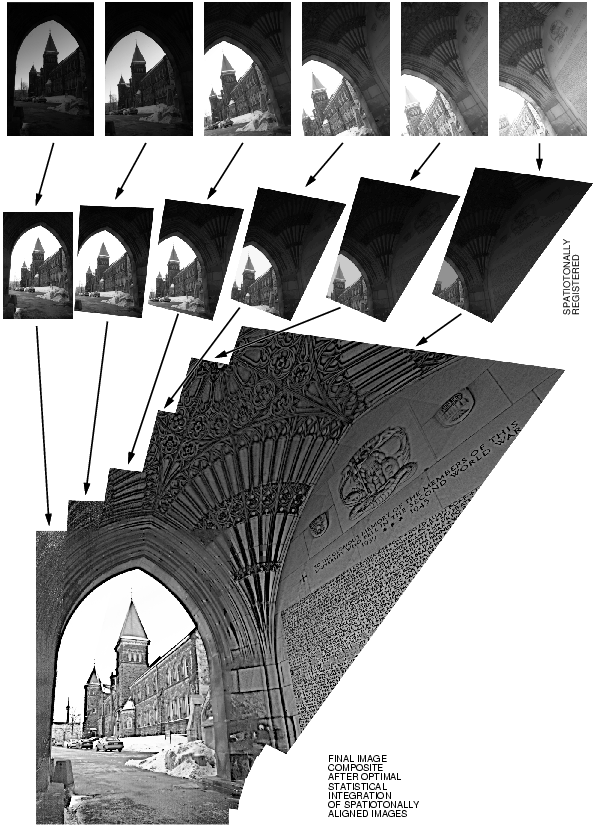
At its core, computational photography involves techniques like image stacking for noise reduction (common in low-light smartphone modes), pixel binning to improve light sensitivity, or multi-frame fusion for HDR. Light field cameras, for instance, capture the intensity, color, and direction of light, allowing for post-capture refocusing and depth estimation, a feat impossible with traditional cameras. Advanced algorithms are now employed for various tasks.
📊 Key Facts & Numbers
The computational photography market is vast, with billions of devices employing these techniques daily. Companies have demonstrated computational photography capabilities that allow for advanced photographic effects through sophisticated depth mapping and AI. The computational cost of processing these images is immense, with significant resources dedicated annually to training the models that power many of these features.
👥 Key People & Organizations
Several key figures and organizations have been instrumental in shaping computational photography. Major tech companies invest heavily in computational photography R&D, integrating these techniques into their flagship products. Conferences are critical venues where cutting-edge research in computational imaging is presented and debated by the academic and industrial communities.
🌍 Cultural Impact & Influence
Computational photography has profoundly reshaped visual culture and our expectations of image quality. The ubiquity of these techniques has also led to a greater appreciation for algorithmic aesthetics, where the 'look' of an image is as much a product of code as it is of optics. Furthermore, computational photography has blurred the lines between photography and digital art, with AI-generated imagery and advanced editing tools becoming increasingly accessible.
⚡ Current State & Latest Developments
The current landscape of computational photography is characterized by advancements in real-time semantic segmentation, allowing for sophisticated background blur (bokeh) and sky replacement, even on mid-range devices. Companies are exploring neural rendering techniques to create more realistic and controllable image synthesis. The integration of computational photography into augmented reality (AR) and virtual reality (VR) is also accelerating, with techniques like depth sensing and scene reconstruction becoming critical for immersive experiences.
🤔 Controversies & Debates
The most significant controversy surrounding computational photography centers on the concept of 'authenticity' and 'truth' in images. Critics argue that the extensive algorithmic manipulation inherent in these techniques creates an artificial reality, diverging from the traditional notion of photography as a direct representation of the world. The debate intensifies with the rise of AI-generated imagery, where the distinction between captured and synthesized content becomes increasingly blurred. There are also concerns about algorithmic bias, where models trained on specific datasets may perpetuate societal biases in image processing, leading to unfair or inaccurate representations. The ethical implications of manipulating images, especially in news or documentary contexts, remain a persistent point of contention.
🔮 Future Outlook & Predictions
The future of computational photography is inextricably linked to advancements in artificial intelligence and sensor technology. We can expect to see increasingly sophisticated AI models capable of understanding and reconstructing scenes with near-perfect fidelity, potentially leading to 'computational lenses' that can simulate any optical effect or even generate entirely novel visual experiences. The integration with AR/VR will deepen, enabling dynamic, context-aware image capture and display.
💡 Practical Applications
Computational photography techniques are now ubiquitous, integrated into a vast array of devices and applications. The most visible application is in smartphones, where features like portrait mode (simulated bokeh), night mode (low-light enhancement), and HDR are standard. In automotive systems, computational imaging is crucial for advanced driver-assistance systems (ADAS) and autonomous driving, enabling object detection, lane keeping, and scene understanding. Scientific imaging, from microscopy to astronomy, benefits from computational techniques for noise reduction, resolution enhancement, and data analysis. Industrial inspection and quality control also rely heavily on computational imaging for defect detection and measurement. Even in entertainment, computational techniques are used for visual effects and virtual production.
Key Facts
- Category
- technology
- Type
- topic