
Contents
Overview
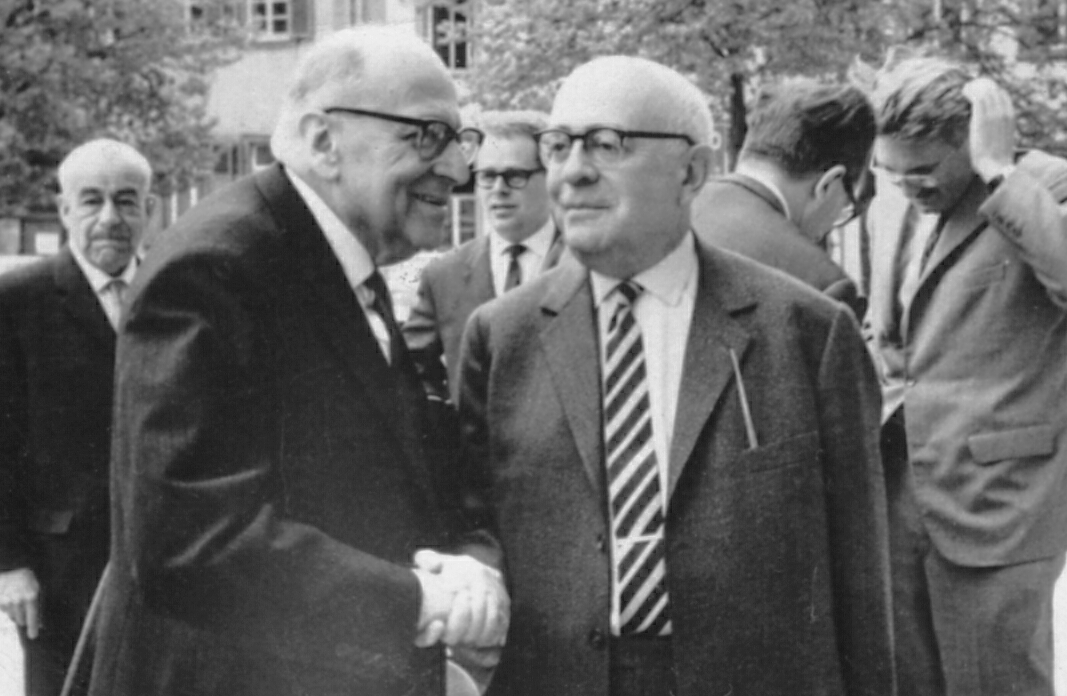
The intellectual lineage of communicative action stretches back through Critical Theory and the Frankfurt School, particularly the work of Theodor Adorno and Max Horkheimer on the 'dialectic of enlightenment.' However, it was Jürgen Habermas who systematically developed the concept in his magnum opus, "The Theory of Communicative Action." This two-volume work, stemming from lectures at UC Berkeley, sought to ground the social sciences in a theory of language, moving beyond the instrumental rationality critiqued by his predecessors. Habermas aimed to identify a basis for social critique and emancipation rooted in the inherent rationality of language itself, distinguishing it from the strategic or manipulative uses of communication.
⚙️ How It Works
At its core, communicative action operates on the principle of reaching mutual understanding. It involves participants raising 'validity claims' – assertions about the objective truth of a statement, the rightness of an action within a social context, or the sincerity of one's own subjective experience. These claims can be challenged and defended through reasoned discourse. Habermas distinguishes this from 'strategic action,' where individuals aim to influence others through rewards, punishments, or deception, treating them as means to an end rather than as autonomous subjects. The ideal speech situation, a hypothetical condition where all participants have equal opportunity to speak, question, and introduce topics without coercion, serves as a normative benchmark for evaluating the quality of communicative action.
📊 Key Facts & Numbers
"The Theory of Communicative Action" featured two volumes: "Reason and the Rationalization of Society," detailing communicative rationality, and "Lifeworld and System: A Critique of Functionalist Reason," exploring societal structures. The 'lifeworld' encompasses the shared cultural knowledge, social integration, and personal identity formation essential for communication, while the 'system' refers to the economic and administrative spheres governed by instrumental rationality.
👥 Key People & Organizations
The central figure is undoubtedly Jürgen Habermas, a towering figure in 20th and 21st-century philosophy and sociology. His work at the Frankfurt School has profoundly shaped social theory. Key collaborators and interlocutors who engaged with or critiqued aspects of his theory include Axel Honneth, who developed the theory of recognition, and Charles Taylor, who offered critiques of modernity and rationality. Organizations like the Max Planck Society have supported Habermas's extensive research, and his ideas have been disseminated through academic institutions worldwide, including the University of Frankfurt.
🌍 Cultural Impact & Influence
Communicative action has had a seismic impact on fields ranging from political science and sociology to ethics and communication studies. It provides a theoretical foundation for deliberative democracy, emphasizing the importance of public discourse and reasoned debate in legitimate governance, influencing scholars like Jean-François Lyotard and Chantal Mouffe in their own theories of discourse and democracy. The concept has also informed critiques of media and technology, analyzing how mass media can distort or bypass genuine communicative processes. Furthermore, it offers a framework for understanding social movements and activism that strive for consensus and emancipation through dialogue, such as the Arab Spring protests which, despite their complex outcomes, were initially fueled by calls for open dialogue and accountability.
⚡ Current State & Latest Developments
In the contemporary landscape, Habermas's theory of communicative action remains highly relevant, particularly in discussions surrounding social media and the public sphere. Debates now center on whether digital platforms facilitate or hinder genuine communicative action, with concerns about echo chambers, misinformation, and the algorithmic amplification of strategic communication. Habermas himself continued to refine his ideas on deliberative democracy and the role of law. Recent analyses explore how artificial intelligence might impact communicative rationality, raising questions about whether AI can engage in genuine understanding or merely simulate it.
🤔 Controversies & Debates
The theory of communicative action is not without its critics. A primary controversy revolves around the feasibility of the 'ideal speech situation.' Skeptics argue that power differentials, cultural biases, and psychological factors are so pervasive that a truly uncoerced, egalitarian dialogue is unattainable. Philosophers like Michel Foucault have critiqued Habermas's notion of universal rationality, suggesting that power operates more subtly and pervasively than Habermas allows. Another debate concerns whether Habermas's framework adequately accounts for non-linguistic forms of communication or the role of emotions and aesthetics in reaching understanding. Some critics also contend that his critique of modernity is overly optimistic about the potential for reason to overcome systemic irrationalities.
🔮 Future Outlook & Predictions
The future outlook for communicative action hinges on humanity's ability to navigate the complexities of a technologically saturated world. As artificial intelligence becomes more sophisticated, the distinction between genuine understanding and sophisticated mimicry will be crucial. Habermas's framework will likely be tested by the rise of AI-driven communication and the potential for automated persuasion. Furthermore, ongoing challenges to democratic institutions globally will continue to highlight the need for robust public spheres capable of fostering reasoned deliberation. Future research may explore how to cultivate communicative rationality in increasingly fragmented and polarized societies, potentially through educational reforms and new models for digital public forums.
💡 Practical Applications
Communicative action finds practical application in numerous domains. It serves as a foundational concept for deliberative democracy initiatives, informing the design of citizen assemblies and participatory budgeting processes in cities like Paris and Montreal. In organizational management, principles of communicative action encourage transparent communication, conflict resolution through dialogue, and employee empowerment, as seen in some B Corp certified companies. Therapists and mediators utilize its principles to facilitate understanding and consensus-building in interpersonal and group conflicts. Educational programs focused on critical thinking and argumentation skills implicitly draw upon this theory, aiming to equip individuals for reasoned public engagement.
Key Facts
- Category
- philosophy
- Type
- concept