
Contents
Overview
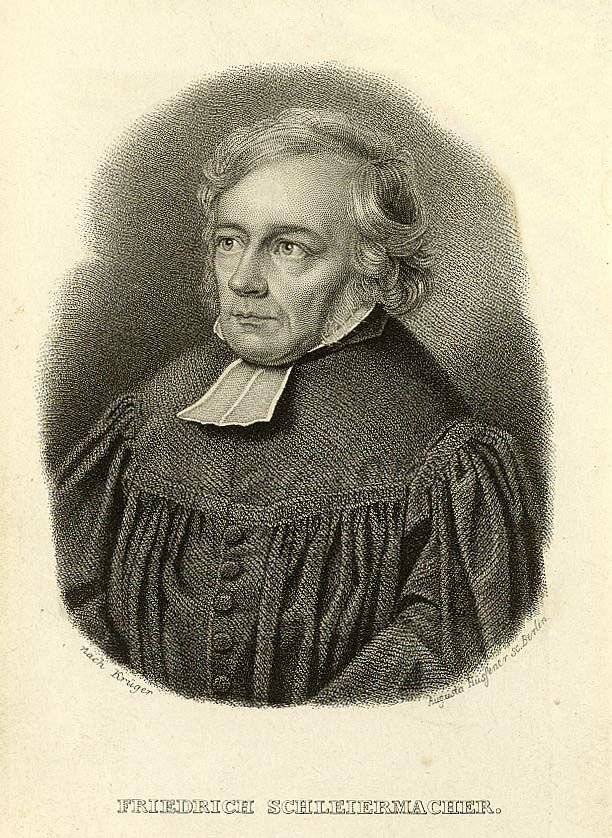
The concept of hermeneutics has its roots in ancient Greece, where it was associated with the messenger god Hermes. The term 'hermeneutics' was first used by Friedrich Schleiermacher in the 19th century to describe the methodology of interpreting biblical texts. Since then, hermeneutics has expanded to include the interpretation of various texts, including philosophical and literary works, as seen in the works of Jacques Derrida and Michel Foucault. The development of hermeneutics has been influenced by other disciplines, such as linguistics and anthropology, and has been applied in fields like law and history.
🔍 How It Works
Hermeneutics involves a range of techniques and approaches, including exegesis, which focuses on the close reading of texts, and semiotics, which examines the relationship between signs and symbols. The discipline also considers the role of presuppositions and pre-understandings in shaping our interpretations, as discussed by Hans-Georg Gadamer in his work Truth and Method. Additionally, hermeneutics has been influenced by philosophy, particularly the work of Martin Heidegger and his concept of Being-in-the-World.
🌐 Cultural Impact
The cultural impact of hermeneutics can be seen in its application in various fields, including literary theory and cultural studies. The discipline has also influenced the development of critical theory and poststructuralism, as seen in the work of Roland Barthes and Jean Baudrillard. Furthermore, hermeneutics has been used in education to develop new approaches to teaching and learning, such as experiential learning and problem-based learning. The influence of hermeneutics can also be seen in the work of Paul Ricoeur and his concept of narrative identity.
🔮 Legacy & Future
The legacy of hermeneutics can be seen in its continued influence on various fields, including philosophy, literary theory, and cultural studies. The discipline has also been applied in new and innovative ways, such as in the development of digital hermeneutics and hermeneutic phenomenology. As the field continues to evolve, it is likely that hermeneutics will remain a vital and dynamic discipline, shaping our understanding of texts, communication, and interpretation. The future of hermeneutics will likely be influenced by the work of thinkers such as Giorgio Agamben and his concept of bare life.
Key Facts
- Year
- 19th century
- Origin
- Germany
- Category
- philosophy
- Type
- concept
Frequently Asked Questions
What is the difference between hermeneutics and exegesis?
Hermeneutics is a broader discipline that encompasses the interpretation of texts, while exegesis is a specific approach to interpreting texts that focuses on the close reading of the text. Exegesis is often used in biblical studies, while hermeneutics has been applied in a wider range of fields, including philosophy and literary theory. For example, Jacques Derrida's work on deconstruction has been influential in shaping the field of hermeneutics.
How does hermeneutics relate to semiotics?
Hermeneutics and semiotics are closely related disciplines, as both deal with the interpretation of signs and symbols. Semiotics provides a framework for understanding the relationship between signs and their meanings, while hermeneutics provides a methodology for interpreting texts and other forms of communication. The work of Charles Sanders Peirce has been influential in shaping the field of semiotics, and his ideas have been applied in hermeneutics by thinkers such as Umberto Eco.
What are some of the key concepts in hermeneutics?
Some of the key concepts in hermeneutics include interpretation, text analysis, communication, presuppositions, and pre-understandings. These concepts are central to the discipline and are used to understand and analyze texts, as well as to develop new approaches to interpretation. For example, Hans-Georg Gadamer's concept of horizon has been influential in shaping the field of hermeneutics, and his ideas have been applied in fields such as literary theory and cultural studies.
How has hermeneutics been applied in different fields?
Hermeneutics has been applied in a range of fields, including philosophy, literary theory, cultural studies, and education. It has been used to develop new approaches to teaching and learning, as well as to analyze and interpret texts and other forms of communication. For example, Paul Ricoeur's work on narrative identity has been influential in shaping the field of hermeneutics, and his ideas have been applied in fields such as psychology and sociology.
What is the future of hermeneutics?
The future of hermeneutics is likely to be shaped by its continued application in various fields, as well as by the development of new approaches and methodologies. The discipline is likely to remain a vital and dynamic field, shaping our understanding of texts, communication, and interpretation. For example, the work of Giorgio Agamben on bare life has been influential in shaping the field of hermeneutics, and his ideas have been applied in fields such as political theory and philosophy.