
Contents
Overview
The concept of standby systems, including cold standby, has evolved alongside the increasing reliance on technology for critical operations. Early computing systems, while less complex than today's infrastructure, recognized the need for redundancy to prevent data loss and service interruption. As systems became more sophisticated, so did the strategies for ensuring their continuity. The distinction between cold, warm, and hot standby emerged as a way to categorize different levels of readiness and recovery speed, influencing how businesses and organizations approach disaster recovery planning. This evolution is evident in the development of various system design principles, from basic fault tolerance to advanced high-availability architectures, impacting everything from enterprise IT to consumer electronics.
⚙️ How It Works
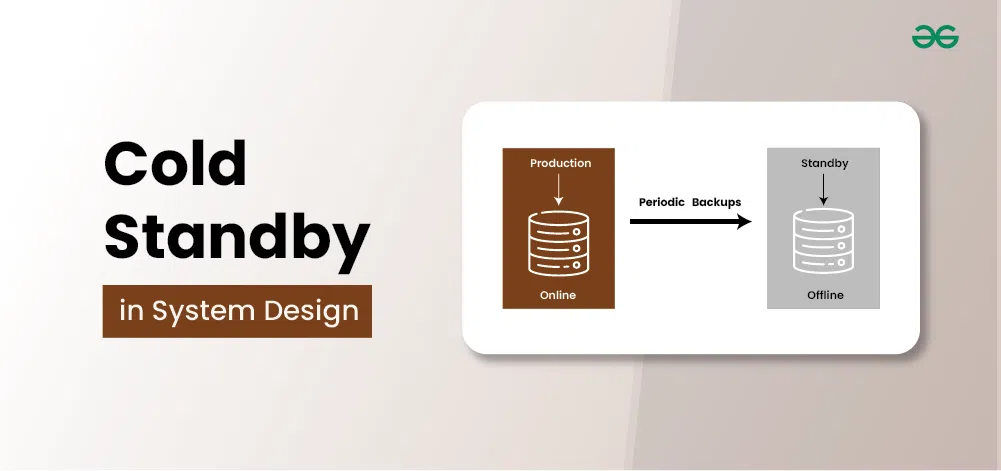
In a cold standby configuration, a secondary system or piece of equipment is kept in an inactive state, often powered down or in a dormant mode. Unlike hot standby systems, which are continuously running and synchronized, or warm standby systems that are partially active, a cold standby requires manual intervention to be brought online. This typically involves powering up the system, configuring it, and potentially restoring data from backups or snapshots. This process can take a significant amount of time, leading to a longer recovery period. The key characteristic is that the standby system does not consume resources or incur operational costs until it is activated, making it a cost-effective solution for non-critical systems or scenarios where downtime is acceptable, as discussed in resources like GeeksforGeeks and Medium.
🌍 Cultural Impact
The adoption of cold standby strategies has practical implications across various industries, influencing how businesses manage risk and ensure operational continuity. For instance, in IT infrastructure, cold standby is often employed for less critical servers or development environments where the cost of maintaining a continuously active backup is prohibitive. Similarly, in manufacturing, spare equipment might be kept in storage as a cold standby, ready to be installed if a primary machine fails. This approach is also seen in disaster recovery planning, where organizations might maintain a 'cold site' that can be set up with necessary equipment and data if their primary facilities become inaccessible, a concept explored by Simplicable. The decision to use cold standby often hinges on a trade-off between cost savings and the tolerance for extended downtime, a balance that must be carefully considered by IT managers and business continuity planners.
🔮 Legacy & Future
The future of cold standby is likely to be shaped by advancements in automation and cloud computing. While the core principle of an inactive backup remains, the activation process is becoming more streamlined. Automated scripts and cloud-based orchestration tools can significantly reduce the manual effort and time required to bring a cold standby system online. Furthermore, the rise of Infrastructure as Code (IaC) allows for the rapid provisioning of standby environments in the cloud, blurring the lines between traditional cold standby and more agile recovery solutions. As organizations continue to prioritize resilience and cost-efficiency, cold standby, in its evolving forms, will likely remain a relevant strategy for managing risks in a technologically dependent world, complementing other approaches like warm and hot standby.
Key Facts
- Year
- 2023
- Origin
- General system design and disaster recovery principles
- Category
- technology
- Type
- concept
Frequently Asked Questions
What is the primary advantage of cold standby?
The primary advantage of cold standby is its cost-effectiveness. Since the backup system is inactive and not consuming resources, it significantly reduces operational costs compared to warm or hot standby systems. This makes it an attractive option for non-critical systems or organizations with budget constraints.
What is the main disadvantage of cold standby?
The main disadvantage of cold standby is its longer recovery time. Because the backup system is inactive, it requires manual intervention to power on, configure, and synchronize, which can lead to significant downtime. This makes it unsuitable for mission-critical applications where immediate failover is essential.
When is cold standby most appropriate to use?
Cold standby is most appropriate for systems where downtime is tolerable and data loss is not a critical concern. This includes non-critical applications, development or testing environments, and disaster recovery scenarios where the cost savings outweigh the longer recovery time. Examples include internal file servers or batch processing systems.
How does cold standby differ from hot standby?
The key difference lies in their operational state. A hot standby system is fully active, continuously synchronized with the primary system, and ready for immediate, automated failover. In contrast, a cold standby system is inactive and requires manual activation, resulting in a much longer recovery time. Hot standby offers minimal downtime but is more expensive, while cold standby is cheaper but has more downtime.
Can cold standby be automated?
While traditionally requiring manual activation, cold standby systems can be increasingly automated. With the use of scripts, orchestration tools, and cloud-based provisioning, the process of bringing a cold standby system online can be significantly streamlined, reducing manual effort and recovery time. However, it typically still involves a more involved activation process than the near-instantaneous failover of hot standby.
References
- geeksforgeeks.org — /system-design/cold-standby-vs-hot-standby/
- medium.com — /@jusuftopic/designing-for-redundancy-hot-vs-cold-standby-in-mission-critical-sy
- dexonsystems.com — /blog/what-does-standby-mean
- simplicable.com — /en/cold-standby
- canvascloud.ai — /cloud-glossary/cold-standby
- geeksforgeeks.org — /system-design/what-is-cold-standby/
- instrumentationtools.com — /difference-between-cold-standby-and-hot-standby/
- reddit.com — /r/HomeNetworking/comments/jzrgjj/cold_vs_hot_standby/