
Contents
- 🎵 Origins & History
- ⚙️ How It Works
- 📊 Key Facts & Numbers
- 👥 Key People & Organizations
- 🌍 Cultural Impact & Influence
- ⚡ Current State & Latest Developments
- 🤔 Controversies & Debates
- 🔮 Future Outlook & Predictions
- 💡 Practical Applications
- 📚 Related Topics & Deeper Reading
- Frequently Asked Questions
- References
- Related Topics
Overview
The history of classical music in America is a dynamic narrative of transplantation, adaptation, and eventual innovation. Initially dominated by European composers and performers, American classical music gradually developed its own identity, reflecting the nation's diverse cultural landscape and evolving social structures. Early efforts focused on establishing performance institutions and importing European repertoire, but by the late 19th and early 20th centuries, American composers began to forge unique styles, incorporating indigenous folk melodies, jazz rhythms, and a burgeoning sense of national identity. The 20th century saw a proliferation of orchestras, conservatories, and composers, leading to a vibrant and multifaceted classical music scene that continues to engage with both tradition and contemporary expression. Despite ongoing debates about its accessibility and relevance, American classical music remains a significant cultural force, continually seeking to define itself against its European roots and the broader American experience.
🎵 Origins & History
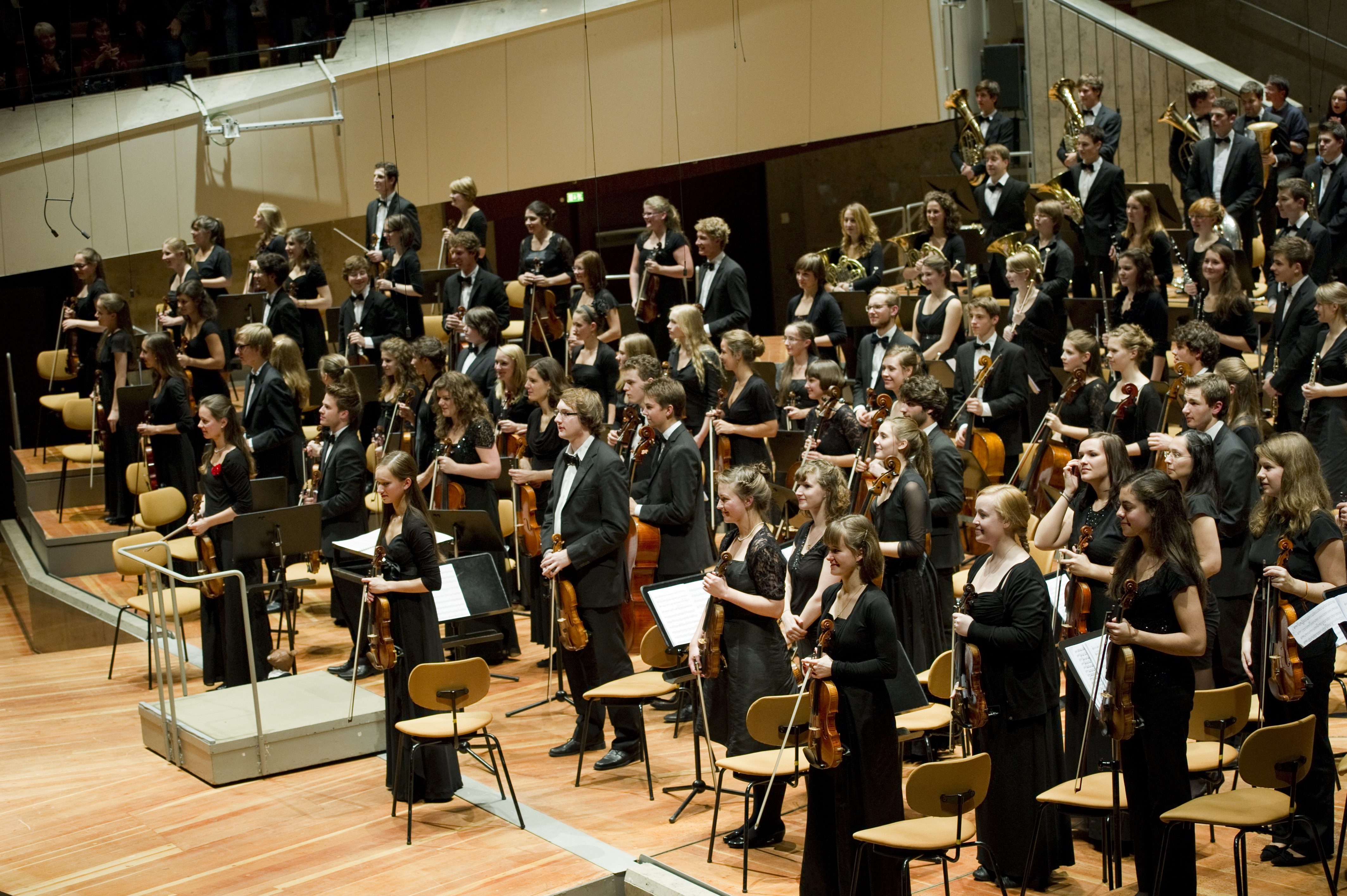
The seeds of classical music in America were sown by European colonists, primarily in the 17th and 18th centuries. Early musical life was largely centered around churches and private homes, with psalmody and hymn singing forming the bedrock of musical practice. German and English settlers brought their musical traditions, including the works of composers like Handel and Haydn, which were performed in nascent concert halls and salons. The establishment of the New York Philharmonic in 1842 and the Boston Symphony Orchestra in 1881 marked a significant step towards institutionalizing classical music, mirroring the grand European orchestras and solidifying a taste for established repertoire. These institutions, along with conservatories like the Juilliard School (founded 1905), became crucial in training musicians and shaping American musical tastes, often through a curriculum heavily influenced by European pedagogy and aesthetics.
⚙️ How It Works
The 'how it works' of classical music in America is less about a singular mechanism and more about a complex ecosystem of creation, performance, and dissemination. It involves the meticulous training of musicians in conservatories and university programs, the commissioning of new works by composers, and the presentation of these works by professional orchestras, chamber ensembles, and solo artists. The infrastructure includes concert halls, opera houses, and recording studios, supported by a network of music critics, educators, and patrons. The notational system, inherited from European traditions, remains the primary language, though contemporary composers increasingly explore graphic notation, electronic music, and interdisciplinary collaborations. The economic model often relies on a mix of ticket sales, grants from foundations like the National Endowment for the Arts, corporate sponsorships, and individual donations, creating a delicate balance for artistic sustainability.
📊 Key Facts & Numbers
By 2023, there were over 300 professional symphony orchestras operating in the United States, with the top-tier orchestras like the New York Philharmonic and Chicago Symphony Orchestra boasting annual budgets exceeding $50 million. Conservatories such as Juilliard and Eastman enroll thousands of students annually, with tuition often surpassing $60,000 per year. The classical music recording industry, though smaller than popular music, still generates hundreds of millions of dollars globally, with labels like Deutsche Grammophon and Sony Classical continuing to release new recordings. Approximately 10-15% of the American population attends a classical music concert annually, a figure that has remained relatively stable over the past two decades, indicating a dedicated but not rapidly expanding core audience.
👥 Key People & Organizations
Key figures in shaping American classical music include composers like Aaron Copland, whose accessible style and use of American folk melodies defined a national sound, and Charles Ives, a pioneering modernist who experimented with dissonance and polytonality. Orchestras like the Philadelphia Orchestra, under conductors such as Leopold Stokowski, became renowned for their innovative programming and rich sound. Institutions like the Metropolitan Opera have served as premier venues for operatic performance, showcasing both European masters and American composers. More recently, composers like John Adams and Caroline Shaw have garnered significant attention, pushing the boundaries of the genre and earning accolades such as the Pulitzer Prize for Music.
🌍 Cultural Impact & Influence
The cultural impact of classical music in America is profound, extending far beyond concert halls. Its influence can be heard in film scores, from the sweeping epics of John Williams to the experimental soundscapes of contemporary composers. The harmonic language and structural innovations of classical music have informed genres from jazz to rock music. Furthermore, the institutions that support classical music, such as orchestras and conservatories, have played a vital role in arts education and community engagement across the nation. The very notion of 'high art' in America has been, for centuries, inextricably linked to the European classical tradition, shaping aesthetic values and cultural hierarchies, though this perception is increasingly challenged by more diverse artistic expressions.
⚡ Current State & Latest Developments
The current state of classical music in America is one of both resilience and adaptation. Post-pandemic, orchestras are actively working to rebuild audiences and financial stability, with many experimenting with innovative programming, digital streaming services, and community-based initiatives. There's a growing emphasis on diversity and inclusion, with a push to program more works by women and composers of color, and to engage with underrepresented communities. Organizations like the League of American Orchestras are at the forefront of these discussions, advocating for systemic change. The rise of digital platforms and social media has also created new avenues for composers and performers to reach audiences directly, bypassing traditional gatekeepers and fostering a more decentralized musical landscape.
🤔 Controversies & Debates
One of the most persistent controversies surrounding classical music in America is its perceived elitism and lack of accessibility. Critics argue that the high cost of tickets, the formal concert etiquette, and the often Eurocentric repertoire alienate potential audiences. Debates also rage over funding priorities, with some advocating for increased public support for classical institutions while others argue for a broader distribution of arts funding across more diverse genres and community-based projects. The question of what constitutes 'American' classical music remains a point of contention, with ongoing discussions about how to balance historical European influences with indigenous musical traditions and contemporary cultural expressions. The role of technology, from digital streaming to AI-generated music, also presents new ethical and artistic challenges.
🔮 Future Outlook & Predictions
The future outlook for classical music in America is a complex interplay of challenges and opportunities. Experts predict a continued push towards greater diversity in programming and personnel, with a focus on commissioning and performing works that reflect a wider range of cultural experiences. Digital innovation will likely play an even larger role, with virtual reality concerts, interactive online learning platforms, and AI-assisted composition tools becoming more prevalent. The economic model will continue to evolve, with a greater reliance on diversified revenue streams beyond traditional ticket sales and philanthropy. There's also a growing interest in cross-genre collaborations, blurring the lines between classical, jazz, electronic, and popular music, potentially attracting new audiences and fostering innovative artistic expressions.
💡 Practical Applications
Classical music in America finds practical application in numerous fields beyond the concert hall. Its principles of structure, harmony, and melody are foundational to music education in schools and universities nationwide, forming the basis for understanding music theory and composition. Film and television industries heavily rely on classical music techniques for scoring, creating emotional resonance and atmosphere in visual media, with composers like Hans Zimmer often drawing upon symphonic traditions. Video game soundtracks also frequently employ orchestral arrangements to enhance player immersion. Furthermore, the rigorous discipline and technical mastery required of classical musicians are transferable skills valued in various professional settings, fostering problem-solving abilities and refined performance practices.
Key Facts
- Year
- 17th century - Present
- Origin
- United States
- Category
- history
- Type
- movement
Frequently Asked Questions
When did classical music truly begin to take root in America?
Classical music began to take root in America during the colonial period, primarily through the musical practices of European settlers in the 17th and 18th centuries. Early efforts focused on church music and private performances, gradually evolving with the establishment of formal concert societies and orchestras in the 19th century. The founding of major orchestras like the New York Philharmonic in 1842 and the Boston Symphony Orchestra in 1881 marked significant milestones in institutionalizing the genre and fostering a taste for European repertoire, laying the groundwork for later American composers to emerge.
What are the key differences between European classical music and its American counterpart?
While American classical music is rooted in the European tradition, it developed distinct characteristics influenced by the nation's unique cultural and social landscape. Early American composers often incorporated indigenous folk melodies, spirituals, and later, the rhythms and improvisational spirit of jazz. Composers like Aaron Copland consciously sought to create a 'national' sound, distinct from European models. Furthermore, the American experience, with its emphasis on individualism and innovation, has fostered a more experimental and diverse approach to composition and performance compared to the more historically entrenched traditions in Europe.
How has the accessibility of classical music changed in America over time?
The accessibility of classical music in America has seen significant shifts. Initially, it was largely confined to elite circles and European immigrants. The establishment of public orchestras and conservatories in the late 19th and early 20th centuries broadened its reach, but it remained largely perceived as 'high art.' In recent decades, there's been a concerted effort to increase accessibility through initiatives like free outdoor concerts, educational outreach programs by organizations like the League of American Orchestras, and the use of digital platforms for streaming and engagement. However, debates persist regarding ticket prices, repertoire choices, and the overall perception of elitism, indicating that accessibility remains an ongoing challenge.
Who were the most influential American composers in the 20th century?
The 20th century was a golden age for American classical composers, with figures like Charles Ives pushing modernist boundaries, and Aaron Copland crafting an accessible, quintessentially American sound. Other pivotal composers include George Gershwin, who masterfully blended jazz and classical idioms in works like 'Rhapsody in Blue,' and Samuel Barber, known for his lyrical and emotionally resonant compositions such as the 'Adagio for Strings.' Composers like Igor Stravinsky, though Russian-born, spent significant portions of their careers in America, influencing generations. The latter half of the century saw figures like John Cage revolutionize avant-garde music and Philip Glass popularize minimalism.
What are the main criticisms leveled against the current state of classical music in America?
The primary criticisms against classical music in America often center on its perceived elitism and lack of diversity. Critics argue that concert programming remains too heavily focused on the European canon, with insufficient representation of women, composers of color, and contemporary American voices. The high cost of tickets and the formal concert environment are also cited as barriers to broader audience engagement. Furthermore, debates exist regarding the allocation of funding, with some arguing that public and private support disproportionately benefits established institutions at the expense of emerging artists and community-based music projects. The relevance of classical music in a rapidly changing cultural landscape is also a recurring point of discussion.
How can someone new to classical music start exploring American composers?
For newcomers interested in American classical music, a great starting point is to explore composers who intentionally incorporated American vernacular styles. Begin with Aaron Copland, whose 'Appalachian Spring' and 'Fanfare for the Common Man' are iconic. George Gershwin's 'Rhapsody in Blue' offers a vibrant fusion of jazz and classical elements. For a more modernist perspective, listen to Charles Ives, perhaps starting with his 'The Unanswered Question.' Later 20th-century composers like John Adams provide accessible contemporary examples, with works like 'Short Ride in a Fast Machine.' Many orchestras offer 'popular' or 'family' concerts that feature these composers, and streaming services provide extensive playlists dedicated to American classical music.
What are the predictions for the future of classical music in the United States?
Predictions for the future of classical music in the United States point towards increased diversification and technological integration. Expect a continued emphasis on commissioning and performing works by underrepresented composers, leading to a broader and more inclusive repertoire. Digital platforms will likely become even more central, with virtual performances, interactive educational content, and AI-assisted composition tools playing larger roles. The economic model may shift towards more flexible funding streams and community partnerships. Furthermore, cross-genre collaborations with artists from jazz, electronic, and popular music spheres are anticipated to grow, potentially attracting new audiences and fostering innovative artistic expressions that redefine the boundaries of classical music.